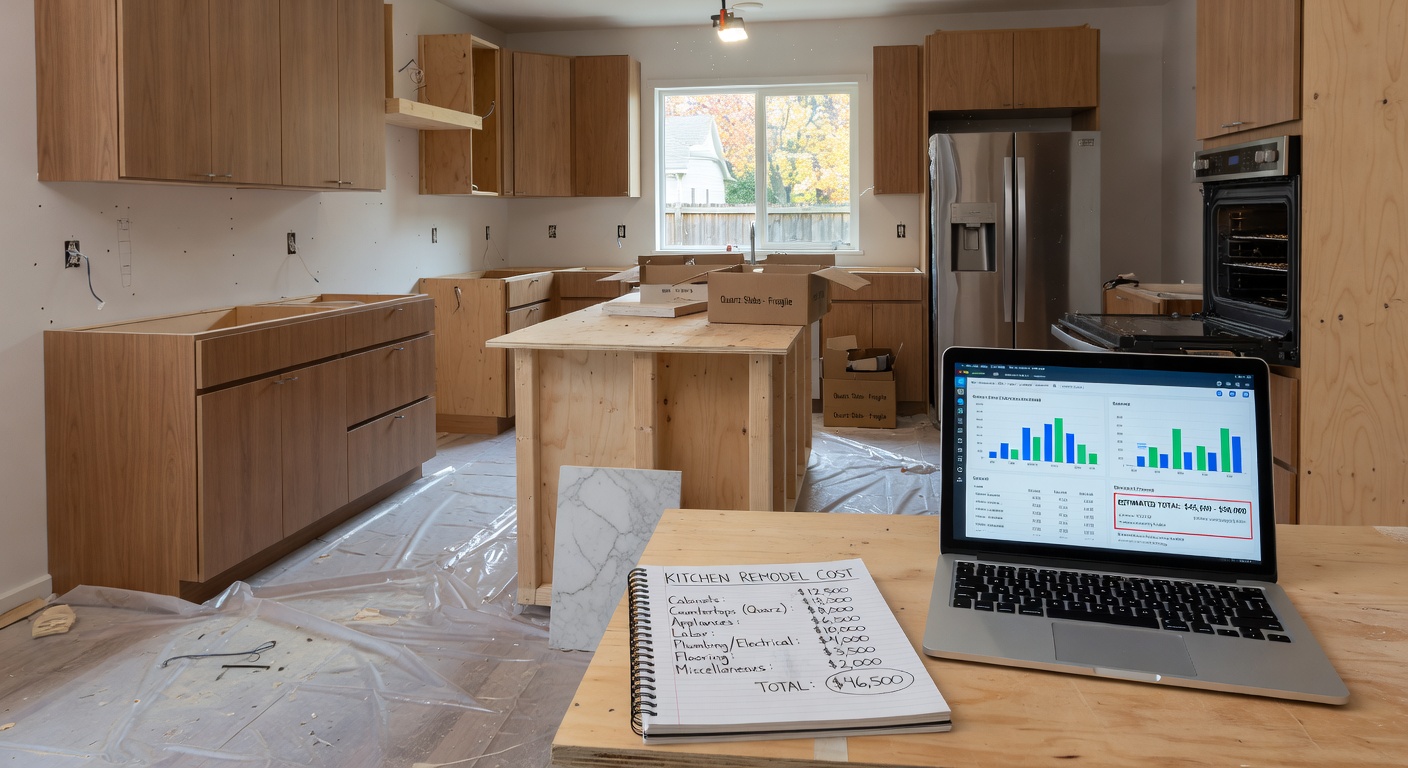
A kitchen remodel in the Denver metro area costs between $20,000 and $150,000, with most homeowners spending $45,000 to $85,000 for a mid-range project. The final price depends on kitchen size, cabinet and countertop selection, whether plumbing or electrical systems move, and which Denver neighborhood the home sits in.
Denver’s construction market shapes these numbers directly. Colorado’s tight skilled-trades labor pool pushes contractor rates 8% to 25% above national benchmarks, and the metro’s 5,280-foot elevation adds altitude-specific requirements for gas appliances and HVAC systems that homeowners in most other cities never encounter. Building age also matters: Denver’s housing stock ranges from turn-of-the-century bungalows in neighborhoods like Highlands and Baker to 1980s-2000s suburban builds in Aurora and Centennial, and older homes frequently require electrical panel upgrades or structural work that newer construction does not.
This guide breaks the total cost into its component parts — cabinets, countertops, labor, demolition, electrical, and plumbing — then applies those figures to real Denver kitchen sizes and budget tiers. It also covers cost differences across Denver-metro cities, DIY versus professional installation, big-box retailer options, money-saving strategies, financing paths, and the return homeowners can expect at resale.
Every figure below reflects installed, professional pricing unless otherwise noted. Homeowners should treat these ranges as a planning baseline and confirm final numbers with written bids from licensed local contractors.
How Much Does a Kitchen Remodel Cost on Average?
The average kitchen remodel in the Denver metro area costs approximately $45,000 to $55,000, with most projects falling between $20,000 and $105,000 depending on scope. Nationally, Angi’s 2026 cost data puts the average kitchen remodel at $26,943, with most homeowners paying between $14,586 and $41,549. Denver’s regional labor premium and elevation-related build requirements push local averages roughly 10% to 25% above that national figure.
This average masks a wide spread because “kitchen remodel” describes projects that range from a cosmetic refresh to a full gut renovation. A cosmetic update that keeps the existing layout and refinishes surfaces can land near $15,000 to $30,000. A full remodel that replaces cabinets, countertops, flooring, and appliances without changing the layout typically runs $45,000 to $85,000. A remodel that also relocates plumbing, moves walls, or adds a kitchen island with new electrical and drain lines regularly exceeds $100,000.
Per-square-foot pricing offers a useful cross-check. National industry data places typical kitchen remodel costs at $75 to $250 per square foot, with premium finishes and layout changes reaching $400 or more per square foot. For a standard 200-square-foot Denver kitchen, that translates to a project cost of roughly $15,000 on the low end to $50,000 or more once cabinetry, countertops, and appliances are added.
Kitchen Remodel Cost Breakdown by Category
A Denver kitchen remodel budget divides into cabinets, countertops, an optional island, demolition, labor, and electrical or plumbing work. Cabinets and labor together typically consume 55% to 70% of total project cost, while countertops account for another 10% to 20%. Understanding each category separately helps homeowners identify where to spend and where to cut.
The categories below interact with one another. Adding a kitchen island increases cabinet, countertop, electrical, and sometimes plumbing costs simultaneously. Moving a sink or range changes both plumbing and electrical totals. Reviewing each line item individually, then adding contingency for interactions between them, produces a more accurate budget than pricing the kitchen as a single lump sum.
Cabinet Costs
Kitchen cabinets cost $100 to $1,200 per linear foot installed, with most Denver homeowners spending $4,000 to $30,000 depending on cabinet tier and kitchen size. Stock cabinets run $100 to $300 per linear foot, semi-custom cabinets run $150 to $800 per linear foot, and fully custom cabinetry runs $500 to $1,500 per linear foot.
A standard 10-by-10-foot kitchen requires approximately 20 to 25 linear feet of cabinetry. At that size, stock cabinets typically total $2,000 to $7,500, semi-custom cabinets total $3,750 to $20,000, and custom cabinetry totals $12,500 to $37,500. Cabinets consistently represent the largest single line item in a kitchen remodel, accounting for 29% to 40% of total project cost according to industry cost-breakdown data. Material choice drives most of the variation: particleboard and thermofoil sit at the low end, plywood boxes with solid-wood doors sit in the middle, and solid hardwood with custom finishes sits at the top.
Countertop Costs
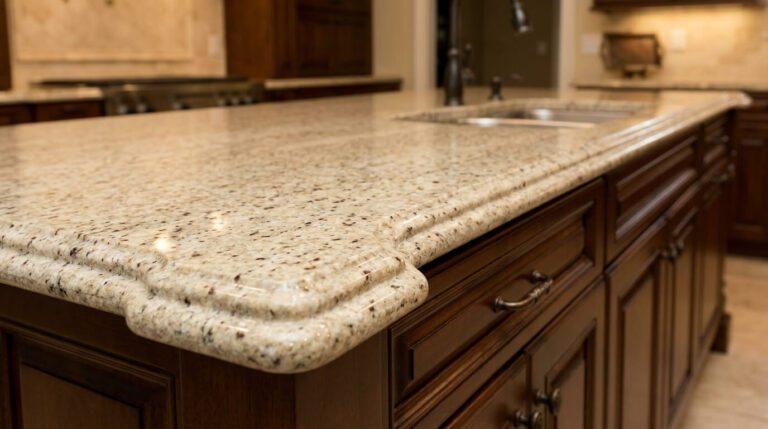
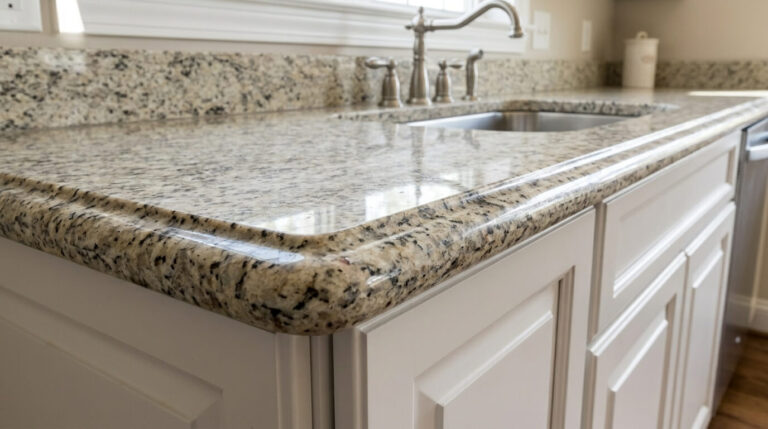
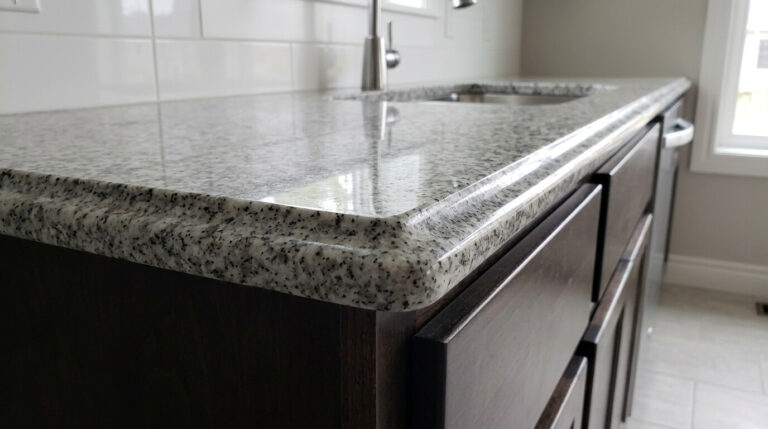
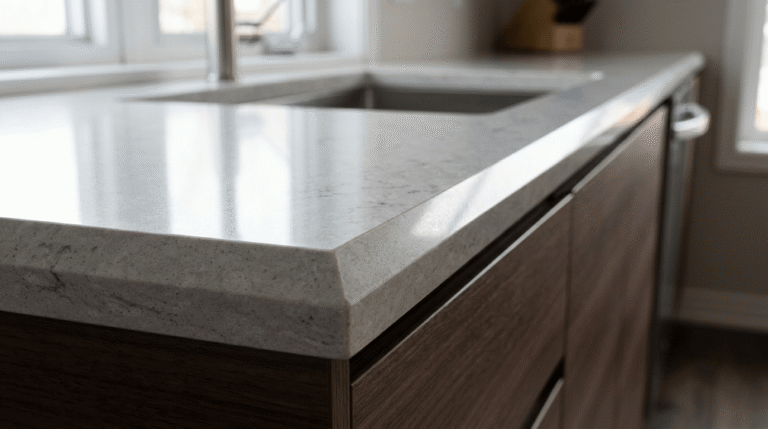
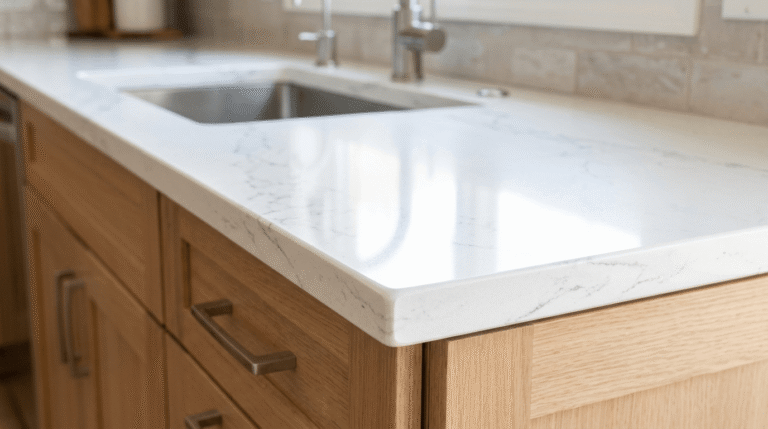
Countertops cost $25 to $250 per square foot installed depending on material, with most Denver kitchens spending $2,500 to $10,000 for a full countertop replacement. Laminate runs $15 to $50 per square foot installed. Granite runs $40 to $175 per square foot installed, with most straightforward installations landing between $70 and $115 per square foot after fabrication and cutouts. Quartz runs $50 to $150 per square foot installed. Marble runs $60 to $250 per square foot installed.
A typical 40-square-foot kitchen countertop run costs $1,000 to $2,000 in laminate, $2,800 to $4,600 in granite, and $2,000 to $6,000 in quartz. Granite requires periodic sealing to resist staining, while quartz is non-porous and does not require sealing. Sink cutouts, edge profiles, and backsplash installation each add $200 to $1,000 or more on top of base material and installation pricing.
Cabinets and Countertops Combined
Cabinets and countertops together typically account for 45% to 60% of a Denver kitchen remodel budget, running $6,500 to $40,000 combined for most mid-range projects. A budget-tier combination using stock cabinets and laminate countertops can stay near $6,500 to $9,000 for a standard 10-by-10 kitchen. A mid-range combination using semi-custom cabinets and quartz countertops typically runs $16,000 to $26,000. A high-end combination using custom cabinetry and premium stone can exceed $40,000.
Because cabinets and countertops are selected and installed as a coordinated system, most Denver contractors quote them together rather than as separate line items. Pairing a lower-cost cabinet tier with a premium countertop, or the reverse, is a common way homeowners balance visual impact against total spend without changing the kitchen’s layout.
Kitchen Island Installation Cost
A new kitchen island costs $3,000 to $15,000 to install, depending on size, cabinetry, countertop material, and whether electrical or plumbing work is required. A basic island with stock cabinetry and a laminate or granite top can run $3,000 to $6,000. A mid-range island with semi-custom cabinets, quartz countertops, and new electrical outlets typically costs $6,000 to $10,000.
Adding plumbing to an island — for a prep sink or dishwasher — increases the cost significantly because it requires cutting into the subfloor to run new supply and drain lines, which can add $1,500 to $4,000 in plumbing labor alone. Electrical work for island outlets or under-cabinet lighting adds $500 to $2,000 depending on the distance from the existing panel and whether the circuit needs upgrading.
Demolition Cost
Kitchen demolition costs $800 to $3,800 for most projects, with a national average near $800 for standard tear-out work. Small kitchen demolitions run $350 to $1,250, while large or full-gut demolitions reach $2,500 to $5,000. Costs rise when a project removes structural walls, encounters asbestos or lead in older construction, or requires careful deconstruction to salvage cabinets or fixtures for reuse or donation, which runs $7 to $14 per square foot instead of standard removal rates.
Denver’s older housing stock adds a variable that newer-construction markets rarely face: demolition frequently uncovers rotted subfloor, outdated wiring, or plumbing that does not meet current code, particularly in homes built before 1980. Angi data notes that pipe leak repairs average $500 and rotted support beam replacement averages $3,250 when these issues surface mid-project. Homeowners should hold 10% to 20% of their total budget in reserve for exactly this scenario.
Labor Cost
Labor accounts for roughly 30% to 45% of total kitchen remodel cost in Denver, reflecting a construction labor market that runs 8% to 25% above the national average. Skilled trade labor in the Denver metro averages around $52 per hour for general work, while specialized trades such as electricians and plumbers charge $80 to $150 per hour depending on experience and demand.
General contractors typically charge 10% to 20% of total project cost for overseeing a kitchen remodel, or a day rate of $300 to $500 plus $150 to $250 per day for each additional laborer on site. For an average-sized Denver kitchen, combined contractor and labor fees — covering demolition, carpentry, installation, and finish work — commonly fall in the $15,000 to $40,000 range on a mid-size project, scaling higher for larger kitchens or layout changes.
Electrical and Plumbing (Rewiring) Cost
Electrical work for a standard kitchen remodel costs $1,900 to $2,500, while plumbing modifications run $1,000 to $4,000 depending on whether fixtures stay in place or move. Adding new circuits for appliances, under-cabinet lighting, or an island typically falls at the lower end of that range. Full kitchen rewiring, which becomes necessary in many older Denver homes to meet current code, starts around $2,100 to $2,500 per wiring run and scales with kitchen size.
Relocating a sink or dishwasher requires rerouting water supply and drain lines, which pushes plumbing costs toward the $4,000 upper range. Repiping an entire kitchen runs $1,500 to $15,000, with an average near $7,500, depending on pipe material and the extent of the work; copper piping costs $2 to $8 per linear foot installed compared with $0.50 to $1 per linear foot for CPVC. Denver’s altitude adds one more variable: gas range installations may require altitude-adjusted burners, and HVAC reconfiguration for open-concept remodels can involve more complex ductwork than sea-level projects.
Kitchen Remodel Cost by Kitchen Size
Kitchen size is one of the strongest predictors of total remodel cost because it determines linear feet of cabinetry, square footage of countertop and flooring, and the scale of demolition and labor. Denver kitchen remodel costs scale from roughly $15,000 for a small galley kitchen to $150,000 or more for a large kitchen with premium finishes and a full layout change.
Square footage alone does not set the final price — material tier and scope of work still swing the total significantly within any size category. The ranges below assume a mid-range finish level unless noted otherwise.
Small Kitchen Remodel Cost
A small kitchen remodel in Denver, covering roughly 70 to 100 square feet, typically costs $15,000 to $35,000. Small kitchens common in Denver’s older bungalows and condos require less cabinetry and countertop material, which keeps material costs down even though labor and demolition costs remain relatively fixed regardless of size.
Galley and single-wall layouts, the two most common small-kitchen configurations, generally fall at the lower end of this range because they involve less cabinetry and simpler plumbing runs. Homeowners working with a small footprint often see a higher percentage of their budget go toward labor and fixed costs like demolition and permits, since those expenses do not shrink proportionally with square footage.
10×10 Kitchen Remodel Cost
A 10×10 kitchen remodel — 100 square feet, the industry-standard size used for cabinet and cost comparisons — costs $20,000 to $50,000 in the Denver market for a mid-range project. This size requires approximately 20 to 25 linear feet of cabinetry, 40 square feet of countertop, and standard-scope electrical and plumbing work.
Using stock cabinets and laminate or granite countertops, a 10×10 kitchen can be completed near $20,000 to $30,000. Moving to semi-custom cabinets and quartz countertops raises the total to $35,000 to $50,000. Full-gut 10×10 projects that relocate plumbing or add structural changes exceed this range.
12×12 Kitchen Remodel Cost
A 12×12 kitchen remodel — 144 square feet — costs $30,000 to $65,000 in Denver for a mid-range project, reflecting roughly 44% more floor area than a 10×10 kitchen. This size is common in Denver’s suburban builds from the 1980s through 2000s and typically accommodates an L-shaped or U-shaped layout with additional cabinet runs.
The larger footprint allows for design features not practical in a 10×10 space, such as a small peninsula or expanded pantry storage, which adds to both cabinet and countertop totals. Mid-range 12×12 remodels with semi-custom cabinetry and quartz counters commonly land in the $45,000 to $65,000 portion of this range.
Large Kitchen Remodel Cost (10×20+)
A large kitchen remodel, covering 200 square feet or more, costs $65,000 to $150,000 or more in the Denver metro area. This size typically includes a kitchen island, expanded cabinetry along multiple walls, and often a layout that supports higher-end appliances and finishes.
Large kitchens are common in Denver’s bigger single-family homes in neighborhoods such as Cherry Creek, Wash Park, and Highlands Ranch. At this scale, island installation, additional electrical circuits, and increased countertop square footage combine to push costs well above smaller-kitchen benchmarks even when material tiers stay mid-range. Luxury-tier finishes in a large kitchen — custom cabinetry, premium stone, and high-end appliances — regularly reach or exceed $150,000.
Cost Per Square Foot
Denver kitchen remodels cost approximately $150 to $400 per square foot, with most mid-range projects falling between $200 and $300 per square foot. National industry data places typical kitchen remodel costs at $75 to $250 per square foot, and Denver’s regional labor premium and elevation-related requirements push local pricing toward the higher portion of that range and beyond it for premium projects.
Cost per square foot is not constant across kitchen sizes because fixed costs — demolition, permits, and general contractor mobilization — spread across more square footage in larger kitchens, which can lower the effective per-square-foot rate even as the total project cost rises. A small kitchen with premium finishes can carry a higher per-square-foot cost than a large kitchen with mid-range finishes, so this metric works best as a planning tool alongside total-budget figures rather than as a standalone comparison.
Kitchen Remodel Cost by Budget Tier
Denver kitchen remodels fall into three general budget tiers: budget or minor remodels starting around $15,000 to $30,000, mid-range remodels running $45,000 to $85,000, and high-end or luxury remodels starting at $100,000 and extending past $150,000. Each tier corresponds to a different scope of work, not just a different material quality level.
Budget tier work keeps the existing layout and refinishes or lightly upgrades surfaces. Mid-range tier work typically replaces cabinets, countertops, and appliances while keeping the kitchen’s footprint intact. High-end tier work often changes the layout, moves plumbing or electrical, and uses custom cabinetry with premium stone and appliances. Choosing a tier early in the kitchen remodel planning process helps homeowners set realistic expectations before soliciting contractor bids.
Budget / Minor Kitchen Remodel
A budget or minor kitchen remodel in Denver costs $15,000 to $30,000 and typically includes cabinet refacing or painting, a new countertop, updated hardware, a fresh backsplash, and possibly new flooring, without changing the kitchen’s layout. This tier keeps existing plumbing and electrical in place, which is the primary reason it stays well below mid-range and high-end totals.
The 2025 Cost vs. Value Report defines a minor kitchen remodel as one that replaces cabinet doors and drawer fronts while keeping existing cabinet boxes, installs new countertops, updates the sink and faucet, adds new flooring, and replaces appliances with mid-grade models. This scope delivers the strongest return on investment of any interior remodeling project, discussed further in the ROI section below.
Mid-Range Kitchen Remodel
A mid-range kitchen remodel in Denver costs $45,000 to $85,000 and typically includes new semi-custom cabinetry, quartz or granite countertops, updated appliances, and new flooring or lighting, generally without major structural changes. This tier represents where most full Denver kitchen remodels land, according to multiple local contractor cost guides.
Mid-range projects may include modest layout adjustments, such as relocating a single appliance or adding a small island, but they typically avoid moving load-bearing walls or extensively rerouting plumbing. Homeowners in this tier often see the clearest balance between visible upgrade quality and total project cost.
High-End / Luxury Kitchen Remodel
A high-end or luxury kitchen remodel in Denver starts around $100,000 to $150,000 and can exceed that range significantly, driven by custom cabinetry, structural layout changes, premium appliances, and high-end stone or specialty surfaces. This tier frequently includes moving or removing walls, relocating plumbing and electrical systems, and integrating smart-home or specialty lighting features.
Luxury remodels commonly appear in Denver’s larger single-family homes and historic districts, where full gut renovations and custom millwork are more common. While this tier delivers the highest-quality finished kitchen, it also carries the lowest percentage return at resale compared with minor and mid-range projects, as detailed in the ROI section.
Kitchen Remodel Cost by Location
Kitchen remodel costs vary across the Denver metro area based on local labor rates, housing age, and neighborhood demand, with high-demand areas running 15% to 25% above the metro average and outer suburbs typically landing closer to or slightly below it. Denver overall runs roughly 7% to 10% above the national average for kitchen remodeling.
Housing stock age plays as large a role as neighborhood prestige. Older homes closer to Denver’s urban core more often require electrical panel upgrades and structural work during a remodel, while newer suburban construction generally needs less system-level work, even when material and finish costs are comparable.
Cost Variance by City (examples: Aurora, Thornton, Littleton, Lakewood, Arvada)
Kitchen remodel costs across Denver-metro suburbs generally fall within 10% of the metro average, with mid-range projects in cities like Aurora, Thornton, Littleton, Lakewood, and Arvada typically running $45,000 to $85,000 depending on home age and size. Differences between these cities stem primarily from housing stock era and local contractor availability rather than dramatic swings in labor rates.
Aurora and Thornton, with more 1980s-through-2000s suburban construction, tend to require less structural and electrical upgrade work, which can keep costs at or slightly below the Denver-proper average. Littleton and Lakewood have a mix of older and newer homes, placing typical mid-range remodels in a similar $45,000-to-$85,000 band. Arvada, with a blend of Victorian-era and newer construction, follows a comparable pattern. Homeowners in any of these cities should still obtain local bids, since individual contractor rates and permit timelines vary by municipality within the metro area.
DIY vs. Professional Kitchen Remodel Cost
A DIY kitchen remodel in Denver can reduce total project cost by 20% to 50% compared with hiring a full-service contractor, primarily by eliminating labor markup on tasks the homeowner performs directly. The tradeoff is time, skill requirements, and risk: electrical, plumbing, and structural work in Denver require licensed professionals and permits regardless of who manages the rest of the project.
Most Denver homeowners land on a hybrid approach — handling demolition, painting, or hardware installation themselves while hiring licensed trades for electrical, plumbing, and cabinet installation. This split captures a meaningful share of DIY savings without taking on liability for code-regulated work.
DIY Kitchen Remodel: Potential Savings and Risks
DIY kitchen remodeling can save 20% to 50% of total project cost, primarily by eliminating labor charges on tasks such as demolition, painting, hardware installation, and flat-pack cabinet assembly. Ready-to-assemble cabinet systems, including IKEA’s SEKTION line, are specifically designed for homeowner assembly and can cut cabinet costs substantially compared with professional installation of the same product line.
The primary risks are code compliance, warranty coverage, and hidden costs from mistakes. Colorado requires permits and licensed professionals for electrical and plumbing work; unpermitted work can complicate a future home sale and create safety hazards. Contractors and cabinet manufacturers frequently void warranties on work performed by unlicensed installers. Denver’s older housing stock also raises the odds that a DIY project will uncover an issue — outdated wiring, subfloor damage, or plumbing that does not meet code — that requires professional correction mid-project, which can erase some or all of the anticipated savings.
Hiring a Contractor: What’s Included in the Price
Hiring a general contractor for a Denver kitchen remodel typically includes project management, subcontractor coordination, permit acquisition, and a warranty on workmanship, in exchange for a fee of 10% to 20% of total project cost. This fee covers scheduling demolition, carpentry, electrical, and plumbing subcontractors, sourcing materials, and managing inspections required by the city or county.
A contractor’s price also typically includes liability insurance coverage during construction and a single point of accountability if an installation issue surfaces after completion. For homeowners weighing contractor selection, understanding exactly what a bid includes — labor only, labor and materials, or labor, materials, and design services — is essential for comparing quotes accurately, since two bids at different dollar amounts may cover different scopes of work.
Home Depot, IKEA, and Costco Kitchen Remodel Costs
Big-box retailers offer kitchen remodel packages that generally cost less than fully custom cabinetry, with IKEA typically the most affordable, Home Depot offering a wider price spectrum, and Costco positioned between stock and semi-custom pricing depending on the program. A full IKEA kitchen remodel typically runs $10,000 to $70,000 depending on scope, with SEKTION cabinets alone for a 10×10 kitchen costing $3,000 to $7,000.
IKEA’s frameless SEKTION system uses flat-pack cabinets designed for self-assembly, and its installation service through third-party partners generally covers only cabinet assembly and mounting — demolition, plumbing, electrical, countertops, and flooring require separate contractors. Home Depot offers a broader range, from budget stock cabinets to semi-custom and custom lines from brands including American Woodmark and KraftMaid, with full cabinet projects typically running $5,000 to $20,000 or more depending on materials and customization. Stock cabinets purchased through big-box retailers generally run $75 to $300 per linear foot, positioning them at or below the low end of the broader cabinet market.
Regardless of retailer, big-box cabinet packages typically price materials only. Denver homeowners still need to budget separately for demolition, licensed electrical and plumbing work, countertop fabrication, and installation labor, which can add $10,000 or more to the retailer’s advertised cabinet price.
How to Save Money on a Kitchen Remodel
The most effective ways to reduce Denver kitchen remodel costs are keeping the existing layout, choosing semi-custom over custom cabinetry, separating materials from contractor markups, and scheduling work during off-peak months. Keeping the current footprint avoids the plumbing and electrical relocation costs that drive many budgets over their initial estimate.
Semi-custom cabinets deliver a similar visual result to custom cabinetry at roughly 60% of the cost, according to industry cost-breakdown data, making them the single highest-leverage material decision for homeowners trying to control budget without sacrificing appearance. Buying materials — particularly countertops and fixtures — directly from suppliers rather than through a contractor markup can save 10% to 20% on those line items, though this requires the homeowner to manage more coordination.
Scheduling a remodel outside Denver’s peak construction season, when contractor calendars have more openings, can lower labor rates and shorten wait times for a project start date. Getting at least three written, itemized bids rather than verbal estimates also helps homeowners identify contractors whose overhead and profit margins fall within the reasonable 25% to 35% range and avoid outlier quotes in either direction.
How to Finance a Kitchen Remodel
The primary ways to finance a Denver kitchen remodel are a home equity loan, a home equity line of credit (HELOC), a cash-out refinance, or a personal loan, each suited to different project scopes and timelines. A home equity loan provides a fixed lump sum at a fixed interest rate, making it well suited to a kitchen remodel with a firm, itemized contractor bid and a defined total cost.
A HELOC provides a revolving credit line, typically with a 10-year draw period, that works better for homeowners uncertain of their final project cost or planning phased work over time; HELOC rates are usually variable and tied to the prime rate. A cash-out refinance replaces the existing mortgage with a larger one and can make sense when current mortgage rates sit below the homeowner’s existing rate, though it resets the full loan term. Personal loans close faster — often within one to five days — and require no home equity, but typically carry higher interest rates than home-secured options, generally in the high single digits to mid-30% APR range depending on credit profile.
Interest on a home equity loan or HELOC used for a kitchen remodel is generally tax-deductible under current IRS rules, since the funds go toward substantially improving the home securing the debt; homeowners should confirm deductibility with a tax professional for their specific situation. Financial guidance across multiple lenders consistently advises against financing a kitchen remodel with credit cards, since typical credit card interest rates of 18% to 25% cost significantly more over time than home equity or personal loan rates.
Kitchen Remodel ROI: Is It Worth the Investment?
A minor kitchen remodel delivers the strongest return on investment of any interior home improvement, recouping approximately 113% of its cost at resale according to the 2025 Cost vs. Value Report, while major and upscale kitchen remodels recoup roughly 30% to 51% of their cost. This gap makes remodel scope one of the most important financial decisions in the planning process, separate from material or design preferences.
The 2025 Cost vs. Value Report places the national average cost of a minor kitchen remodel at $28,458, adding an average of $32,141 in resale value. A major midrange kitchen remodel, by contrast, averages roughly $82,800 in cost while adding only about $41,400 in resale value — a 50% recoupment rate. Upscale major remodels perform lowest on a percentage basis, often recouping 30% to 36% of cost, even though they add the largest dollar amount in absolute resale value.
ROI figures vary meaningfully by market. The 2025 Cost vs. Value Report analyzed 119 U.S. markets and found minor kitchen remodel ROI ranging from 75% to 125% depending on location, with 21 states showing 100%-plus returns. These percentages reflect resale value only; they do not capture the daily-use value a homeowner gains from an improved kitchen while still living in the home, which industry analysts describe as a separate, non-financial component of overall return. Homeowners planning to stay in their Denver home for many years before selling typically weigh that use-value alongside the resale percentage when deciding how much of the budget to allocate toward each tier of remodel.