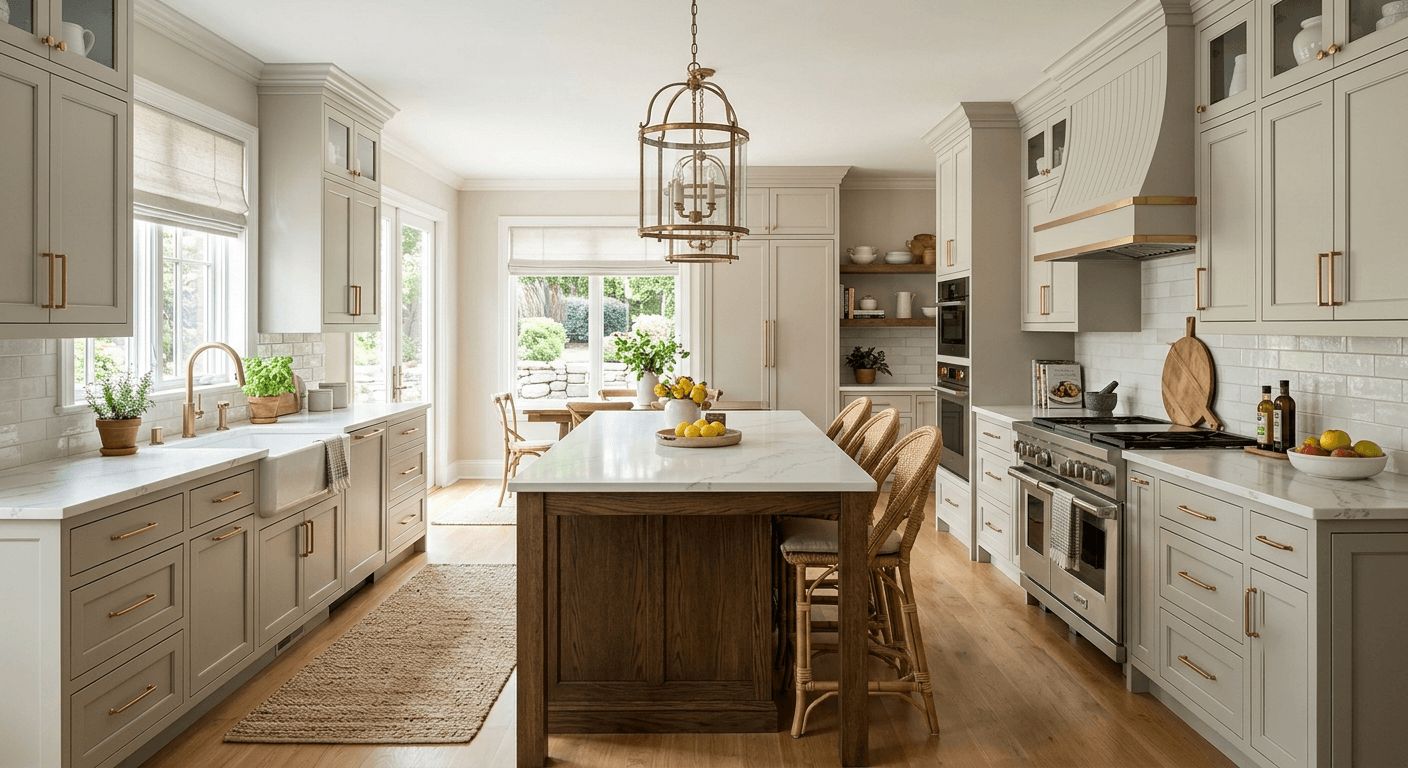
A kitchen renovation involves dozens of decisions, but the design style sets the foundation for every choice that follows. Style determines cabinetry lines, color palette, hardware finishes, countertop materials, and the overall mood of the room before a single product is selected.
Homeowners planning a remodel often encounter overlapping terms such as modern, contemporary, transitional, and farmhouse without a clear explanation of what separates one from another. Each style follows a distinct set of visual rules covering cabinet doors, materials, colors, and architectural details, and confusing two similar styles can lead to a kitchen that feels disjointed rather than cohesive.
This guide defines kitchen style as a concept, outlines the primary style categories used in residential design, and explains the visual cues that distinguish one style from the next. It also separates style from layout, a distinction that affects planning decisions differently, and closes with a practical framework for matching a style to a home’s architecture, budget, and long-term maintenance needs.
Use the sections below in order or jump directly to a specific style, a comparison of styles and layouts, or the selection criteria that apply to your renovation.
What Is a Kitchen Style?
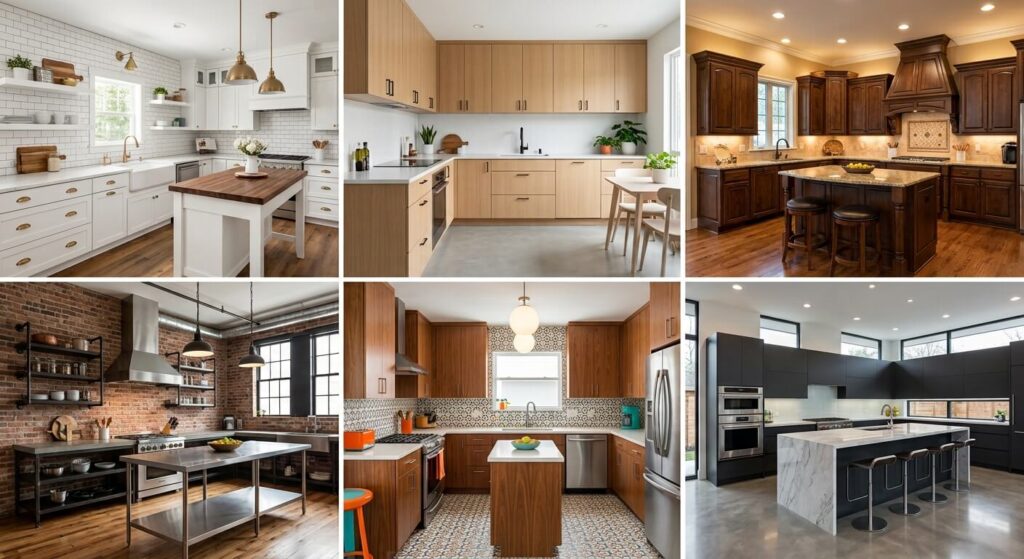
A kitchen style is the visual design language applied to a kitchen’s cabinetry, materials, colors, hardware, and finishes. It defines the aesthetic character of the room, including whether the space reads as ornate or minimal, warm or cool, historical or current.
Style governs appearance rather than function. Two kitchens with identical cabinet placement and workflow can display entirely different styles depending on door profiles, countertop materials, color choices, and decorative details. A farmhouse kitchen and a modern kitchen can share the same footprint while looking nothing alike.
Kitchen style differs from kitchen layout. Layout refers to the physical arrangement of cabinets, appliances, and work zones, such as a galley, U-shaped, or L-shaped configuration. Layout addresses circulation, workflow, and spatial efficiency. Style addresses the visual identity applied within that layout. A U-shaped kitchen can be finished in a Scandinavian style, an industrial style, or a traditional style without changing its underlying layout. The two concepts operate independently and require separate planning decisions during a renovation.
Types of Kitchen Styles
Ten kitchen styles account for most residential design projects: modern, contemporary, traditional, transitional, farmhouse, industrial, Scandinavian, coastal/cottage, minimalist, and rustic. Each style follows a recognizable combination of cabinet door profiles, materials, color ranges, and hardware choices.
The styles below are organized by their defining visual characteristics rather than by popularity or cost, since a single home may suit more than one style depending on its architecture and the homeowner’s preferences.
Modern Kitchen Style
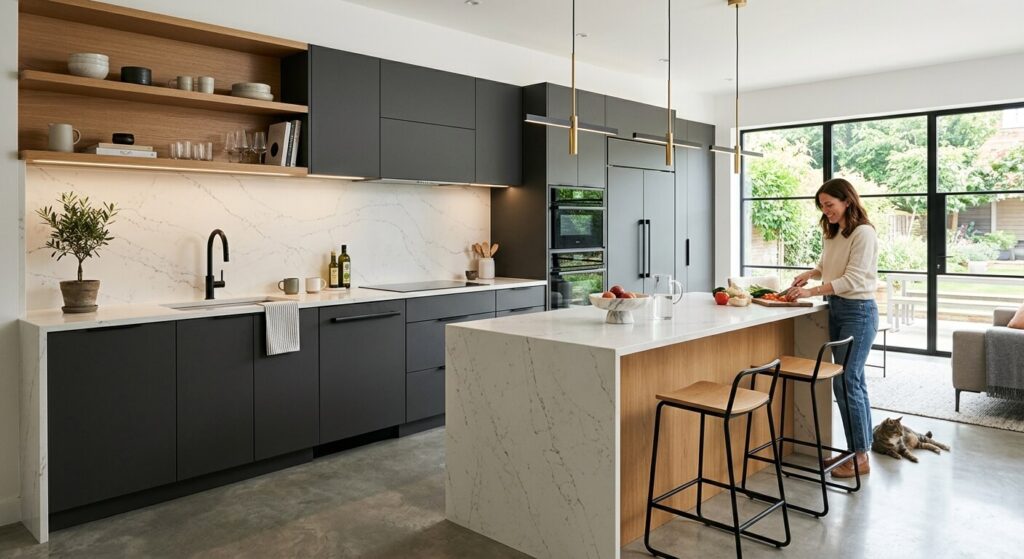
A modern kitchen style uses flat-panel cabinetry, minimal ornamentation, and a restrained material palette rooted in the early-to-mid-20th-century modernist movement. The style prioritizes clean geometric lines and function over decoration.
Modern kitchens rely on flat, slab-style cabinet doors without raised panels, moldings, or ornamental detail. Hardware is typically integrated or reduced to slim linear pulls, and some designs eliminate visible hardware entirely through push-to-open mechanisms. Sightlines stay uncluttered, with appliances often built in or paneled to match surrounding cabinetry.
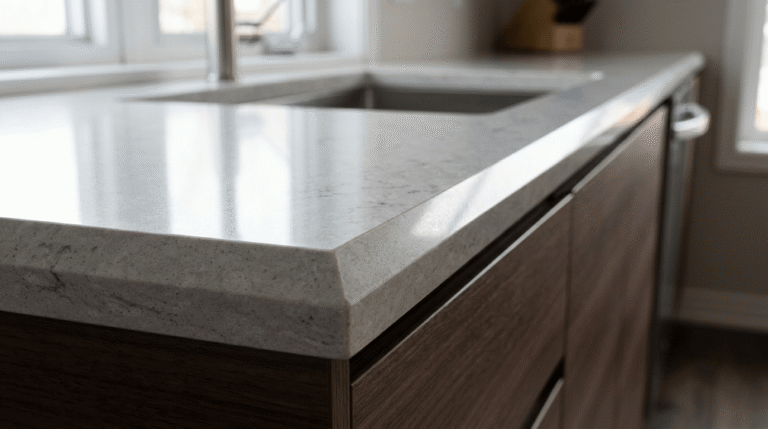
The color palette uses a limited range built around white, black, gray, and natural wood tones. Accent colors, when used, tend toward saturated single hues rather than multiple competing colors. Cabinet materials include high-gloss or matte lacquer, laminate, and thermofoil, paired with countertops in quartz, concrete, or stainless steel, with metal and glass appearing frequently in shelving and backsplash elements.
Modern style suits contemporary architecture, urban condominiums, and newly built homes where clean lines already define the exterior and interior structure. It applies less naturally to homes with heavy traditional millwork or ornate architectural detail.
Contemporary Kitchen Style
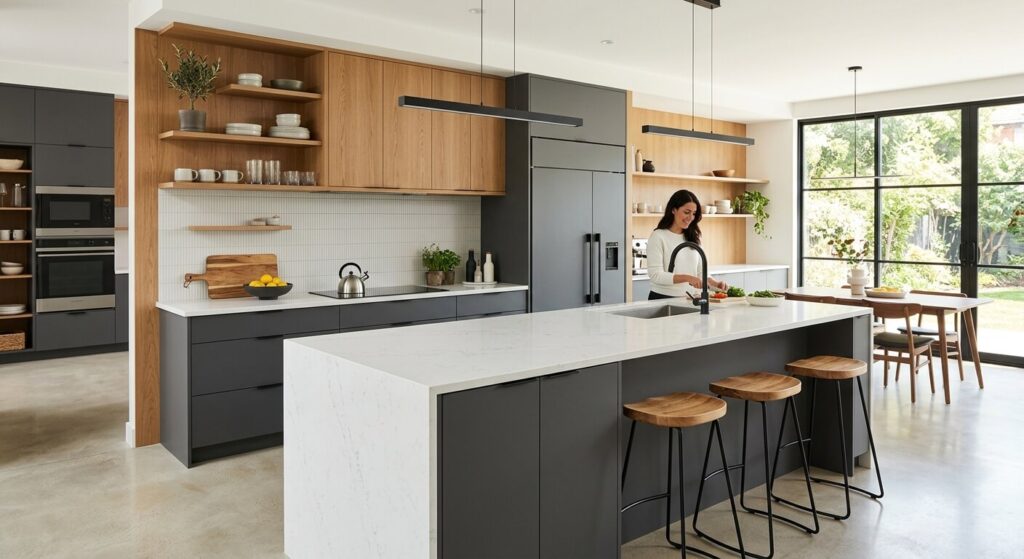
A contemporary kitchen style reflects current design trends rather than a fixed historical movement, which means its specific features shift over time as trends change. The defining trait of contemporary design is its responsiveness to the present moment rather than adherence to a single fixed rule set.
Contemporary kitchens often combine flat and slightly textured cabinet fronts, curved island edges, and mixed material combinations that update every few years. Unlike modern style, contemporary design permits more variation in texture, shape, and layered materials.
The color palette shifts with prevailing trends and frequently includes warm neutrals, soft greens, and matte black accents alongside white and gray bases. Cabinetry commonly uses matte-finish wood veneer, textured laminate, or painted MDF, paired with engineered stone countertops and mixed-metal hardware finishes such as brushed brass or matte black.
Contemporary style suits homeowners who want an updated, current look without committing to the strict geometric minimalism of modern design, and it adapts well to both new construction and renovated older homes.
Traditional Kitchen Style
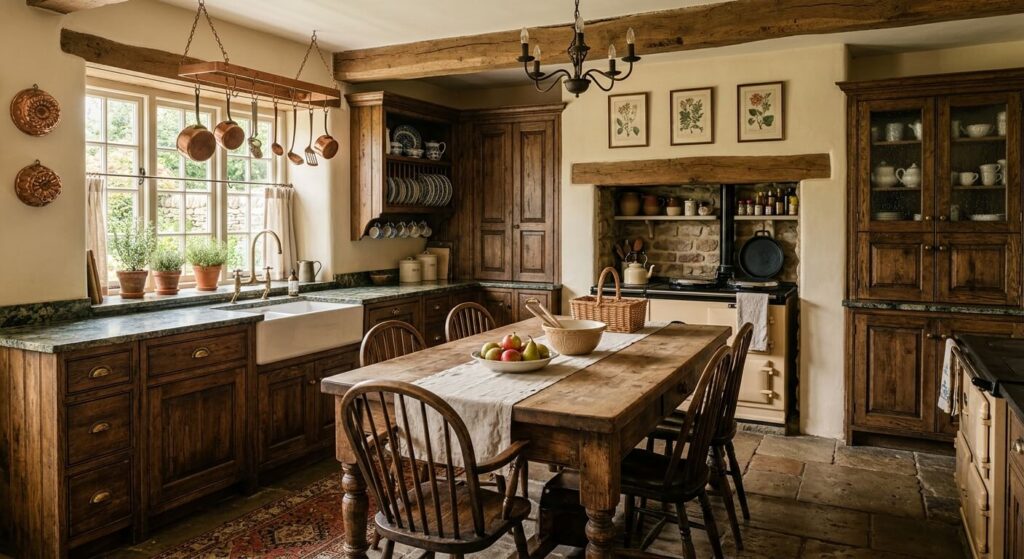
A traditional kitchen style draws on classical European design elements, including raised-panel cabinetry, decorative molding, and ornamental detail that reference 18th- and 19th-century interiors. Traditional design emphasizes symmetry, craftsmanship, and formal detailing.
Traditional kitchens feature raised-panel or inset cabinet doors, crown molding, decorative corbels, and furniture-style island legs. Glass-front upper cabinets and detailed range hoods reinforce the formal character of the room.
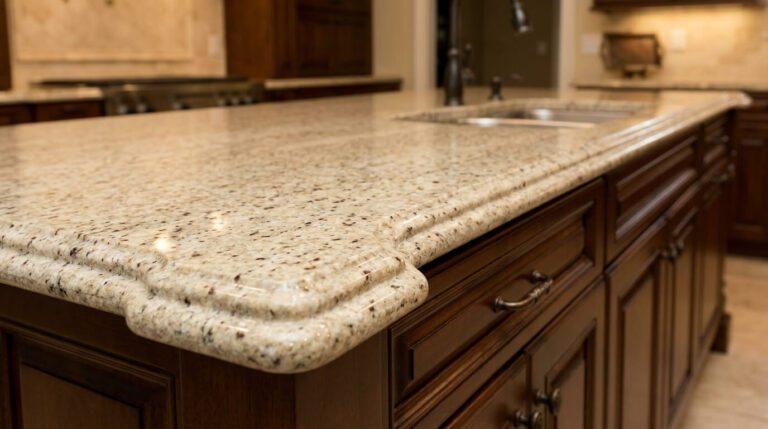
The color palette favors warm, muted tones such as cream, sage green, navy, and stained wood browns, often paired with white or off-white trim. Cabinets are typically built from solid wood species such as cherry, maple, or oak, finished with stain rather than paint in many cases, while countertops commonly use granite or marble and hardware favors bronze, brass, or oil-rubbed finishes.
Traditional style suits colonial, Georgian, and Victorian architecture, along with any home where existing millwork and formal proportions call for a matching level of detail.
Transitional Kitchen Style
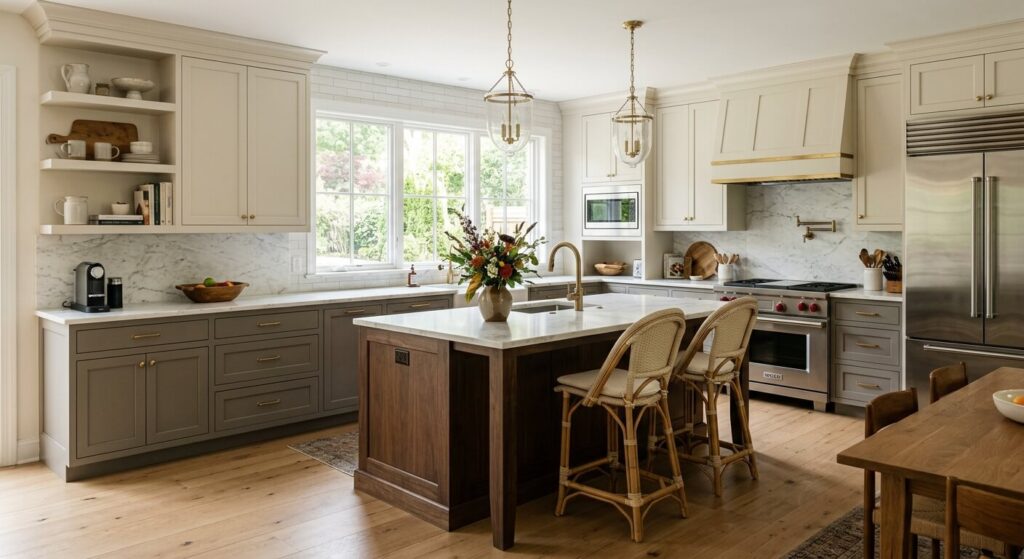
A transitional kitchen style blends traditional detailing with modern simplicity, combining classic cabinet shapes with a restrained color palette and updated materials. The style occupies the middle ground between ornate traditional design and stripped-down modern design.
Transitional kitchens use shaker-style cabinet doors, a profile that includes a simple recessed center panel without heavy ornamentation. Islands often serve as a design focal point, and hardware selections stay simple, favoring clean bar pulls over ornate knobs.
The color palette leans toward soft whites, warm grays, and greiges, sometimes paired with a contrasting island in navy, charcoal, or deep green. Shaker cabinets in painted wood or wood veneer pair with quartz or natural stone countertops, and mixed metal finishes, such as brushed nickel or matte black, are common throughout the space.
Transitional style suits a wide range of architecture because it avoids the strict formality of traditional design and the strict minimalism of modern design, making it a common choice for resale-focused renovations.
Farmhouse Kitchen Style
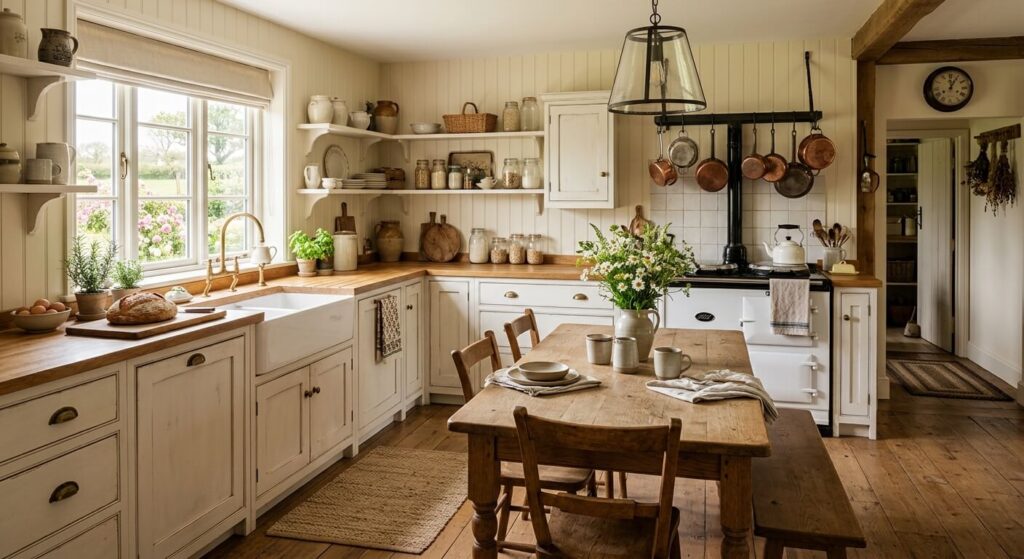
A farmhouse kitchen style reproduces the informal, functional character of rural American kitchens through beadboard paneling, apron-front sinks, and reclaimed or distressed wood finishes. The style emphasizes warmth and practicality over formality.
Farmhouse kitchens center on an apron-front (farmhouse) sink, open shelving, and shaker or beadboard cabinet doors. Exposed wood beams, board-and-batten paneling, and vintage-inspired fixtures reinforce the rural aesthetic.
The color palette relies heavily on white and off-white cabinetry paired with natural wood tones, sometimes accented with black, navy, or sage green on an island or lower cabinets. Cabinetry commonly uses painted wood with visible grain texture, paired with butcher block or soapstone countertops, and hardware favors black iron, bin pulls, and cup pulls in aged or matte finishes.
Farmhouse style suits rural properties, converted barns, and suburban homes seeking an informal, family-oriented kitchen, and it adapts well to older homes with existing wood structural elements.
Industrial Kitchen Style
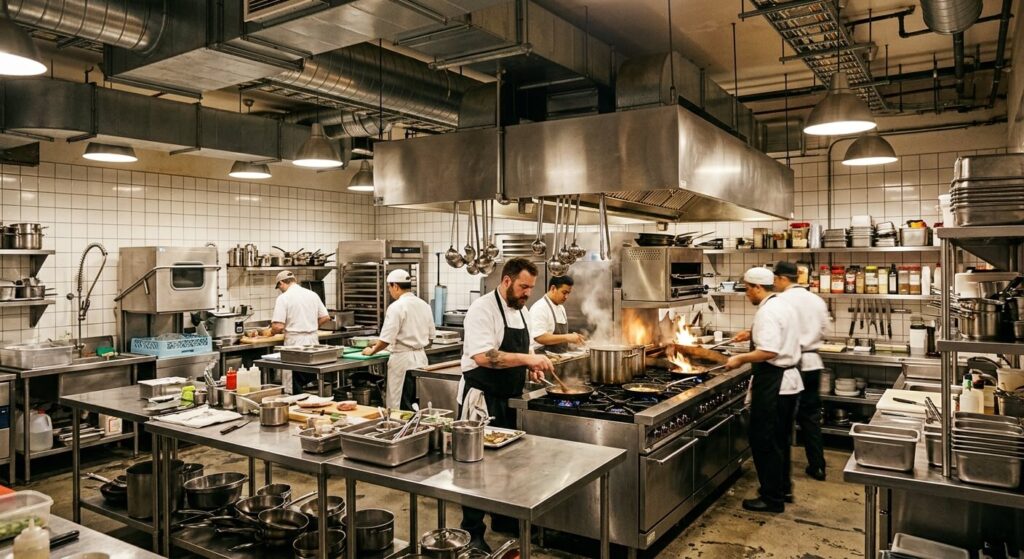
An industrial kitchen style borrows visual cues from converted warehouses and factories, using exposed materials such as brick, concrete, and metal in place of finished surfaces. The style treats structural elements as intentional design features rather than concealing them.
Industrial kitchens expose ductwork, pipes, and structural beams where possible, and often incorporate metal-frame shelving in place of upper cabinets. Cabinet doors in this style skew flat or slab-style, similar to modern design, but paired with rougher surrounding materials.
The color palette stays dark and muted, built around black, charcoal, gray, and raw metal tones, with minimal use of bright or saturated color. Cabinetry uses dark-stained or black-painted wood alongside metal-frame elements, paired with concrete or stainless-steel countertops, and exposed Edison-style bulbs and black metal hardware complete the material palette.
Industrial style suits converted lofts, warehouse conversions, and urban homes with exposed structural elements already visible, and it applies less naturally to homes with traditional architecture or limited ceiling height.
Scandinavian Kitchen Style
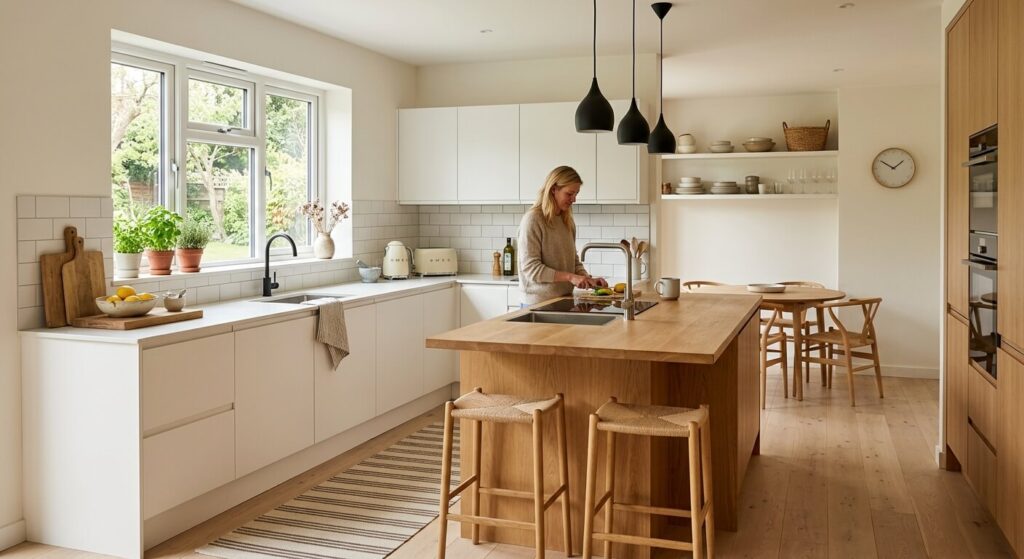
A Scandinavian kitchen style applies the Nordic design principles of light, simplicity, and natural materials to create a bright, uncluttered cooking space. The style prioritizes function and comfort within a restrained visual framework.
Scandinavian kitchens use flat or simple shaker cabinet doors, minimal hardware, and open or glass-front shelving to display functional objects. Natural light plays a central role, often reinforced through light wood flooring and pale wall colors.
The color palette centers on white, light gray, and pale wood tones, occasionally accented with soft pastels such as blush or sage. Cabinetry commonly uses light-toned wood, such as birch or ash, or white-painted surfaces, paired with light quartz or laminate countertops, and hardware stays minimal, often limited to slim metal pulls or recessed finger grips.
Scandinavian style suits smaller kitchens and homes in lower-light climates, since the palette and material choices are designed to maximize brightness and visual openness.
Coastal / Cottage Kitchen Style
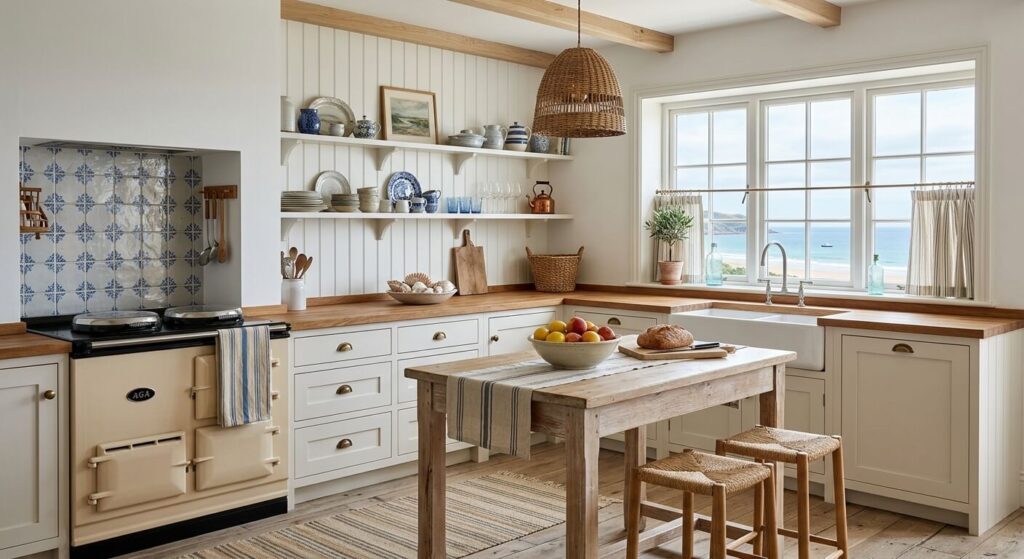
A coastal/cottage kitchen style evokes a relaxed seaside or countryside atmosphere through light color palettes, beadboard detailing, and natural textures such as rattan and woven fiber. The style favors an airy, informal character over rigid symmetry.
Coastal and cottage kitchens use shaker or beadboard cabinet doors, open shelving, and woven or rattan light fixtures. Vintage-inspired hardware and glass-front cabinets reinforce the informal, collected-over-time feel associated with the style.
Coastal palettes favor white, soft blue, and sandy neutral tones, while cottage palettes lean toward pastel colors such as pale yellow, mint, or blush pink. Cabinetry uses painted wood with a slightly distressed or weathered finish in many cottage designs, paired with butcher block, light quartz, or marble-look countertops, and hardware favors brushed nickel, unlacquered brass, or ceramic knobs.
Coastal style suits beach properties and homes in warm climates, while cottage style suits older homes with existing character detailing, such as cottages, bungalows, and craftsman-era houses.
Minimalist Kitchen Style
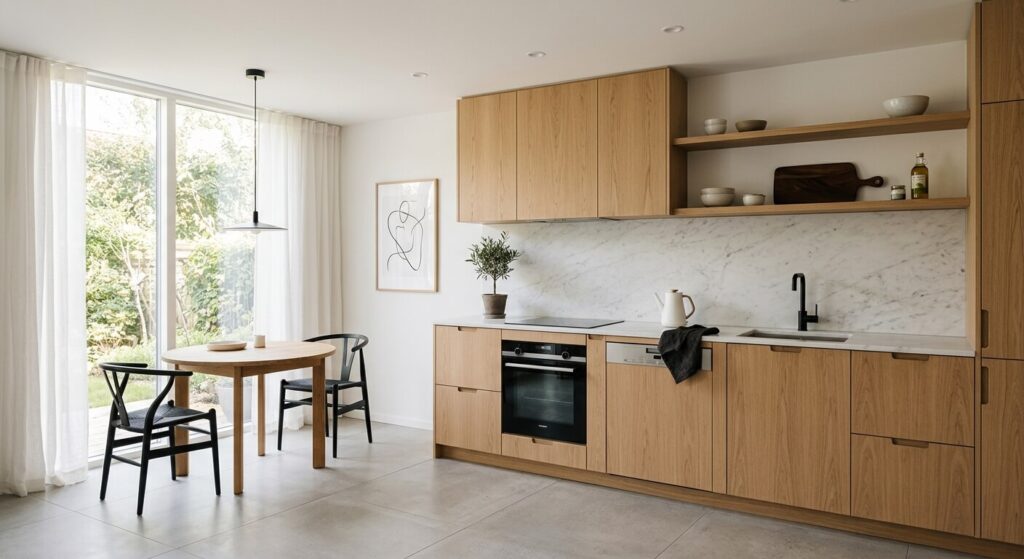
A minimalist kitchen style reduces visual elements to the smallest number necessary for function, eliminating decorative detail, visible hardware, and unnecessary material variation. The style shares roots with modern design but pushes restraint further.
Minimalist kitchens use handleless cabinet fronts, concealed appliances, and a single dominant material or color across most surfaces. Storage is fully enclosed, with no open shelving or displayed objects breaking the visual field.
The color palette uses one to two colors at most, typically white, gray, black, or a single wood tone, without secondary accent colors. Cabinetry uses flat lacquer, matte laminate, or a single wood veneer, paired with a single countertop material extended across the island and perimeter for visual continuity, and hardware is eliminated in favor of push-to-open mechanisms or integrated grooves.
Minimalist style suits smaller kitchens where visual simplicity increases the perceived sense of space, and it suits homeowners who prioritize a clutter-free environment over decorative variety.
Rustic Kitchen Style
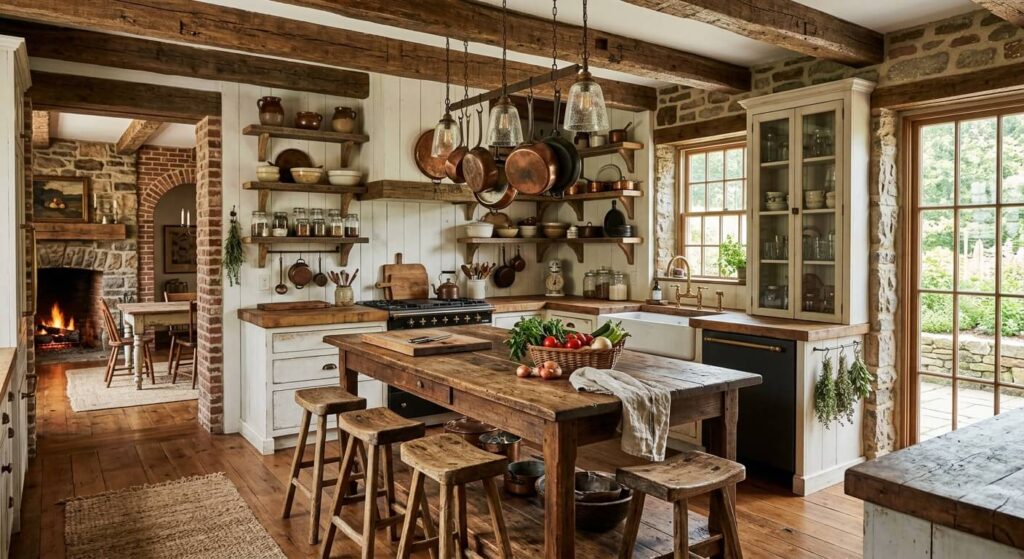
A rustic kitchen style emphasizes raw, natural materials with visible texture and imperfection, including exposed wood grain, stone, and hand-forged metal details. The style draws on cabin and mountain-lodge design traditions.
Rustic kitchens use solid wood cabinetry with visible knots and grain variation, often left unpainted or lightly stained. Open shelving, exposed wood beams, and stone accent walls appear frequently within the style.
The color palette relies on deep browns, warm wood tones, and stone grays, with minimal use of white or high-contrast color. Cabinetry uses solid wood species such as knotty pine, hickory, or reclaimed barn wood, paired with granite, soapstone, or butcher block countertops, and hardware favors wrought iron, hammered metal, or antler-style pulls.
Rustic style suits mountain homes, log cabins, and rural properties, and it applies less naturally to urban settings or homes without existing natural material context.
How to Identify a Kitchen Style by Its Visual Details
A kitchen style can be identified by examining four visual categories in sequence: cabinetry and hardware, color palette, materials and countertops, and lighting and decor accents. Comparing these details against the style descriptions above narrows an unfamiliar kitchen photo or showroom sample to a specific style category.
Each category functions as an independent diagnostic cue, since two styles can share one visual trait while differing on the others. Cross-referencing multiple categories produces a more accurate identification than relying on a single detail alone.
Cabinetry and Hardware Cues
Cabinet door profile provides the fastest visual cue for identifying kitchen style. A flat, slab-style door without raised panels signals modern, industrial, or minimalist design, while a recessed center panel with a simple frame signals shaker-based styles such as transitional, farmhouse, or coastal. A raised panel with decorative molding signals traditional design.
Hardware style narrows the identification further within these broader categories. Slim linear pulls or handleless fronts point toward modern or minimalist design, while bin pulls and black iron hardware point toward farmhouse style. Ornate bronze or brass hardware with detailed backplates points toward traditional design, and hammered or wrought-iron hardware points toward rustic style.
Color Palettes by Style
Color palette narrows style identification once cabinetry cues establish a general category. A single-tone palette limited to white, black, or gray typically indicates modern or minimalist style, while a warm neutral palette with an accent island color indicates transitional style.
Pastel and soft blue tones point toward coastal or cottage style, and deep, muted colors such as navy or sage green paired with stained wood point toward traditional design. Dark, monochrome palettes built around charcoal and raw metal point toward industrial style, and light wood tones combined with white surfaces point toward Scandinavian style.
Materials and Countertops by Style
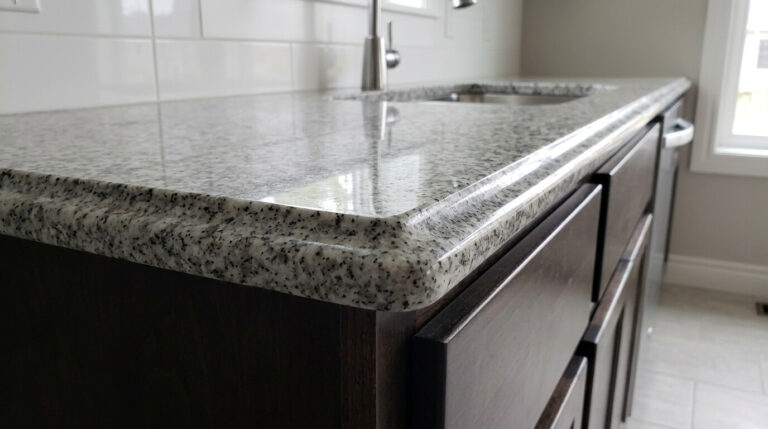
Countertop material reinforces style identification alongside cabinetry and color. Polished quartz and stainless steel point toward modern or minimalist design, while butcher block and soapstone point toward farmhouse or rustic style. Concrete countertops paired with exposed brick point toward industrial style.
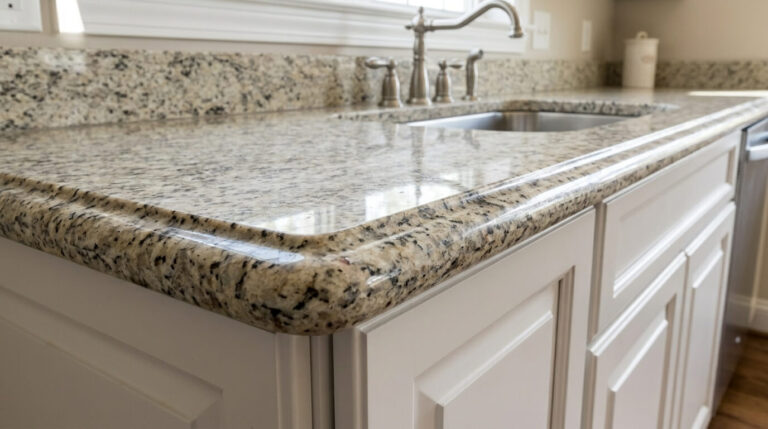
Marble and detailed granite point toward traditional design, particularly when paired with raised-panel cabinetry. Light-toned engineered stone paired with pale wood cabinetry points toward Scandinavian style, and honed or textured stone paired with a soft color palette points toward coastal or transitional style.
Lighting and Decor Accents
Lighting fixtures and decorative accents provide a final confirming detail once the primary style category is established. Exposed Edison-style bulbs and black metal fixtures confirm industrial style, while woven rattan or wicker fixtures confirm coastal or cottage style.
Sculptural pendant lighting with clean geometric forms confirms modern or contemporary style, and candelabra-style or crystal fixtures confirm traditional design. Simple, unobtrusive fixtures with minimal ornamentation confirm Scandinavian or minimalist style, and wrought-iron or antler-style fixtures confirm rustic style.
Most Popular Kitchen Styles Right Now
Transitional design ranks as the leading kitchen style heading into 2026, with <cite index=”3-1″>72% of industry professionals naming timeless, transitional designs as the most popular style over the next three years</cite> in a Laurysen Kitchens industry survey. The style’s blend of classic shaker cabinetry with a restrained, updated palette continues to outpace more extreme modern or traditional looks.
Warm wood cabinetry has displaced painted finishes as the dominant material trend. <cite index=”7-1″>A National Kitchen and Bathroom Association report found that 59% of respondents favored wood grain over painted cabinets, with 51% noting that white oak was the most popular wood type</cite>. This shift supports farmhouse, transitional, Scandinavian, and rustic styles, all of which rely on visible wood texture rather than solid paint color.
Within cabinet door profiles specifically, <cite index=”2-1″>Houzz’s 2026 Kitchen Trends Study found that Shaker cabinets remain the most popular choice, followed by flat-panel designs</cite>, confirming transitional and modern styles as the two leading design directions by cabinet silhouette. The same study found that <cite index=”2-1″>bar pulls dominate over knobs as the preferred hardware style, most often finished in brushed nickel, followed by black or brushed gold</cite>.
Texture-forward styles influenced by Japandi and Wabi Sabi design principles are also gaining visibility, layering natural materials such as limewash plaster, zellige tile, and honed stone into Scandinavian- and minimalist-adjacent kitchens. These trends favor matte finishes and organic surface variation over the high-gloss, uniform surfaces associated with earlier modern design.
Current pricing and finish preferences shift from year to year, so homeowners planning a renovation should confirm current material and style availability with a local kitchen designer or showroom before finalizing selections.
Kitchen Styles vs. Kitchen Layouts: What’s the Difference?
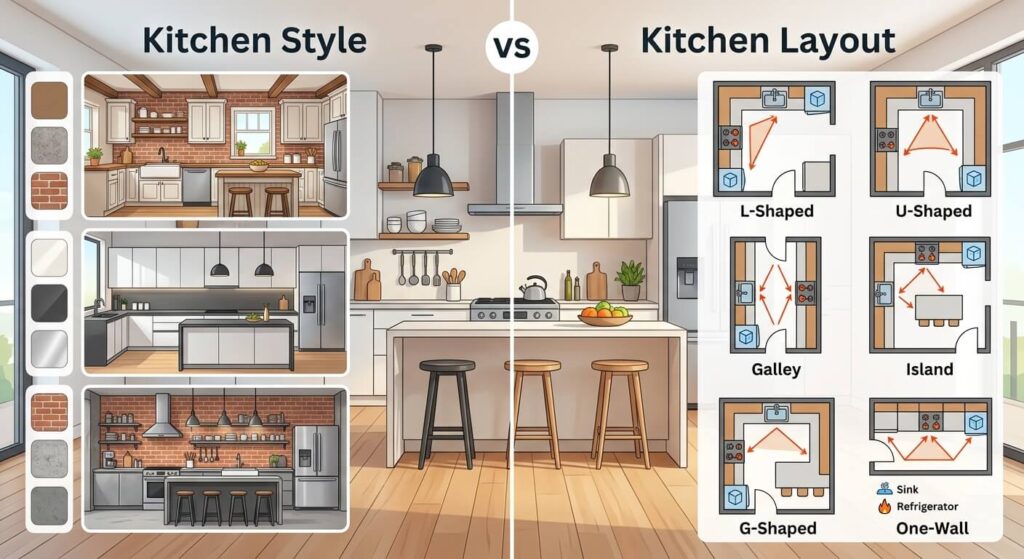
Kitchen style refers to the visual design applied to a kitchen, while kitchen layout refers to the physical arrangement of cabinets, appliances, and work zones within the room. Style determines appearance; layout determines function and workflow.
Layout categories include galley, L-shaped, U-shaped, single-wall, and island layouts, each defined by the position of the refrigerator, sink, and cooktop relative to one another and to the surrounding walls. These categories remain constant regardless of the style applied within them. A galley layout can be finished in a modern style, a farmhouse style, or a traditional style without altering its two-wall configuration.
Style and layout require separate planning processes during a renovation. Layout decisions depend on the kitchen’s square footage, plumbing and electrical locations, and the household’s workflow needs, while style decisions depend on the home’s architecture, the homeowner’s aesthetic preference, and budget. A renovation plan typically finalizes layout first, since structural and mechanical changes are more costly to reverse, before selecting the style elements that will finish the space.
Confusing the two terms during the planning process can lead to mismatched expectations, such as a homeowner requesting a “modern layout” when the intended change is actually a modern style applied to an existing layout. Clarifying which term applies to a specific renovation goal streamlines communication with designers and contractors.
How to Choose the Right Kitchen Style for Your Home
Choosing the right kitchen style requires evaluating four factors in sequence: the home’s existing architecture, the renovation budget, long-term maintenance requirements, and the balance between current trends and timeless appeal. Working through these factors in order narrows the ten style categories to a small number of realistic options.
No single factor determines the final choice independently. A style that matches the home’s architecture may exceed the available budget, and a style within budget may require more maintenance than the household is prepared to manage, which makes a sequential evaluation more reliable than choosing a style based on visual preference alone.
Match Style to Your Home’s Architecture
A kitchen style should align with the home’s existing architectural period and detailing to avoid a visual mismatch between the kitchen and the rest of the house. Traditional and farmhouse styles suit colonial, Victorian, and older rural homes, while modern and industrial styles suit contemporary builds and converted urban spaces.
Homes without a strong architectural identity, such as many suburban builds from recent decades, offer more flexibility and can accommodate transitional, contemporary, Scandinavian, or coastal styles without conflicting with existing structural details. Reviewing the home’s exterior trim, window style, and roofline before selecting a kitchen style helps confirm whether a strong stylistic statement will read as intentional or inconsistent.
Set a Budget for Your Chosen Style
A renovation budget directly limits which kitchen styles remain achievable, since material and labor costs vary significantly across cabinetry types, countertop materials, and custom detailing. Traditional and rustic styles, which rely on solid wood cabinetry, custom millwork, and natural stone, typically carry higher material costs than laminate-based modern or minimalist designs.
Setting a budget range before selecting a style, rather than after, prevents a homeowner from committing emotionally to a style that exceeds available funds. A kitchen designer or contractor can provide estimated cost ranges for cabinetry, countertops, and hardware once a preferred style and rough budget are established, allowing adjustments to material grade without abandoning the overall style direction.
Consider Maintenance and Longevity
Maintenance requirements vary by material choice within each kitchen style, making ongoing upkeep an important factor separate from initial cost. Natural stone countertops common in traditional and rustic kitchens, such as marble, require periodic sealing and careful handling to prevent staining, while engineered quartz used in modern and minimalist kitchens resists staining without sealing.
Open shelving, common in farmhouse and coastal styles, requires more frequent cleaning than enclosed cabinetry, since displayed items collect dust and kitchen residue. Matte and unlacquered metal finishes, popular across several styles, develop a natural patina over time, which some homeowners consider desirable and others consider a maintenance concern. Evaluating each material’s upkeep requirements against household habits helps prevent long-term dissatisfaction with an otherwise well-matched style.
Weigh Trend vs. Timeless Appeal
Kitchen styles vary in how closely they track short-term design trends versus long-term stability, which affects how long a renovation will look current before requiring an update. Transitional, traditional, and Scandinavian styles tend to age slowly, since their core elements have remained consistent across multiple design cycles.
Contemporary style, by definition, shifts with current trends and may require more frequent updates to specific finishes, colors, or hardware to remain visually current. Homeowners planning to remain in a home for many years often prioritize timeless styles to avoid a premature sense of dated design, while homeowners renovating for near-term resale may prioritize current trends that appeal to active buyers. Balancing this trade-off against the expected length of homeownership helps determine how much weight to give current trend reports when finalizing a style decision.
Where to Find More Kitchen Style Inspiration
Kitchen style inspiration is available through design publications, manufacturer galleries, and in-person showroom visits, each offering a different level of detail for planning a renovation. Design publications and industry trend reports provide a broad overview of current style directions and material preferences across the market.
Cabinet and countertop manufacturers publish project galleries organized by style category, allowing direct comparison of cabinetry profiles, hardware finishes, and material combinations within a single style. Local kitchen showrooms and design centers allow homeowners to view materials in person, which reveals texture, finish, and color accuracy that photographs cannot fully convey.
Working directly with a kitchen designer or architect provides the most tailored inspiration, since a professional can translate general style preferences into options suited to a specific home’s layout, architecture, and budget constraints.