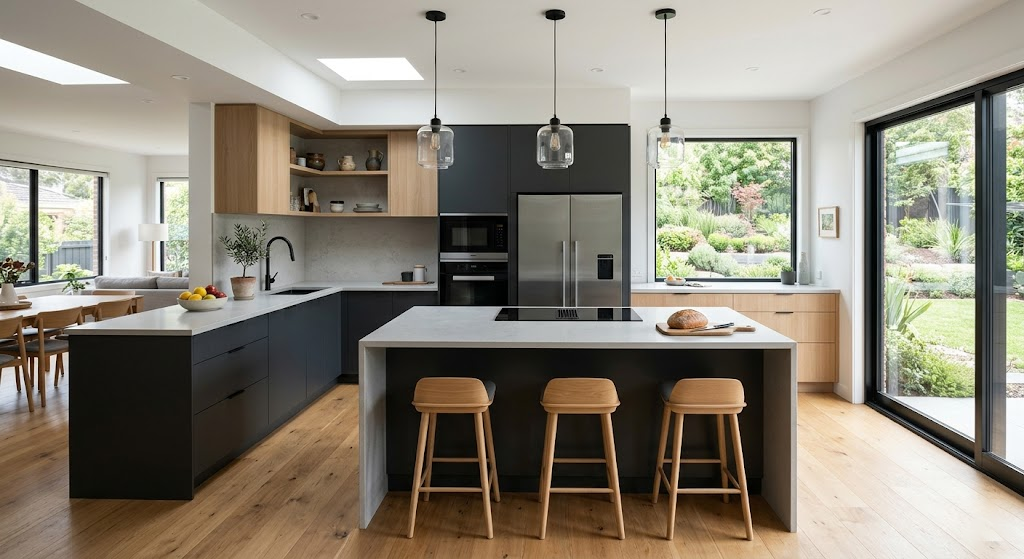
A kitchen remodel budget is a planned allocation of money across scope, materials, labor, permits, and contingency. The final cost depends on 4 primary factors: kitchen size, project scope, material grade, and local labor rates.
A minor kitchen remodel keeps the existing layout and updates visible surfaces. A major kitchen remodel replaces cabinets, appliances, flooring, countertops, lighting, plumbing fixtures, and sometimes the layout. Houzz reports a national median spend of $20,000 for minor kitchen remodels and $60,000 for major kitchen remodels, while high-end projects reach $67,000 and $180,000 at the 90th percentile.
The best kitchen remodel budget balances 4 goals: daily function, durable materials, resale value, and personal lifestyle. Spend the most on cabinets, layout function, installation quality, durable countertops, and appliances used daily. Save money on cosmetic upgrades, layout changes, decorative finishes, and premium features that do not improve cooking, storage, cleaning, or traffic flow.
Kitchen Remodel Budget Breakdown
A kitchen remodel budget breaks into materials, labor, installation, design, fixtures, permits, and contingency. A practical starting point is the NKBA percentage model: cabinetry and hardware at 29%, installation at 17%, appliances and ventilation at 14%, countertops at 10%, flooring at 7%, lighting at 5%, walls and ceilings at 5%, design fees at 4%, doors and windows at 4%, faucets and plumbing at 4%, and other costs at 1%.
| Budget Category | Typical Share | What It Covers | Budget Priority |
|---|---|---|---|
| Cabinetry and hardware | 29% | Cabinet boxes, doors, drawers, hardware, inserts | High |
| Installation and labor | 17% | Contractor labor, carpentry, trade coordination | High |
| Appliances and ventilation | 14% | Refrigerator, range, oven, dishwasher, hood | Medium to high |
| Countertops | 10% | Material, fabrication, edge profile, installation | High |
| Flooring | 7% | Tile, LVP, engineered wood, hardwood | Medium |
| Lighting | 5% | Recessed lights, pendants, under-cabinet lighting | Medium |
| Walls and ceilings | 5% | Drywall, paint, trim, surface repair | Medium |
| Design fees | 4% | Space planning, drawings, finish selections | Medium |
| Doors and windows | 4% | Openings, trim, replacement units | Low to medium |
| Faucets and plumbing | 4% | Sink, faucet, disposal, supply lines | Medium |
| Other | 1% | Small materials, miscellaneous items | Low |
A percentage model gives structure, not a fixed rule. A small kitchen with high-end appliances may spend more than 14% on appliances. A large kitchen with custom cabinetry may spend more than 29% on cabinets. A remodel that moves plumbing, gas, or walls shifts more money into labor, permits, and repairs.
Cabinets
Cabinets often take the largest part of a kitchen remodel budget because cabinets control storage, layout, visual style, installation labor, and long-term durability. Houzz reports that 69% of renovating homeowners replace all cabinets, 27% complete partial cabinet projects, and 55% of partial cabinet upgrades involve exterior refinishing.
Replace cabinets when boxes are damaged, layouts waste storage, drawers fail, water damage exists, or the remodel changes appliance locations. Reface cabinets when boxes are solid but doors, drawer fronts, and finishes look dated. Repaint cabinets when the layout works and the main problem is color. Use stock cabinets for the lowest cabinet cost. Use semi-custom cabinets for better sizes, finishes, and storage features. Use custom cabinets when the kitchen has unusual dimensions, inset doors, complex islands, or high-end millwork.
A smart cabinet budget separates appearance from structure. Door style, finish, and hardware create visual impact. Box construction, drawer glides, hinges, shelves, and installation accuracy create performance. Spend more on plywood boxes, strong drawer hardware, soft-close hinges, proper leveling, and storage accessories used daily.
Countertops
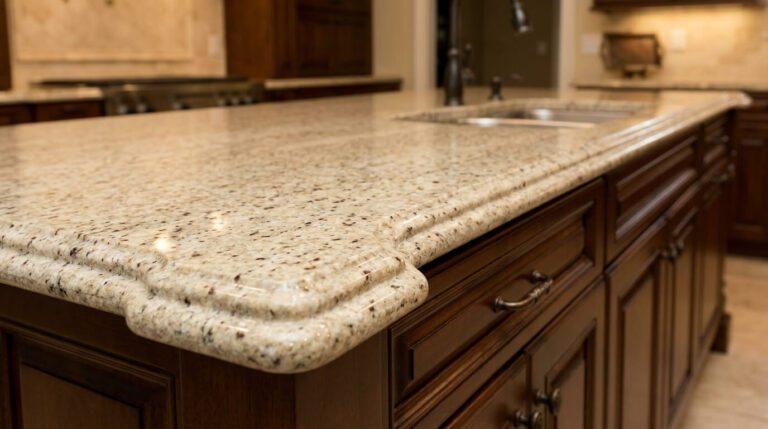
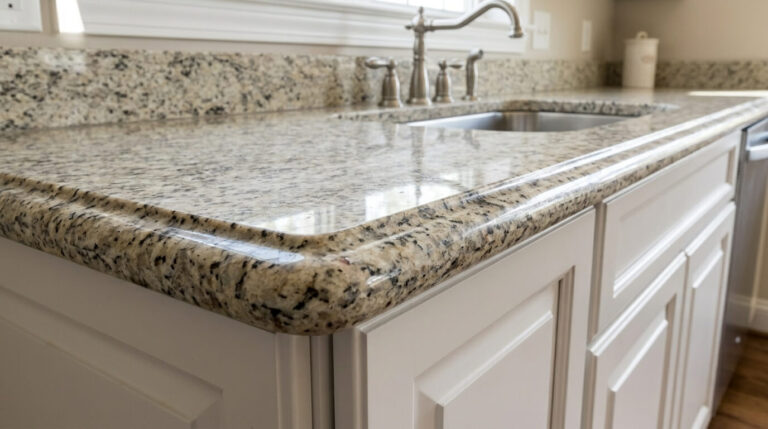
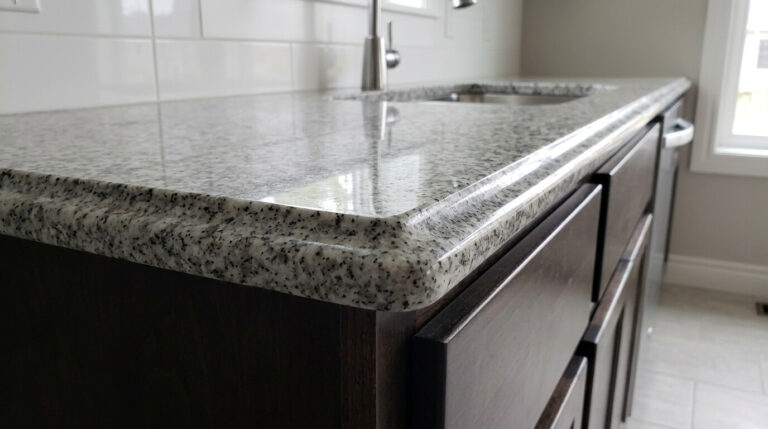
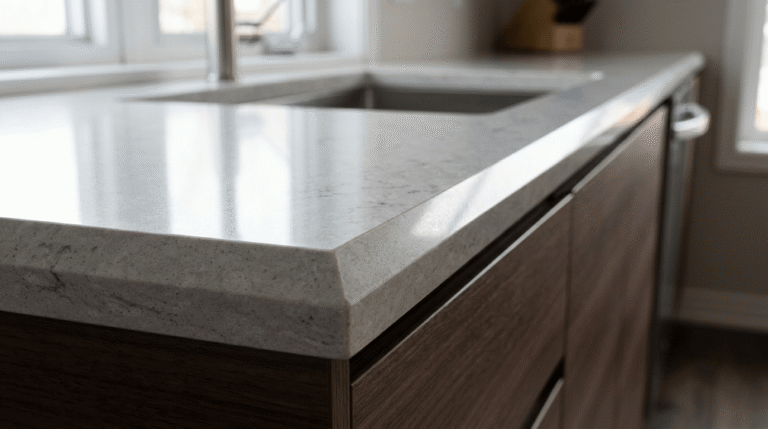
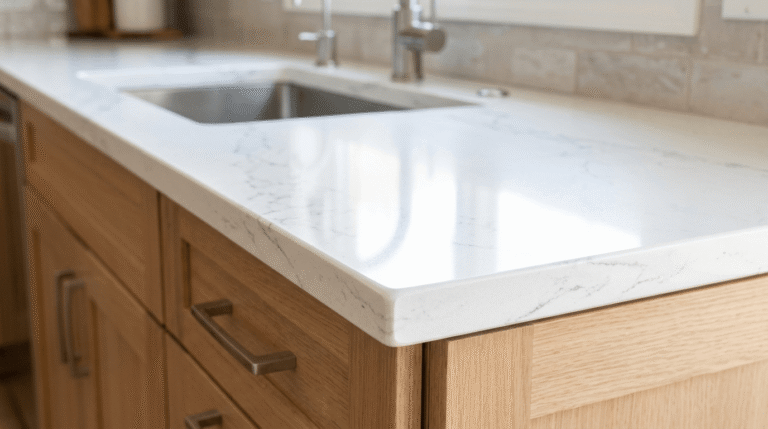
Countertops are high-contact kitchen surfaces that affect durability, cleaning, food prep, and visual value. Engineered quartz is the top countertop material in the 2025 Houzz kitchen study, with 39% of renovating homeowners choosing it. Granite follows at 19%, quartzite at 11%, butcher block or wood slab at 9%, and marble at 4%.
Laminate is the lowest-cost countertop option. It works for budget remodels, rental kitchens, and short-term ownership plans. Butcher block adds warmth and works well on islands, but wood needs sealing and care near sinks. Solid surface gives seamless repairable surfaces and moderate durability. Granite offers natural stone variation and heat resistance, but sealing requirements vary by stone. Quartz offers consistent appearance, strong stain resistance, and low maintenance. Porcelain gives thin profiles, heat resistance, and a modern slab look, but fabrication and edge work can raise cost.
Spend more on countertops when the kitchen receives heavy daily use, the island is a main prep zone, or the countertop choice defines the kitchen design. Save money by choosing a standard edge, using remnants for small sections, limiting waterfall panels, and avoiding exotic slabs with high fabrication waste.
Appliances
An appliance budget is a usage-based budget for cooking, refrigeration, cleaning, ventilation, and specialty functions. Spend more on appliances used daily and spend less on premium features that do not match cooking habits.
A household that cooks daily benefits from a reliable range, cooktop, oven, dishwasher, refrigerator, and ventilation hood. A household that reheats meals more often than cooking from scratch benefits from a strong microwave, refrigerator, dishwasher, and simple range. Houzz reports that quality is the top reason for choosing large appliances at 64%, followed by look and feel at 50%, cost at 29%, size at 27%, specialty features at 25%, and energy efficiency at 22%.
Avoid overspending on unused specialty features. Steam ovens, wine refrigerators, built-in coffee systems, panel-ready refrigeration, and smart controls add cost. These features make sense when they match daily routines, storage goals, or resale expectations in the local market.
Flooring
Kitchen flooring is a water-exposed, high-traffic surface that affects safety, cleaning, comfort, and installation cost. The best flooring choice depends on moisture exposure, subfloor condition, household activity, and design continuity.
Tile is durable, water-resistant, and strong for heavy-use kitchens. Porcelain tile performs better than many ceramic options in wet areas. Luxury vinyl plank is water-resistant, softer underfoot, and often less expensive to install than tile. Engineered wood creates a warmer look and handles dimensional movement better than solid hardwood in many kitchens. Hardwood provides visual continuity in open floor plans, but water exposure and refinishing needs affect long-term maintenance.
Save money on flooring by keeping the same footprint, avoiding complex patterns, and selecting standard plank or tile sizes. Spend more when the subfloor needs leveling, waterproofing, crack isolation, or structural repair. Installation quality matters because uneven subfloors cause tile cracking, plank separation, and visible transitions.
Lighting
Kitchen lighting is a functional system for prep work, cooking, cleaning, safety, and design depth. A complete lighting plan includes task lighting, ambient lighting, accent lighting, and dimming control.
Recessed lights and under-cabinet lights dominate renovated kitchen lighting choices, with Houzz reporting 73% of homeowners selecting recessed lights and 71% selecting under-cabinet lights. Pendant lights are also common, selected by 57% of homeowners.
Use recessed lights for general illumination. Use under-cabinet lighting for counters, prep zones, and backsplash visibility. Use pendants over islands and peninsulas for task light and design emphasis. Use dimmers to control brightness during cooking, cleaning, dining, and evening use. Save money by finalizing the lighting plan before drywall repair and cabinet installation, because late electrical changes add labor.
Plumbing Fixtures
Plumbing fixtures are daily-use kitchen components that affect cleaning, water control, sink performance, and repair frequency. The main fixture budget includes the sink, faucet, garbage disposal, drain assembly, supply lines, shutoff valves, dishwasher connection, refrigerator water line, and pot filler when specified.
Spend more on a durable faucet, deep sink, quality drain hardware, and reliable disposal when the kitchen handles heavy cooking and cleaning. Stainless steel sinks remain practical because they resist impact and match many appliance finishes. Fireclay and cast iron sinks create a traditional look, but weight and installation requirements can add labor. Pull-down faucets, touch controls, water-efficient features, and filtered water lines add convenience when they match daily use.
Save money by keeping the sink in the same location. Moving a sink often adds plumbing labor, cabinet changes, countertop cutout changes, venting work, and permit requirements.
Backsplash
A backsplash is a lower-cost design upgrade that protects walls and creates visual connection between cabinets and countertops. Tile remains the most flexible backsplash choice because material cost, pattern, color, and labor can scale up or down.
Houzz reports that full backsplash coverage up to cabinets or the range hood is selected by 67% of homeowners, while 12% extend backsplashes to the ceiling and more than three-quarters choose tile for upgraded backsplashes.
Ceramic tile is budget-friendly and widely available. Porcelain tile improves durability and water resistance. Handmade tile adds texture but increases installation time. Slab backsplash creates a cleaner high-end look when matched to countertops, but material and fabrication costs rise. Peel-and-stick backsplash works for temporary updates, rental units, or low-budget cosmetic refreshes, but durability and heat resistance vary by product.
Save money by using a simple running bond pattern, standard grout lines, and tile sizes that require fewer cuts. Spend more when the backsplash is the main design feature, the wall has many outlets, or the design uses slab, mosaic, handmade tile, or ceiling-height coverage.
Labor and Installation
Labor and installation are the coordinated work that turns design, materials, and permits into a functioning kitchen. Labor can become one of the biggest expenses because kitchen remodeling combines carpentry, demolition, electrical, plumbing, drywall, flooring, cabinet installation, countertop fabrication, painting, and finish work.
Contractors manage schedule, trades, sequencing, inspections, and jobsite problem solving. Designers improve layout, storage, clearances, material selections, and ordering accuracy. Electricians handle lighting, outlets, appliance circuits, panels, and code requirements. Plumbers handle sinks, dishwashers, disposals, water lines, drains, vents, and gas connections where allowed. Cabinet, countertop, tile, and flooring installers control the finished appearance.
DIY works best for low-risk tasks such as painting, hardware replacement, basic demolition, and simple backsplash installation. Electrical, plumbing, gas, structural changes, and complex tile or cabinet installation belong to licensed or skilled professionals. Poor installation can damage expensive materials and create repair costs that exceed the original labor savings.
Permits and Hidden Costs
Permits and hidden costs are non-finish expenses that protect safety, code compliance, scheduling, and project completion. Common hidden costs include building permits, electrical permits, plumbing permits, inspections, demolition disposal, dumpster rental, delivery fees, material storage, temporary kitchen setup, dust protection, floor protection, and unexpected repair work.
Older kitchens often reveal outdated wiring, ungrounded outlets, old plumbing, water damage, uneven floors, damaged subfloors, mold, or framing issues after demolition. A layout change can expose more hidden costs because moving walls, sinks, ranges, or refrigerators affects electrical, plumbing, ventilation, flooring, drywall, and structural work.
Budget for hidden costs before selecting final finishes. A project with no permit allowance, no delivery allowance, and no contingency can lose control after demolition starts.
Where Should You Spend the Most Money in a Kitchen Remodel?
The largest kitchen remodel investments usually belong in cabinets, layout improvements, durable countertops, quality installation, and daily-use appliances. These categories affect storage, traffic flow, cooking performance, cleaning, and long-term durability.
Spend the most money on:
- Cabinets: Cabinet boxes, drawers, hinges, and storage features carry daily use.
- Layout: Better appliance placement, wider walkways, and improved work zones increase function.
- Countertops: Durable prep surfaces reduce maintenance and replacement risk.
- Installation: Skilled labor protects cabinets, tile, flooring, plumbing, and electrical systems.
- Daily-use appliances: Refrigerator, range, dishwasher, and ventilation affect routine performance.
A minor kitchen remodel also has strong resale relevance. Zonda’s 2025 Cost vs. Value Report lists minor kitchen remodel as the only interior project in the national top 5, with an average job cost of $28,458, resale value of $32,141, and cost recouped of 112.9%.
Where Can You Save Money During a Kitchen Remodel?
The best kitchen remodel savings come from keeping the same layout, refinishing cabinets, choosing mid-range materials, shopping appliance sales, and limiting custom work. These choices reduce labor, waste, lead times, and change orders.
Save money by keeping plumbing, gas, and electrical locations in place. Repaint or reface cabinets when cabinet boxes remain solid. Choose stock or semi-custom cabinets instead of full custom cabinets. Select quartz, laminate, solid surface, or butcher block based on use rather than trend. Buy appliances during seasonal sales after measurements are confirmed. Use standard tile patterns, standard cabinet sizes, and standard countertop edges.
Avoid saving money on installation quality, waterproofing, electrical safety, plumbing reliability, and ventilation. Low-cost labor can create crooked cabinets, failed grout, uneven floors, appliance fit problems, leaks, and inspection delays.
Is It Worth Changing the Kitchen Layout?
Changing the kitchen layout is worth the cost when the existing layout creates poor storage, unsafe traffic flow, appliance conflicts, or unusable prep space. Layout changes become unnecessary cost when the current appliance triangle, walkways, sink location, and storage zones already work.
Houzz reports that 64% of homeowners renovate within the original kitchen square footage, while 35% increase the footprint. Among expansions, 29% use dining room space, 18% build a home addition, and 12% use living room space.
A layout change often adds plumbing, electrical, flooring, drywall, structural, and permit costs. Moving a sink changes water lines, drains, vents, cabinets, countertops, and flooring. Moving a range can affect gas, electrical circuits, ventilation, and hood ducting. Removing a wall can require engineering, beams, patching, permits, and inspections.
Keep the layout when the kitchen functions well and the budget is limited. Change the layout when the cost creates measurable gains in storage, prep space, accessibility, appliance clearance, or household traffic.
How Much Should You Set Aside for Unexpected Costs?
Set aside 10% to 20% of the kitchen remodel budget for unexpected costs, with higher contingency for older homes, layout changes, and full demolition. A $40,000 remodel needs a $4,000 to $8,000 contingency. A $75,000 remodel needs a $7,500 to $15,000 contingency.
Use the contingency for unknown conditions, not upgrades. Valid contingency uses include damaged subfloors, old plumbing, unsafe wiring, water damage, mold remediation, code corrections, structural blocking, or delivery-related replacement costs.
A 10% contingency fits a cosmetic remodel with known conditions. A 15% contingency fits a standard remodel with cabinet, countertop, appliance, lighting, and flooring updates. A 20% contingency fits older homes, wall removal, moved plumbing, moved gas, or complex permit work.
Should You DIY Any Part of a Kitchen Remodel?
DIY works for low-risk kitchen remodel tasks such as painting, hardware replacement, simple demolition, basic backsplash installation, and temporary kitchen setup. Licensed professionals fit electrical, plumbing, gas, structural, and permit-controlled work.
DIY painting can reduce labor cost when surfaces are prepared correctly. DIY hardware replacement can refresh cabinets with limited risk. DIY demolition can save money when utilities are disconnected and load-bearing elements are untouched. DIY backsplash can work with simple tile, level walls, and standard patterns.
Do not DIY panel upgrades, new circuits, gas lines, sink relocation, structural wall removal, complex waterproofing, or stone countertop fabrication. These tasks affect safety, insurance, inspections, and long-term performance.
What Kitchen Upgrades Add the Most Value?
The kitchen upgrades that add the most value are better storage, improved layout, durable countertops, updated lighting, quality cabinets, and energy-efficient appliances. These upgrades improve daily use and buyer appeal.
High-value kitchen upgrades include:
- Storage upgrades: Deep drawers, pantry cabinets, pull-outs, tray dividers, and trash pull-outs.
- Layout improvements: Clear walkways, better prep zones, and correct appliance clearances.
- Durable countertops: Quartz, granite, porcelain, solid surface, or practical wood sections.
- Lighting upgrades: Recessed lights, under-cabinet lights, pendants, and dimmers.
- Cabinet upgrades: Strong boxes, functional drawers, reliable hinges, and lasting finishes.
- Efficient appliances: Right-sized refrigerator, dishwasher, range, and ventilation.
Resale value depends on the local market, home price range, neighborhood expectations, and project scope. A modest, functional kitchen often performs better at resale than a highly personalized luxury kitchen.
Sample Kitchen Remodel Budgets
Sample kitchen remodel budgets show how scope controls spending more than kitchen size alone. Houzz reports national median spend of $20,000 for minor remodels and $60,000 for major remodels, with larger kitchens and high-end remodels reaching much higher figures.
| Budget Level | Likely Scope | Best Priorities | Avoid Overspending On |
|---|---|---|---|
| Small remodel: $15,000–$30,000 | Paint, hardware, lighting, backsplash, appliance swap, minor countertop update | Cabinet repainting, lighting, faucet, backsplash, durable flooring repair | Moving plumbing, custom cabinets, luxury appliances |
| Mid-range remodel: $40,000–$80,000 | New cabinets, countertops, appliances, flooring, lighting, sink, faucet | Semi-custom cabinets, quartz or granite counters, quality labor, daily-use appliances | Exotic stone, full custom millwork, complex layout changes |
| High-end remodel: $100,000–$180,000+ | Layout change, custom cabinets, premium appliances, stone slabs, large island, structural work | Layout, custom storage, professional installation, ventilation, durable finishes | Trend-only finishes, unused specialty appliances, excessive customization |
A $25,000 kitchen remodel works best as a controlled refresh. A $60,000 kitchen remodel can support a full replacement without major structural changes. A $150,000 kitchen remodel fits high-end materials, custom cabinetry, footprint changes, and premium labor.
Common Kitchen Remodel Budget Mistakes
Common kitchen remodel budget mistakes are planning errors that increase labor, delay installation, or force expensive substitutions. The biggest mistakes are no contingency, mid-project changes, looks-first material choices, underestimated labor, ignored permits, and late appliance purchases.
Avoid these 6 mistakes:
- Skipping contingency: Demolition can reveal wiring, plumbing, flooring, or water damage.
- Changing plans mid-project: Change orders increase labor, delay trades, and disrupt material orders.
- Choosing looks over durability: High-maintenance finishes fail faster in heavy-use kitchens.
- Underestimating labor: Cabinet, tile, electrical, plumbing, and countertop installation require skilled work.
- Ignoring permits: Unpermitted work can affect inspections, insurance, safety, and resale.
- Buying appliances too late: Appliance dimensions control cabinets, electrical, plumbing, and countertop openings.
Prevent budget mistakes by finalizing the layout, cabinet plan, appliance specifications, finish schedule, lighting plan, and permit requirements before demolition begins.
Final Thoughts: Spend Where It Improves Daily Use
The best kitchen remodel budget is a function-first spending plan that balances daily use, durability, resale value, and lifestyle. Cabinets, layout, installation quality, countertops, lighting, and daily-use appliances deserve priority because these elements control how the kitchen works every day.
Plan priorities before requesting quotes. Define the remodel scope, keep the layout when possible, assign a 10% to 20% contingency, choose materials by durability and maintenance, and compare contractor estimates by scope rather than total price alone. A disciplined kitchen remodel budget spends money where the kitchen gains storage, safety, comfort, and long-term value.