l shaped kitchen cost layout types materials tips

L-Shaped Kitchen Design: Layout Ideas, Materials, Cost & Tips

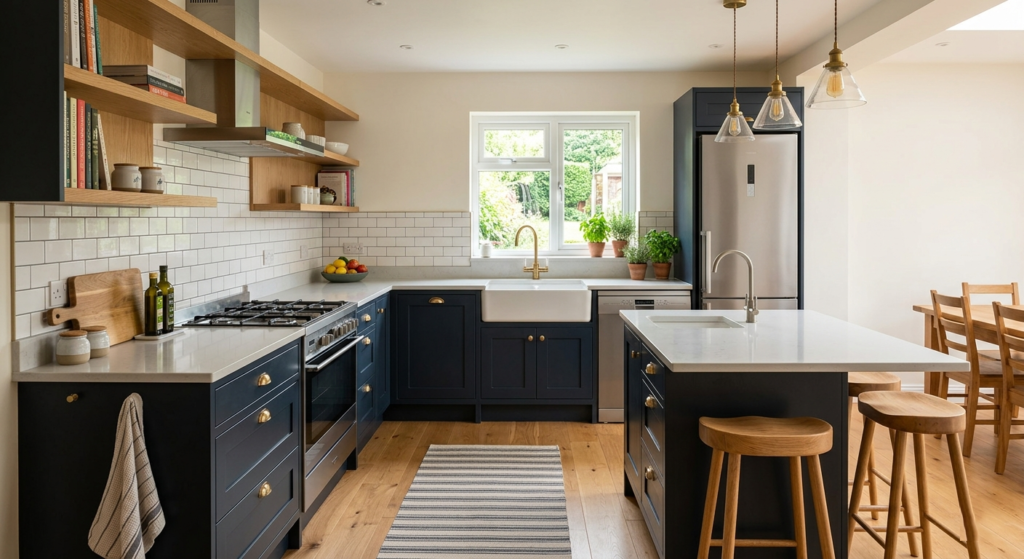
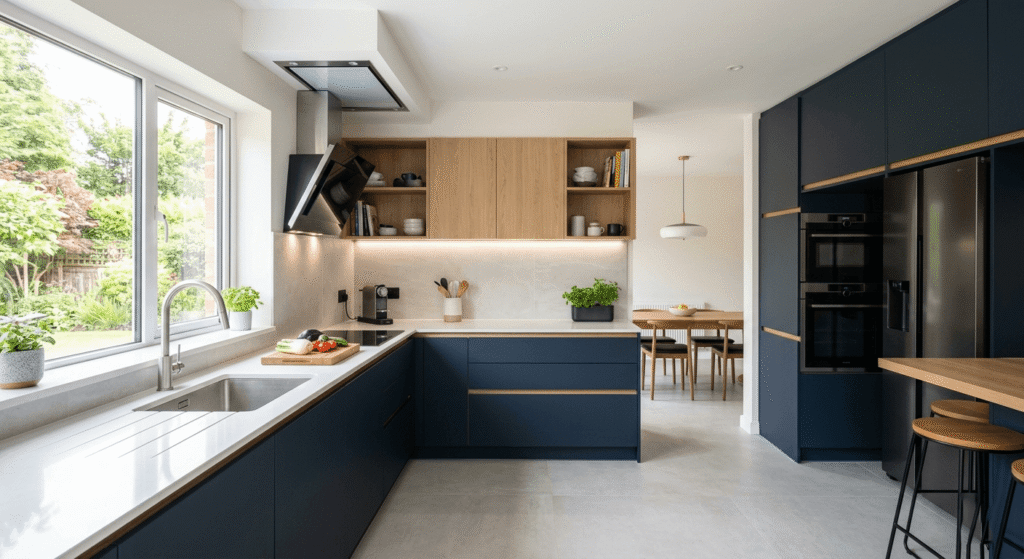
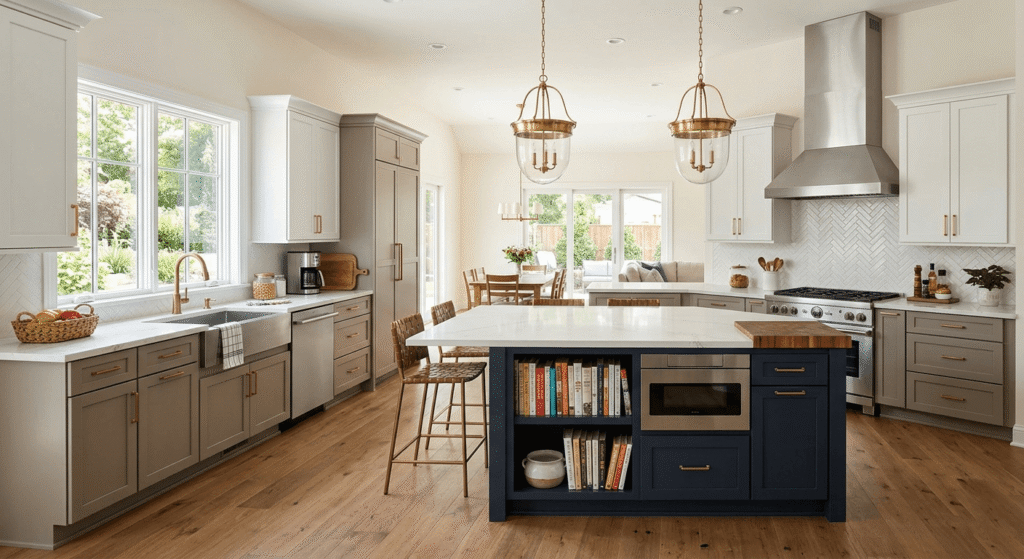
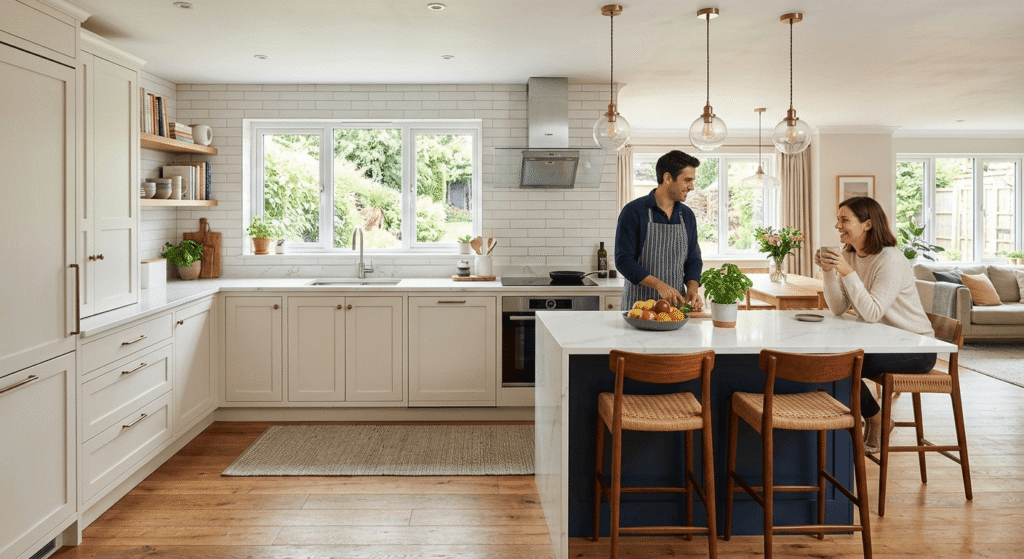
An L-shaped kitchen design is a two-wall kitchen layout that places cabinets, countertops, appliances, and storage along two connected walls that meet at a right angle. This kitchen layout creates an efficient cooking zone, uses corner space, supports open floor plans, and fits small, medium, and large homes.

L-shaped kitchens work because the layout separates the main kitchen functions into connected zones. The sink, hob or stove, refrigerator, countertop, cabinets, and circulation space stay close enough for daily cooking without blocking movement. The National Kitchen & Bath Association describes the kitchen work triangle as the relationship between the cooking surface, cleanup or prep sink, and refrigerator storage, with recommended distances used to support safe and efficient planning.

What Is an L-Shaped Kitchen?

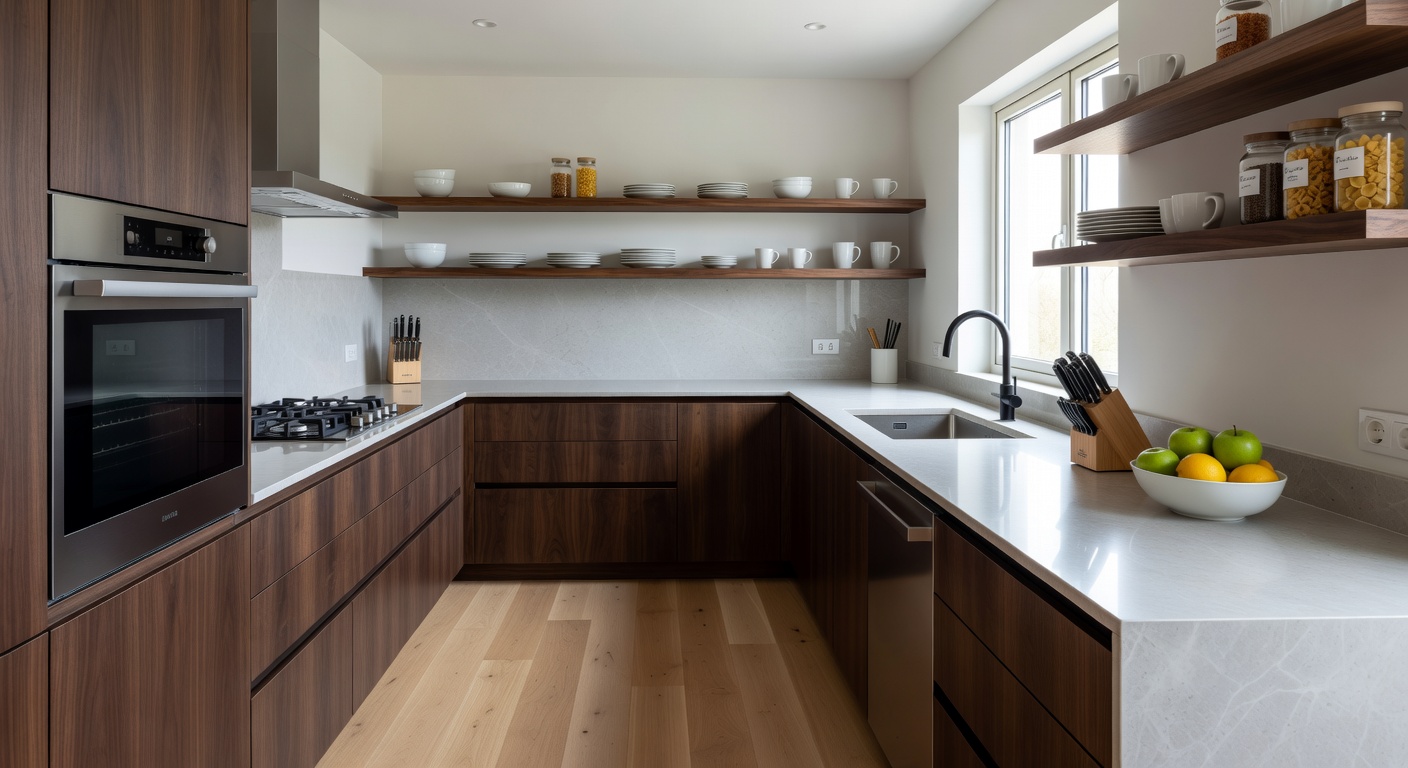
An L-shaped kitchen is a kitchen layout formed by two adjoining runs of cabinets and countertops placed along perpendicular walls. The two runs create an ā€œLā€ shape, usually with one longer working wall and one shorter supporting wall.

This layout contains 5 primary kitchen entities: base cabinets, wall cabinets, countertop surface, appliance zones, and corner storage. The longer side often holds the sink, preparation counter, dishwasher, or refrigerator. The shorter side often holds the hob, chimney, oven unit, pantry cabinet, or additional counter space.

The L-shaped layout suits modular kitchens, open kitchens, compact apartments, villas, and modern homes because one side remains open for movement, dining, or visual connection with the living area.

1. Basic Layout Structure

The basic L-shaped kitchen structure contains two connected countertop runs, one corner cabinet zone, and one open side for circulation. The two runs meet at a 90-degree angle.

The common structure includes:

  1. One long wall for the sink, preparation counter, base cabinets, and overhead cabinets.
  2. One short wall for the hob, refrigerator, tall storage, or appliance unit.
  3. One internal corner for a blind corner unit, carousel unit, magic corner, or diagonal cabinet.
  4. One open side for entry, dining, breakfast seating, or island placement.

This structure reduces wasted movement because cooking, cleaning, preparation, and storage zones remain in a compact relationship.

2. Key Features of an L-Shaped Kitchen

An L-shaped kitchen has 6 key features: two-wall layout, open circulation, corner storage, flexible appliance placement, continuous countertop space, and optional island or breakfast counter integration.

The two-wall layout creates a clear work zone. Open circulation improves movement between the kitchen, dining area, and living area. Corner storage increases usable cabinet volume. Flexible appliance placement allows different sink, stove, and refrigerator positions. Continuous countertop space supports food preparation. Optional island or breakfast counter placement adds dining, serving, and storage capacity.

Benefits of an L-Shaped Kitchen Layout

An L-shaped kitchen layout provides 5 main benefits: space efficiency, flexible sizing, better workflow, increased counter space, and easy island or breakfast counter integration. The layout supports compact homes and large open-plan interiors because one side of the kitchen remains open.

1. Space-Efficient Design

An L-shaped kitchen is space-efficient because two walls carry the main cabinets, appliances, and countertops while the center floor area stays open. This arrangement reduces corridor congestion and keeps the kitchen usable in narrow, square, and rectangular rooms.

The design saves usable floor area by placing storage vertically and horizontally along the wall edges. Base cabinets store cookware. Overhead cabinets store dry goods and crockery. Tall units store pantry items, ovens, microwaves, or cleaning supplies.

2. Ideal for Small and Large Kitchens

An L-shaped kitchen fits small and large kitchens because the layout expands or contracts by changing the length of each cabinet run. A small kitchen may use one 6-foot run and one 4-foot run. A larger kitchen may use two longer runs with an island, pantry wall, or dining counter.

In compact apartments, the L-shape keeps one side open. In large homes, the same layout supports premium additions such as a kitchen island, tall appliance wall, wine storage, or breakfast seating.

3. Better Workflow with the Work Triangle

An L-shaped kitchen supports the work triangle because the sink, stove, and refrigerator can sit on two connected walls without crossing heavy traffic paths. NKBA kitchen planning guidance states that the total work-triangle distance is commonly planned at no more than 26 feet, with each leg generally between 4 and 9 feet.

This triangle reduces unnecessary walking during cooking. The cook can move from refrigerator to sink, from sink to prep counter, and from prep counter to hob in a short sequence.

4. More Countertop Space

An L-shaped kitchen gives more countertop space because two connected walls create longer preparation surfaces than a single-wall kitchen. The continuous counter supports chopping, mixing, plating, appliance use, and serving.

Countertop space becomes more functional when the sink and hob do not occupy the same small section. A practical L-shaped kitchen keeps landing space beside the sink, hob, refrigerator, oven, and microwave.

5. Easy to Add a Breakfast Counter or Island

An L-shaped kitchen can include a breakfast counter or island because the open side of the layout leaves space for seating, storage, or additional preparation surface. A breakfast counter works well in small homes. A kitchen island works well in medium and large homes.

The added element functions as a serving counter, casual dining zone, homework table, coffee station, or additional cabinet block.

Best L-Shaped Kitchen Layout Ideas

The best L-shaped kitchen layout idea is the one that matches room size, appliance count, storage volume, cooking frequency, and dining requirement. The same L-shaped base can become a compact kitchen, open kitchen, island kitchen, breakfast counter kitchen, or dining-connected kitchen.

The table below compares common L-shaped kitchen ideas by room type, layout feature, and best use case.

L-Shaped Kitchen IdeaBest ForMain FeaturePractical Benefit
Small L-shaped kitchenApartments and compact homesShort two-wall counter runSaves floor space
L-shaped kitchen with islandMedium and large homesCentral islandAdds prep, storage, and seating
L-shaped kitchen with breakfast counterOpen-plan homesRaised or extended counterAdds casual dining
L-shaped kitchen with dining areaFamily homesKitchen-dining connectionImproves serving flow
L-shaped kitchen with windowNatural-light kitchensSink or counter near windowImproves daylight and ventilation
Open L-shaped kitchen layoutLiving-dining spacesOne open sideConnects cooking and social zones

This comparison shows that an L-shaped kitchen is not one fixed design. The layout changes through island placement, counter extension, appliance distribution, window position, and storage strategy.

1. Small L-Shaped Kitchen Design

A small L-shaped kitchen design is a compact two-wall kitchen layout that uses vertical storage, light colors, and reduced appliance depth to increase usable workspace. This layout suits studio apartments, small flats, rental homes, and compact urban kitchens.

The best small L-shaped kitchen uses slim base cabinets, overhead cabinets up to ceiling height, light cabinet finishes, under-cabinet lighting, and built-in appliances. The sink and hob stay on separate sections when space allows. The refrigerator sits near the kitchen entry to reduce traffic inside the cooking zone.

2. L-Shaped Kitchen with Island

An L-shaped kitchen with island is a two-wall kitchen layout with a freestanding central counter used for preparation, storage, serving, or seating. This layout suits medium and large kitchens with sufficient clearance around the island.

The island can hold drawers, shelves, a wine chiller, a breakfast overhang, a sink, or a hob. NKBA-style planning uses clear circulation around work areas, with work aisles commonly planned wider for one or multiple cooks.

3. L-Shaped Kitchen with Breakfast Counter

An L-shaped kitchen with breakfast counter is an L-shaped layout with an extended counter edge used for quick meals, tea, coffee, or casual seating. This design suits open kitchens and small homes where a full dining table consumes too much floor area.

A breakfast counter works best with 2 to 4 stools, pendant lights, durable countertop material, and storage below the counter. The counter can extend from one arm of the L-shape or sit as a small peninsula.

4. L-Shaped Kitchen with Dining Area

An L-shaped kitchen with dining area is a kitchen layout that connects the cooking zone directly with the dining table or breakfast table. This design improves serving flow and keeps the kitchen visually connected to family activity.

The dining table can sit near the open side of the L-shape. The kitchen counter can face the dining zone. This setup works well for families that cook and eat in the same shared space.

5. L-Shaped Kitchen with Window

An L-shaped kitchen with window is a two-wall layout that uses a window for natural light, ventilation, and visual openness. The sink is commonly placed below the window because cleaning work benefits from daylight and outside views.

A window near the countertop reduces the need for artificial light during daytime. It also improves air movement when cooking odor or heat builds inside the kitchen.

6. Open L-Shaped Kitchen Layout

An open L-shaped kitchen layout is an L-shaped kitchen connected to the living room or dining room without a full dividing wall. This design supports modern apartments, open-plan homes, and social cooking.

The open side can include an island, breakfast counter, or dining table. The kitchen remains functional while the cook stays visually connected to guests, children, or family members.

L-Shaped Kitchen Work Triangle Planning

L-shaped kitchen work triangle planning is the placement of the sink, stove, and refrigerator in a compact triangular relationship across the two kitchen walls. The work triangle improves cooking movement by connecting food storage, washing, preparation, and cooking zones.

NKBA planning guidance defines the work triangle through the cooking surface, cleanup or prep sink, and refrigeration storage. It also recommends avoiding major traffic paths through the triangle and limiting obstruction from islands or peninsulas.

1. Sink Placement

The sink in an L-shaped kitchen works best on the longer wall or under a window with landing space on both sides. This placement supports cleaning, vegetable washing, dishwashing, and prep work.

The sink zone connects closely with the dishwasher, dustbin, water purifier, and countertop. A dishwasher placed near the sink reduces dripping and shortens dish movement.

2. Stove or Hob Placement

The stove or hob in an L-shaped kitchen works best on the wall with safe counter landing space and proper ventilation above. The hob requires heat-resistant backsplash material, chimney placement, and space away from curtains, tall cabinets, or direct window drafts.

The hob zone functions better when spice pull-outs, oil storage, ladle drawers, and pan drawers sit nearby. This arrangement reduces movement during active cooking.

3. Refrigerator Placement

The refrigerator in an L-shaped kitchen works best near the kitchen entry or at the end of one cabinet run. This position allows family members to access food and drinks without entering the main cooking triangle.

The refrigerator requires door-swing clearance, nearby counter landing space, and distance from high-heat appliances. Placing the refrigerator at one end also keeps the tall appliance mass visually balanced.

4. Common Layout Mistakes to Avoid

The common L-shaped kitchen layout mistakes are blocked corners, poor appliance spacing, short counter landing zones, weak lighting, and traffic crossing the cooking zone.

Avoid placing the hob and sink too close together. Avoid placing the refrigerator deep inside the kitchen when several people access it frequently. Avoid corner cabinets without pull-out systems. Avoid oversized islands that reduce aisle space. Avoid dark finishes in a small kitchen without strong lighting.

Storage Ideas for L-Shaped Kitchens

L-shaped kitchen storage works best when corner cabinets, overhead cabinets, pull-out units, open shelves, and appliance garages divide storage by item type and use frequency. Storage planning determines whether an L-shaped kitchen stays clean, efficient, and easy to maintain.

1. Corner Cabinet Solutions

Corner cabinet solutions are storage systems that convert the hard-to-reach L-shaped corner into usable cabinet volume. The most common options include blind corner pull-outs, carousel units, magic corner systems, diagonal cabinets, and swing trays.

A carousel stores pots, pans, and containers. A magic corner stores heavy cookware. A blind corner pull-out stores less frequent items. The best solution depends on cabinet size, budget, and access preference.

2. Overhead Cabinets

Overhead cabinets are wall-mounted storage units used for crockery, dry goods, glasses, and lightweight kitchen items. In an L-shaped kitchen, overhead cabinets can run across both walls or stay limited to one wall for a lighter look.

Ceiling-height overhead cabinets increase storage in small kitchens. Glass shutters create visual depth. Solid shutters hide clutter. Open niches break cabinet mass.

3. Pull-Out Storage Units

Pull-out storage units are sliding cabinet systems used for spices, oils, grains, bottles, bins, trays, and cleaning supplies. These units increase access because the stored items come out toward the user.

Common pull-outs include spice pull-outs, pantry pull-outs, bottle pull-outs, cutlery trays, dish organizers, wicker baskets, and waste segregation bins.

4. Open Shelves

Open shelves are visible wall-mounted storage surfaces used for frequently used items or decorative kitchen objects. Open shelves work well for mugs, jars, cookbooks, indoor plants, or display crockery.

Open shelves suit modern, rustic, Scandinavian, and industrial L-shaped kitchens. They require regular cleaning because exposed surfaces collect dust and grease.

5. Appliance Garage

An appliance garage is a closed countertop storage compartment for small appliances such as toaster, blender, mixer, coffee machine, or food processor. This storage keeps the countertop clear while keeping appliances plugged in or ready for use.

An appliance garage works well near the breakfast zone, prep counter, or tall unit. A shutter, lift-up door, or pocket door hides the appliance cluster.

Best Materials for an L-Shaped Kitchen

The best materials for an L-shaped kitchen are durable cabinet boards, stain-resistant countertops, washable backsplashes, and moisture-resistant flooring. Material selection affects cost, maintenance, strength, appearance, and kitchen lifespan.

The table below compares common L-shaped kitchen materials by area, material type, and practical value.

Kitchen AreaCommon MaterialsBest Use CaseKey Attribute
CabinetsPlywood, MDF, HDHMR, particle boardBase and wall storageStrength and moisture resistance
CountertopsQuartz, granite, solid surface, laminateFood preparation surfaceStain and heat resistance
BacksplashCeramic tile, glass, quartz, stone, acrylicWall protection behind counterWashability
FlooringPorcelain tile, vitrified tile, vinyl, natural stoneKitchen floorSlip and water resistance
HardwareStainless steel, aluminum, soft-close systemsDrawers and shuttersDurability

This material table shows that one material cannot solve every kitchen requirement. Base cabinets need strength. Countertops need stain resistance. Backsplashes need cleanability. Flooring needs grip and water resistance.

1. Cabinet Materials

Cabinet materials in an L-shaped kitchen are the structural boards and finishes used for base cabinets, overhead cabinets, tall units, and shutters. Plywood provides strong screw-holding capacity and moisture resistance. MDF supports smooth painted finishes. HDHMR boards resist humidity better than standard MDF. Particle board suits budget kitchens with limited moisture exposure.

Cabinet finishes include laminate, acrylic, membrane, PU paint, veneer, and glass. Laminate gives durability. Acrylic gives gloss. Veneer gives natural wood appearance. PU paint gives a premium seamless finish.

2. Countertop Materials

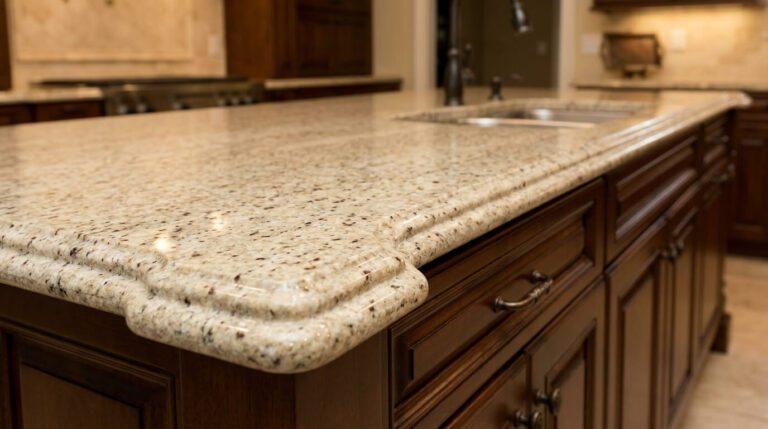
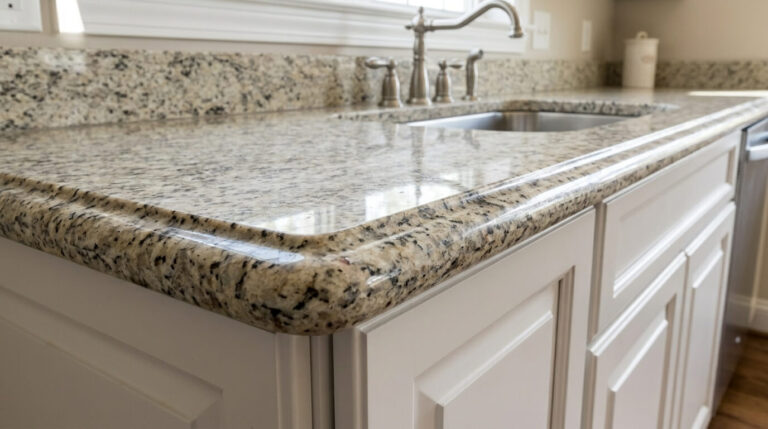
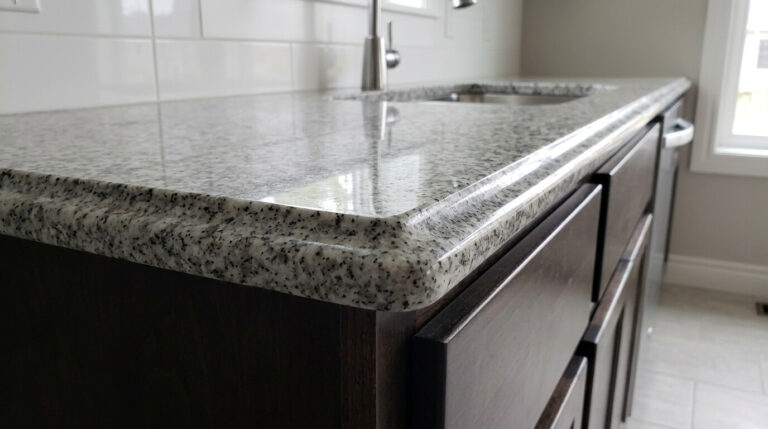
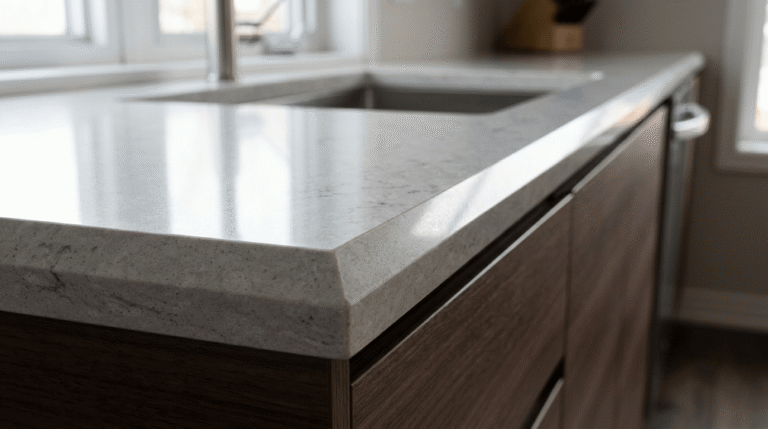
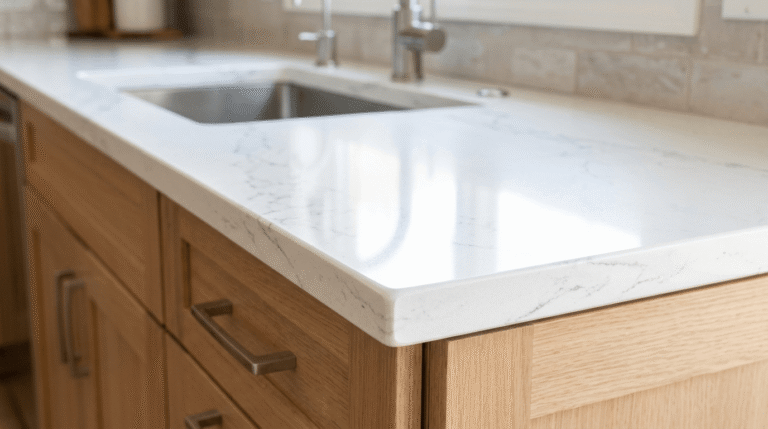
Countertop materials in an L-shaped kitchen are horizontal work surfaces used for chopping, cooking support, appliance placement, and serving. Quartz gives uniform appearance and stain resistance. Granite gives natural variation and heat resistance. Solid surface gives seamless joints. Laminate gives budget-friendly design flexibility.

The best countertop depends on cooking frequency, stain exposure, heat exposure, budget, and design style.

3. Backsplash Materials

Backsplash materials are wall-protection surfaces installed behind the hob, sink, and countertop. Ceramic tiles, porcelain tiles, glass panels, quartz slabs, stone slabs, and acrylic panels are common backsplash materials.

A good backsplash resists oil, water, steam, heat, and cleaning chemicals. Large-format tiles reduce grout lines. Quartz or stone slab backsplashes create a seamless look.

4. Flooring Options

Flooring options for L-shaped kitchens include porcelain tile, vitrified tile, vinyl, natural stone, and engineered wood-look surfaces. The best kitchen flooring resists water, stains, slipping, and regular cleaning.

Matte tiles improve grip. Large tiles reduce visible grout. Stone adds natural texture. Vinyl gives soft underfoot comfort in budget or rental kitchens.

Best Colors for L-Shaped Kitchen Designs

The best colors for L-shaped kitchen designs are light neutrals, warm wood tones, grey palettes, two-tone combinations, and controlled bold accents. Color selection affects brightness, perceived size, maintenance, and style identity.

The table below explains common color options for L-shaped kitchens.

Color SchemeBest ForVisual EffectBest Pairing
WhiteSmall and modern kitchensMakes space look largerWood, grey, black, brass
GreyContemporary kitchensCreates calm neutralityWhite, marble, chrome
Wood and whiteWarm modern kitchensBalances brightness and textureBeige, stone, matte black
Two-toneMedium and large kitchensAdds depth and zoningLight upper, dark lower cabinets
Bold colorsStatement kitchensCreates focal impactNeutral walls and simple counters

This color table shows that kitchen color has functional value. Light colors improve openness. Dark colors hide stains. Wood tones add warmth. Two-tone palettes define zones.

1. White L-Shaped Kitchen

A white L-shaped kitchen is a bright kitchen design that uses white cabinets, white walls, or white countertops to increase visual openness. This color scheme works well in small kitchens, windowless kitchens, and modern minimalist homes.

White pairs well with wood countertops, black handles, marble backsplash, brass fixtures, and grey flooring.

2. Grey L-Shaped Kitchen

A grey L-shaped kitchen is a neutral kitchen design that uses light, medium, or charcoal grey surfaces for a calm modern look. Light grey suits compact kitchens. Charcoal grey suits larger kitchens with strong lighting.

Grey works well with white quartz, matte black hardware, chrome appliances, and wood flooring.

3. Wood and White Combination

A wood and white L-shaped kitchen is a balanced kitchen design that combines white brightness with natural wood texture. This color combination suits Scandinavian, modern, Japandi, and transitional kitchens.

White upper cabinets keep the kitchen light. Wood lower cabinets add warmth and reduce visible stains in high-touch areas.

4. Two-Tone L-Shaped Kitchen

A two-tone L-shaped kitchen is a kitchen design that uses two cabinet colors to define upper-lower zones, tall units, or island sections. Common combinations include white and navy, beige and walnut, grey and white, black and oak, and sage green and cream.

Two-tone designs work best when the darker color stays on lower cabinets and the lighter color stays on upper cabinets.

5. Bold Color Kitchens

Bold color L-shaped kitchens are kitchens that use strong cabinet colors such as navy, emerald green, burgundy, terracotta, black, or deep teal. Bold colors work best with neutral countertops, simple backsplash materials, and balanced lighting.

Bold kitchens suit large rooms, high natural light, and homeowners who want a strong design identity.

Lighting Ideas for L-Shaped Kitchens

L-shaped kitchen lighting works best with 4 lighting layers: task lighting, ambient lighting, accent lighting, and natural lighting. Each lighting layer supports a different function.

1. Task Lighting

Task lighting is focused light used on countertops, sink areas, hob zones, and prep surfaces. Under-cabinet LED strips are the most useful task lights in an L-shaped kitchen because overhead cabinets often shadow the counter.

Task lighting reduces cutting errors, improves food-prep visibility, and makes cleaning easier.

2. Ambient Lighting

Ambient lighting is general room lighting that provides overall brightness across the kitchen. Ceiling lights, recessed lights, track lights, and flush-mount fixtures provide ambient light.

An L-shaped kitchen needs even ambient light across both cabinet runs. Dark corners require extra ceiling or wall-mounted lighting.

3. Accent Lighting

Accent lighting is decorative or highlighting light used to define shelves, niches, backsplashes, glass cabinets, and island zones. Pendant lights above a breakfast counter or island create a visual focal point.

Accent lighting works best as a secondary layer, not the main cooking light.

4. Natural Lighting

Natural lighting is daylight entering through windows, balcony doors, skylights, or open-plan spaces. Natural light improves visibility, reduces daytime electricity use, and makes compact kitchens feel larger.

A sink under a window, light-colored backsplash, reflective cabinet finish, and glass partition can increase daylight distribution.

Appliances for an L-Shaped Kitchen

Appliances in an L-shaped kitchen work best when built-in units, hob placement, dishwasher position, refrigerator location, and concealed appliance storage follow the cooking sequence. The cooking sequence usually moves from food storage to washing, preparation, cooking, serving, and cleaning.

1. Built-In Oven and Microwave Unit

A built-in oven and microwave unit is a tall cabinet section that places baking and heating appliances at comfortable access height. This unit saves counter space and creates a clean modular look.

The oven-microwave tower works best near the preparation counter but away from the wet sink zone.

2. Hob and Chimney Placement

Hob and chimney placement is the alignment of the cooking surface with ventilation above and safe landing space beside it. The chimney must match the hob width and kitchen ventilation requirement.

The hob works best away from direct window drafts. Drawers below the hob can store pans, ladles, and cooking tools.

3. Dishwasher Placement

Dishwasher placement is the positioning of the dishwasher near the sink for efficient dish transfer and plumbing connection. A dishwasher beside the sink reduces dripping across the floor and keeps cleaning work in one zone.

The dishwasher door requires clear opening space. It must not block the main kitchen walkway when open.

4. Refrigerator Placement

Refrigerator placement is the positioning of cold storage near the kitchen entrance or one end of the L-shaped cabinet run. This placement supports quick access without interrupting cooking.

A counter landing zone near the refrigerator supports grocery unloading and ingredient preparation.

5. Concealed Appliances

Concealed appliances are appliances hidden behind cabinet shutters, pocket doors, lift-up shutters, or integrated panels. These include built-in refrigerators, concealed dishwashers, appliance garages, coffee stations, and hidden microwaves.

Concealed appliances create a cleaner visual line in modern and minimalist L-shaped kitchens.

L-Shaped Kitchen Design for Small Spaces

An L-shaped kitchen design for small spaces works best with light colors, reflective finishes, vertical storage, compact appliances, and clear countertops. Small kitchens require more planning because every cabinet, appliance, and counter segment affects movement.

1. Use Light Colors

Light colors make a small L-shaped kitchen look larger because white, cream, beige, pale grey, and light wood reflect more visible light than dark surfaces. Light upper cabinets reduce visual weight. Dark lower cabinets can still work when the countertop and backsplash stay light.

2. Choose Glossy or Reflective Finishes

Glossy or reflective finishes help small kitchens because shiny laminates, acrylic shutters, glass backsplashes, and polished tiles bounce light across the room. This effect improves perceived space in narrow kitchens.

Use reflective finishes with balanced lighting to avoid glare.

3. Maximize Vertical Storage

Vertical storage increases capacity because wall height can hold overhead cabinets, loft cabinets, open shelves, peg rails, and tall pantry units. Ceiling-height storage works especially well when floor space is limited.

Frequently used items belong at eye level. Rarely used items belong in top cabinets or loft units.

4. Use Compact Appliances

Compact appliances save space because smaller refrigerators, slim dishwashers, built-in microwaves, and narrow hobs reduce counter and cabinet pressure. A 2-burner hob works in homes with light cooking. A slim dishwasher works in small families or apartments.

5. Keep the Countertop Clear

A clear countertop improves small kitchen function because open work surface increases preparation area and reduces visual clutter. Appliance garages, wall shelves, drawer organizers, and pull-out trays help keep counters clear.

Daily-use appliances can stay in one defined zone. Rare-use appliances belong in cabinets.

L-Shaped Kitchen Cost Factors

L-shaped kitchen cost depends on cabinet material, countertop material, hardware, appliances, accessories, finishes, plumbing, electrical work, and installation labor. The layout shape alone does not decide the cost. Material grade and customization level create the largest cost difference.

1. Cabinet Material Cost

Cabinet material cost depends on board type, finish type, shutter design, cabinet quantity, and internal hardware. Plywood usually costs more than particle board. Acrylic and PU finishes usually cost more than laminate. Tall units cost more than standard base cabinets because they use more material and hardware.

2. Countertop Cost

Countertop cost depends on material type, slab thickness, edge profile, cutouts, joint count, and installation complexity. Quartz and granite usually cost more than laminate. Sink cutouts, hob cutouts, waterfall edges, and backsplash continuation increase fabrication work.

3. Hardware and Accessories

Hardware and accessories affect cost because soft-close hinges, drawer channels, tall pantry systems, corner units, pull-outs, and lift-up shutters add functional parts inside the kitchen. A simple cabinet with shelves costs less than a cabinet with engineered pull-out storage.

4. Appliance Cost

Appliance cost depends on brand, size, energy rating, installation type, and feature set. Built-in appliances usually cost more than freestanding appliances because they require cabinet integration.

Main appliance categories include refrigerator, hob, chimney, oven, microwave, dishwasher, water purifier, and washing machine when placed inside the kitchen.

5. Installation and Labor

Installation and labor cost depends on site condition, wall alignment, plumbing changes, electrical changes, tile work, countertop fitting, and cabinet installation complexity. Renovation kitchens often cost more than new kitchens because old cabinets, tiles, plumbing, and wiring may require removal or correction.

L-Shaped Kitchen vs Other Kitchen Layouts

An L-shaped kitchen differs from other kitchen layouts because it uses two connected walls while keeping one or two sides open for circulation, dining, or living-room connection. Other layouts use different wall counts and movement patterns.

1. L-Shaped Kitchen vs U-Shaped Kitchen

An L-shaped kitchen uses two walls, while a U-shaped kitchen uses three walls or three connected cabinet runs. The L-shaped layout gives more openness. The U-shaped layout gives more storage and counter space.

Choose an L-shaped kitchen for open-plan living and easier circulation. Choose a U-shaped kitchen for larger storage volume and enclosed cooking zones.

2. L-Shaped Kitchen vs Straight Kitchen

An L-shaped kitchen uses two connected counter runs, while a straight kitchen uses one wall only. The L-shaped layout gives better zone separation and more counter space. The straight kitchen saves the most floor space.

Choose an L-shaped kitchen when a corner is available. Choose a straight kitchen for studio apartments, narrow rooms, and very compact homes.

3. L-Shaped Kitchen vs Parallel Kitchen

An L-shaped kitchen uses two perpendicular walls, while a parallel kitchen uses two opposite walls. The L-shaped layout feels more open. The parallel layout creates strong separation between wet and dry zones.

Choose an L-shaped kitchen for open layouts. Choose a parallel kitchen for long narrow rooms with enough aisle width.

4. L-Shaped Kitchen vs Island Kitchen

An L-shaped kitchen is a base layout, while an island kitchen is a layout with a freestanding central counter. Many island kitchens use an L-shaped base with an added island.

Choose a plain L-shaped kitchen for compact rooms. Choose an L-shaped kitchen with island when the room has enough clearance and the household needs extra prep, storage, or seating.

Common L-Shaped Kitchen Problems and Solutions

The common L-shaped kitchen problems are dead corner space, poor lighting, limited counter space, cluttered layout, and poor ventilation. These problems come from weak planning, not from the L-shaped layout itself.

1. Problem: Dead Corner Space

Dead corner space occurs when the internal corner cabinet becomes hard to reach. Solve dead corner space with a carousel, magic corner, blind corner pull-out, diagonal cabinet, or open corner shelf.

A corner solution turns inaccessible cabinet depth into usable storage for pots, pans, containers, or appliances.

2. Problem: Poor Lighting

Poor lighting occurs when overhead cabinets, dark finishes, and corner depth reduce visibility on the countertop. Solve poor lighting with under-cabinet LED strips, ceiling downlights, pendant lights, and light backsplash materials.

Task lighting belongs above cutting, washing, and cooking zones.

3. Problem: Limited Counter Space

Limited counter space occurs when sink, hob, appliances, and storage items occupy most of the work surface. Solve limited counter space with built-in appliances, appliance garages, wall-mounted racks, compact hobs, and clear landing zones.

A usable preparation counter needs uninterrupted surface near the sink and hob.

4. Problem: Cluttered Layout

A cluttered layout occurs when too many appliances, open shelves, decorative items, and storage units compete for space. Solve clutter with closed cabinets, drawer organizers, pull-outs, concealed appliances, and fewer visible objects.

Keep the countertop limited to daily-use appliances and cooking essentials.

5. Problem: Poor Ventilation

Poor ventilation occurs when cooking heat, steam, oil, and odor remain trapped inside the kitchen. Solve poor ventilation with a correctly sized chimney, external ducting where possible, window ventilation, and cleanable backsplash materials.

The hob zone requires the strongest ventilation support.

L-Shaped Kitchen Design Mistakes to Avoid

The biggest L-shaped kitchen design mistakes are ignoring the work triangle, wasting the corner, blocking circulation, reducing counter landing space, choosing weak lighting, and overloading the open side.

Avoid these 8 mistakes:

  1. Place the refrigerator too far from the sink and prep zone.
  2. Place the hob beside the sink without enough landing space.
  3. Use a standard corner cabinet without an access system.
  4. Add an island in a kitchen with narrow circulation.
  5. Use dark cabinets in a small kitchen without strong lighting.
  6. Keep too many appliances on the countertop.
  7. Ignore chimney placement above the hob.
  8. Use glossy floors without slip resistance.

Good L-shaped kitchen design keeps the cooking path short, the corner usable, the counter clear, and the traffic path outside the main work zone.

Best L-Shaped Kitchen Design Ideas by Style

The best L-shaped kitchen style depends on cabinet profile, color palette, material finish, hardware type, lighting, and countertop selection. The same L-shaped structure can support modern, minimalist, luxury, traditional, and industrial styles.

1. Modern L-Shaped Kitchen

A modern L-shaped kitchen is a clean-lined kitchen with flat shutters, integrated appliances, simple hardware, and neutral or two-tone colors. Common materials include laminate, acrylic, quartz, glass, and matte hardware.

Modern L-shaped kitchens often use handleless cabinets, built-in ovens, under-cabinet lighting, and seamless backsplashes.

2. Minimalist L-Shaped Kitchen

A minimalist L-shaped kitchen is a reduced-detail kitchen with plain cabinet faces, concealed storage, limited colors, and clear countertops. This style removes visual clutter.

Minimalist kitchens use soft-close drawers, appliance garages, push-to-open shutters, neutral tones, and hidden handles.

3. Luxury L-Shaped Kitchen

A luxury L-shaped kitchen is a premium kitchen with high-end materials, custom cabinetry, integrated appliances, layered lighting, and refined finishes. Common features include quartz countertops, marble-look backsplashes, veneer panels, brass hardware, and built-in appliance towers.

Luxury kitchens use fewer visible joints and stronger material coordination.

4. Traditional L-Shaped Kitchen

A traditional L-shaped kitchen is a warm kitchen style with framed shutters, detailed handles, natural colors, and classic materials. Common elements include shaker cabinets, wooden finishes, patterned backsplashes, warm lighting, and decorative cornices.

Traditional L-shaped kitchens work well in family homes and villas.

5. Industrial L-Shaped Kitchen

An industrial L-shaped kitchen is a raw-material kitchen style with metal, brick, concrete, dark colors, open shelving, and visible textures. Common features include black frames, exposed shelves, stainless steel appliances, concrete-look counters, and pendant lights.

Industrial kitchens work best in open-plan homes, lofts, and large apartments.

L-Shaped Kitchen Design Checklist

An L-shaped kitchen design checklist includes measurements, workflow, storage, appliances, lighting, ventilation, materials, colors, and installation details.

Use this checklist before finalizing the kitchen:

  1. Measure both kitchen walls, ceiling height, window location, and door swing.
  2. Mark plumbing, gas, electrical points, and drainage location.
  3. Place the sink, hob, and refrigerator in a functional triangle.
  4. Keep traffic outside the main cooking path.
  5. Add a corner cabinet solution.
  6. Plan landing space near sink, hob, refrigerator, oven, and microwave.
  7. Choose cabinet material based on moisture exposure and budget.
  8. Choose countertop material based on cooking frequency.
  9. Add task lighting below overhead cabinets.
  10. Plan chimney or ventilation near the hob.
  11. Use pull-outs for spices, bottles, bins, and pantry items.
  12. Keep small appliances inside an appliance garage or tall unit.
  13. Select colors based on kitchen size and natural light.
  14. Add a breakfast counter or island only when clearance allows.
  15. Confirm installation details before production.

A complete checklist reduces design errors before carpentry, modular manufacturing, countertop cutting, and appliance installation begin.

Frequently Asked Questions About L-Shaped Kitchens

1. Is an L-shaped kitchen good for small spaces?

Yes, an L-shaped kitchen is good for small spaces because two connected walls hold cabinets and appliances while the center floor area stays open for movement.

2. Can an L-shaped kitchen have an island?

Yes, an L-shaped kitchen can have an island when the room has enough clearance around the island for cooking, cabinet access, appliance doors, and walking space.

3. What is the best color for an L-shaped kitchen?

The best color for an L-shaped kitchen is white, light grey, beige, or wood-and-white in small kitchens because light colors increase visual openness and brightness.

4. Where should the refrigerator go in an L-shaped kitchen?

The refrigerator should go near the kitchen entrance or at one end of the L-shaped cabinet run so food access does not interrupt the main cooking zone.

5. How do you use corner space in an L-shaped kitchen?

Use corner space in an L-shaped kitchen with a carousel, magic corner, blind corner pull-out, diagonal cabinet, or open shelf system.

6. Is an L-shaped kitchen better than a U-shaped kitchen?

An L-shaped kitchen is better than a U-shaped kitchen for open layouts and easier circulation, while a U-shaped kitchen is better for maximum storage and counter space.

Leave a Reply

Your email address will not be published. Required fields are marked *