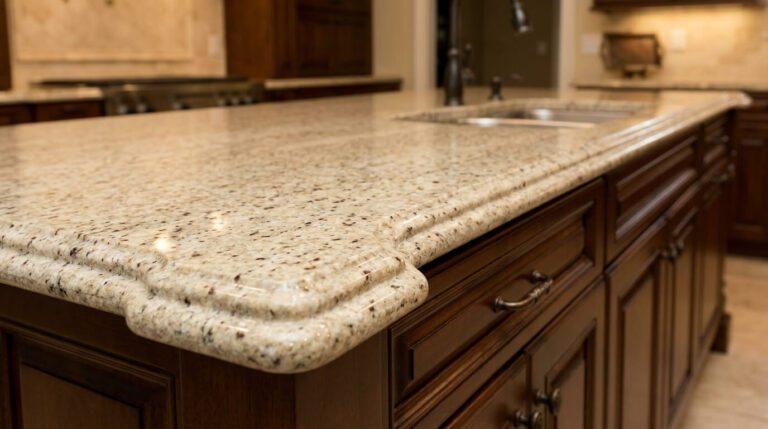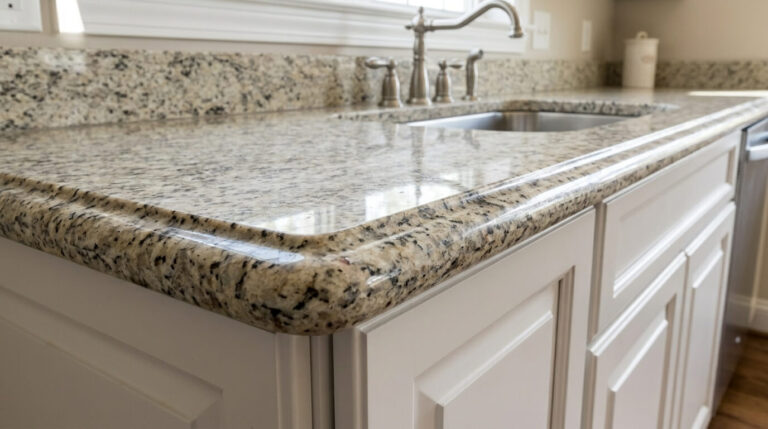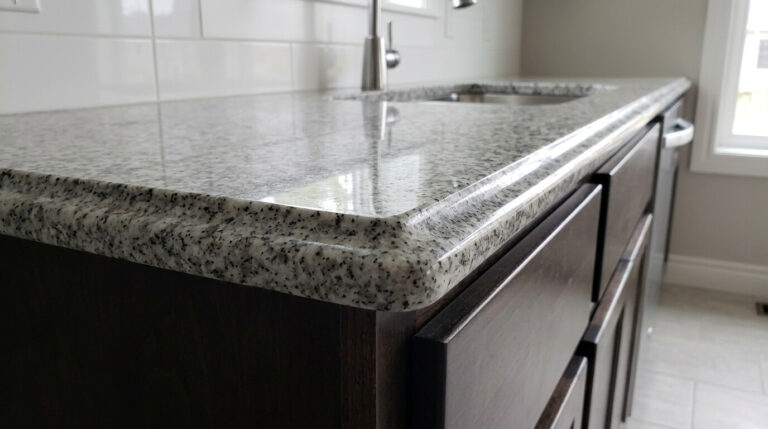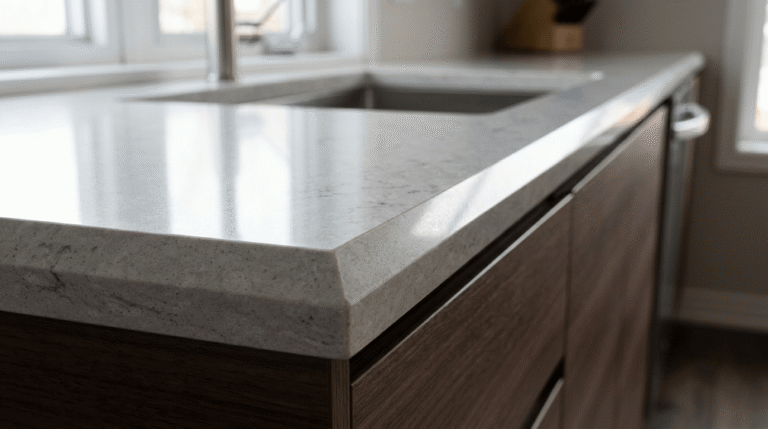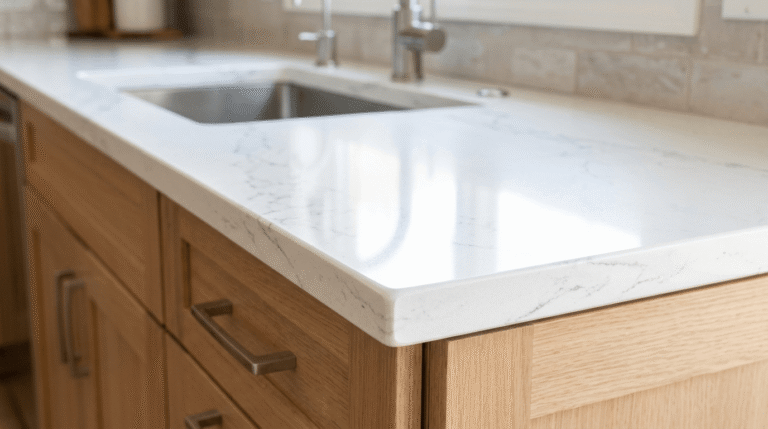
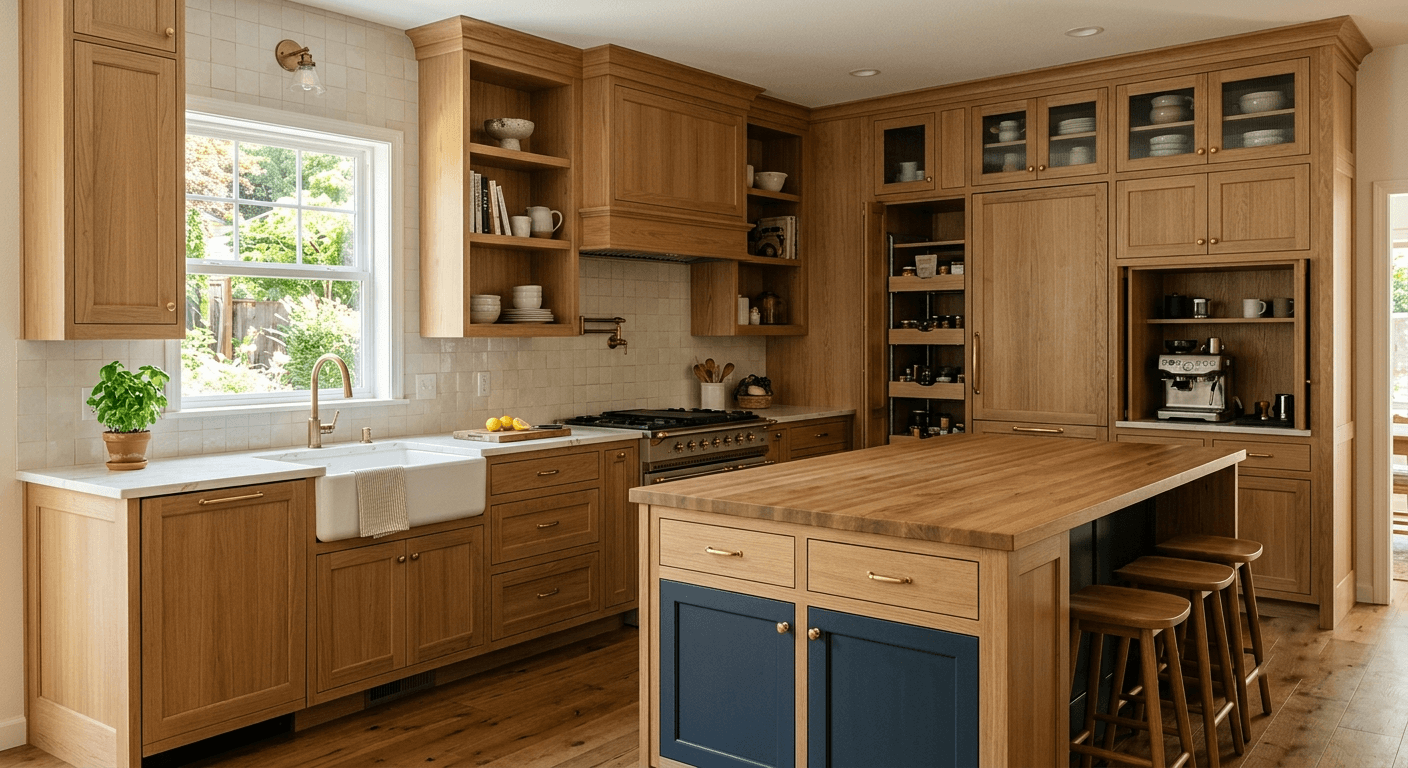
Cabinets form the structural and visual foundation of kitchens, bathrooms, and storage spaces. Homeowners and contractors choose between stock cabinets and custom cabinets based on budget, timeline, and design requirements. Each cabinet type follows a different manufacturing process, which affects price, lead time, material options, and the degree of design flexibility available to the buyer.
Stock cabinets come in preset sizes and finishes, manufactured in bulk before a specific order is placed. Custom cabinets are built to the exact specifications of a single project, including dimensions, materials, and design details. This distinction affects nearly every stage of a renovation, from initial planning through installation.
This article compares stock and custom cabinets across design flexibility, construction quality, lead time, sizing, and cost. It also positions both cabinet types against semi-custom and prefab alternatives, identifies the situations where each option performs best, and outlines a decision framework for selecting between them.
The comparison applies to residential kitchens, bathrooms, laundry rooms, and built-in storage projects where cabinet selection affects both budget and long-term functionality.
What Are Stock Cabinets?
Stock cabinets are pre-manufactured cabinets produced in standard sizes, styles, and finishes and held in inventory for immediate or short-notice purchase. Manufacturers build stock cabinets in bulk before a retailer or contractor places an order, using fixed dimensions that typically increase in 3-inch increments.
Stock cabinets are sold through home improvement retailers, cabinet showrooms, and online suppliers. Buyers select from a limited set of predetermined widths, heights, and depths, along with a fixed range of door styles, finishes, and hardware options. Because production occurs in advance of individual orders, stock cabinets are available for pickup or delivery within days rather than weeks.
What Are Custom Cabinets?
Custom cabinets are cabinets built to the exact measurements, materials, and design specifications of a single project. A cabinetmaker or manufacturer constructs each unit after a client finalizes the layout, dimensions, wood species, finish, and hardware.
Custom cabinets accommodate irregular wall dimensions, non-standard ceiling heights, and specific storage requirements such as built-in appliance surrounds or corner configurations. Production begins only after design approval, and construction methods vary by cabinetmaker, ranging from solid hardwood face frames to fully custom joinery. Because each order is unique, custom cabinets require longer production timelines than stock or semi-custom alternatives.
Stock vs Custom Cabinets: Key Differences
Stock and custom cabinets differ in four primary areas: design flexibility, material and construction quality, lead time, and sizing precision. These differences determine which cabinet type fits a given project’s budget, timeline, and layout requirements.
Stock cabinets prioritize affordability and speed through standardized manufacturing, while custom cabinets prioritize precision and design control through project-specific construction. The following sections compare both cabinet types across each of these criteria using consistent evaluation standards.
Design and Customization Flexibility
Custom cabinets provide full design flexibility, while stock cabinets limit buyers to predetermined sizes, finishes, and configurations. A custom cabinet order allows changes to width, height, depth, wood species, door style, drawer configuration, and interior storage features.
Stock cabinets restrict selection to a manufacturer’s existing catalog. Buyers choose from a fixed set of cabinet widths, typically ranging from 9 to 48 inches in standard increments, along with a limited number of finish and hardware combinations. This restriction affects kitchens with irregular layouts, angled walls, or specific appliance integration needs, since stock inventory may not include a cabinet that fits the exact space.
Materials and Construction Quality
Custom cabinets generally use higher-grade materials and construction methods than stock cabinets, though quality varies by manufacturer within each category. Custom cabinetmakers commonly offer solid hardwood face frames, dovetail joinery, and full-extension soft-close drawers as standard features.
Stock cabinets typically use particleboard or medium-density fiberboard (MDF) boxes with a wood veneer or laminate finish, and construction quality depends on the manufacturer’s price tier. Entry-level stock cabinets use staple or nail construction, while mid-range stock lines may include plywood boxes and soft-close hinges. Because stock cabinets are produced for broad market appeal, material specifications remain fixed across an entire product line rather than adjustable per order.
Lead Time and Availability
Stock cabinets are available faster than custom cabinets because manufacturers produce stock units in advance of individual orders. Stock cabinets are typically ready for pickup or delivery within 1 to 2 weeks, and some retailers stock select styles for same-day purchase.
Custom cabinets require production to begin only after a buyer finalizes design specifications, extending lead time to 6 to 12 weeks or longer depending on the cabinetmaker’s order volume and the complexity of the design. Projects with fixed installation deadlines, such as time-sensitive renovations, factor this lead time difference directly into cabinet selection.
Sizing and Fit
Custom cabinets fit exact wall dimensions, while stock cabinets fit only spaces that match standard size increments. A custom order accounts for irregular walls, out-of-square corners, and non-standard ceiling heights by building each cabinet to the room’s actual measurements.
Stock cabinets are manufactured in fixed width increments, most commonly 3 inches, which can leave gaps or require filler panels when a room’s dimensions fall between available sizes. Installers use filler strips, scribe moldings, or adjusted end panels to close these gaps, which adds material and labor beyond the base cabinet cost.
Cost Comparison: Stock vs Custom Cabinets
Stock cabinets cost less than custom cabinets because standardized manufacturing reduces material waste and labor per unit. Custom cabinets cost more due to individualized design, specialized labor, and made-to-order material selection.
The price difference between stock and custom cabinets reflects production method rather than material quality alone, since some stock lines use comparable materials to entry-level custom cabinetry. Buyers evaluate this cost difference against project budget, kitchen size, and the value placed on precise fit and design control.
Average Price per Linear Foot
Stock cabinets generally cost $60 to $200 per linear foot, while custom cabinets generally cost $500 to $1,200 or more per linear foot. This price range reflects material grade, finish complexity, and regional labor rates, and actual project costs vary by cabinetmaker and retailer.
Semi-custom cabinets fall between these ranges, typically priced from $150 to $650 per linear foot. A standard kitchen requiring 20 to 30 linear feet of cabinetry shows a substantial total cost difference between stock and fully custom options based on these per-foot rates.
Is It Cheaper to Build Cabinets or Buy Them?
Buying pre-manufactured stock cabinets is generally cheaper than building custom cabinets from scratch, whether the buyer hires a cabinetmaker or constructs cabinets independently. Stock cabinet pricing benefits from bulk material purchasing and automated manufacturing, which lowers the per-unit cost compared to individually built cabinetry.
Building custom cabinets, either through a professional cabinetmaker or DIY construction, requires individual material sourcing, specialized tools, and skilled labor hours per unit. DIY cabinet building can reduce labor costs compared to hiring a custom cabinetmaker, but material costs and the risk of construction errors offset some of this savings for buyers without cabinetmaking experience.
Are Custom Cabinets Worth the Extra Cost?
Custom cabinets are worth the extra cost for projects with irregular layouts, specific storage needs, or long-term ownership plans where precise fit and material quality justify the higher price. Custom cabinetry eliminates filler panels, matches exact wall dimensions, and allows storage features tailored to the homeowner’s use of the space.
Custom cabinets provide less value for buyers with standard room dimensions, shorter ownership timelines, or budget constraints, since stock or semi-custom cabinets can meet functional and aesthetic requirements at a lower price. The decision depends on whether the project’s layout, storage requirements, and budget align with the benefits that custom construction provides.
Stock and Custom Cabinets vs. Other Cabinet Types
Stock and custom cabinets represent two ends of a manufacturing spectrum that also includes semi-custom and prefabricated (prefab) cabinets. Semi-custom cabinets combine standardized cabinet boxes with adjustable sizing and finish options, while prefab cabinets refer broadly to any pre-assembled cabinet ready for installation without on-site construction.
Comparing stock and custom cabinets against these related categories clarifies where each option fits within the broader cabinet market based on price, customization, and assembly method.
Semi-Custom Cabinets vs. Custom Cabinets
Semi-custom cabinets offer limited size and finish adjustments within a manufacturer’s standard product line, while custom cabinets offer unrestricted size, material, and design specifications built for a single project. Semi-custom cabinets allow modifications such as added cabinet height, adjusted depth, or additional finish choices, but the base cabinet structure remains within the manufacturer’s existing framework.
Custom cabinets have no structural limitations, since a cabinetmaker builds each unit from project-specific plans. This difference results in semi-custom cabinets costing less than custom cabinets while still exceeding standard stock pricing, positioning semi-custom as a middle option for buyers who need moderate customization without full custom pricing.
Custom Cabinets vs. Prefab Cabinets
Custom cabinets are built to order for a specific project, while prefab cabinets are pre-assembled at a factory before shipment to a retailer or job site. Prefab cabinets include stock and some semi-custom lines, since the defining feature of “prefab” is factory assembly rather than on-site construction.
Custom cabinets require on-site or workshop assembly based on the finalized design, and installation follows the completion of the build. Prefab cabinets arrive ready for installation, which reduces on-site labor time compared to custom cabinetry that may require final fitting, trimming, or finishing after delivery.
Best Use Cases for Stock vs Custom Cabinets
Stock cabinets suit standard-sized spaces, budget-conscious renovations, and projects with tight timelines. Custom cabinets suit irregular layouts, high-end renovations, and projects where specific storage or design requirements exceed what standard sizing can accommodate.
Matching cabinet type to project requirements reduces the risk of budget overruns, fit issues, or design compromises after installation begins.
Using Stock Cabinets for Built-Ins
Stock cabinets work well for built-ins when the available wall space matches standard cabinet width increments or when filler panels can close minor gaps without affecting the design. Built-in projects such as laundry room storage, home office cabinetry, and secondary kitchen areas often use stock cabinets to reduce cost while maintaining a finished appearance.
Stock cabinets used for built-ins require careful measurement before purchase, since gaps larger than a few inches need additional filler material or a different cabinet size to maintain a flush fit against adjacent walls or trim.
When Custom Cabinets Make More Sense
Custom cabinets make more sense when a project involves irregular wall dimensions, angled ceilings, specific appliance integration, or storage requirements that standard cabinet sizes cannot accommodate. Kitchens with non-standard layouts, such as galley kitchens with narrow dimensions or kitchens built around structural columns, benefit from cabinets designed around the exact space.
Custom cabinets also suit buyers who require specific interior storage configurations, such as built-in spice racks, appliance garages, or drawer dividers sized for particular items, since these features require design input unavailable in stock cabinet lines.
How to Choose Between Stock and Custom Cabinets
Choosing between stock and custom cabinets depends on four factors: budget, room dimensions, project timeline, and required design flexibility. A buyer should confirm the total project budget first, since stock and custom cabinets differ substantially in price per linear foot.
Room dimensions determine whether standard cabinet sizes fit the space without filler panels or whether irregular walls require custom-built units. Project timeline affects feasibility, since custom cabinets require several weeks of production time compared to the shorter turnaround of stock cabinets. Design flexibility needs, including specific storage features, non-standard finishes, or unique layout requirements, indicate whether stock cabinet catalogs can meet the project’s functional and aesthetic goals or whether custom construction is necessary.
Buyers with standard-sized rooms, moderate budgets, and shorter timelines generally select stock cabinets, while buyers with irregular layouts, higher budgets, and longer project timelines generally select custom cabinets.
Cabinets vs. Cupboards: Are They the Same Thing?
Cabinets and cupboards refer to similar storage structures, but the terms differ primarily by regional usage and structural convention rather than strict functional distinction. In American English, “cabinet” refers broadly to any enclosed storage unit with doors or drawers, used in kitchens, bathrooms, and other rooms.
“Cupboard” is more commonly used in British English and traditionally refers to a freestanding or built-in storage unit with shelves enclosed by doors, historically used for storing dishes, food, or linens. Modern usage often treats the two terms as interchangeable, particularly in kitchen contexts, though “cabinet” remains the standard term in cabinetry manufacturing and construction industries.
Are Cabinets Considered Furniture?
Cabinets are considered furniture when freestanding and considered fixtures or built-in components when permanently attached to a wall or structure. A freestanding cabinet, such as a standalone bathroom or pantry cabinet, functions as movable furniture and is classified accordingly for purposes such as home sales or moving.
Built-in cabinets, including most kitchen and bathroom cabinetry installed directly into wall studs or cabinetry runs, are classified as fixtures rather than furniture because removal would require disassembly or structural modification. This classification affects real estate transactions, since fixtures typically remain with the property while furniture does not.