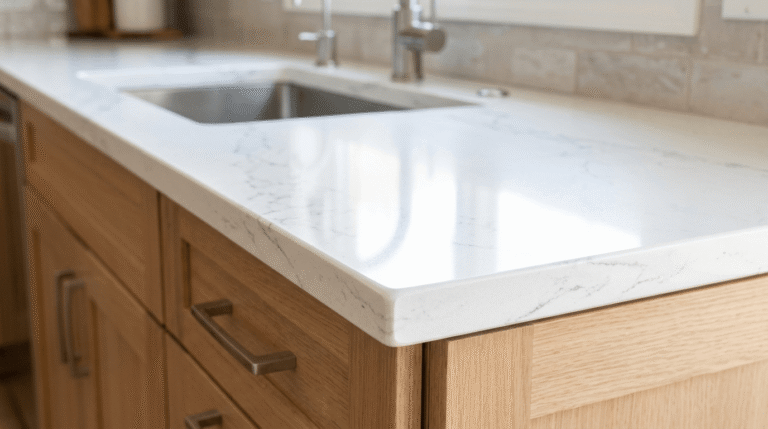
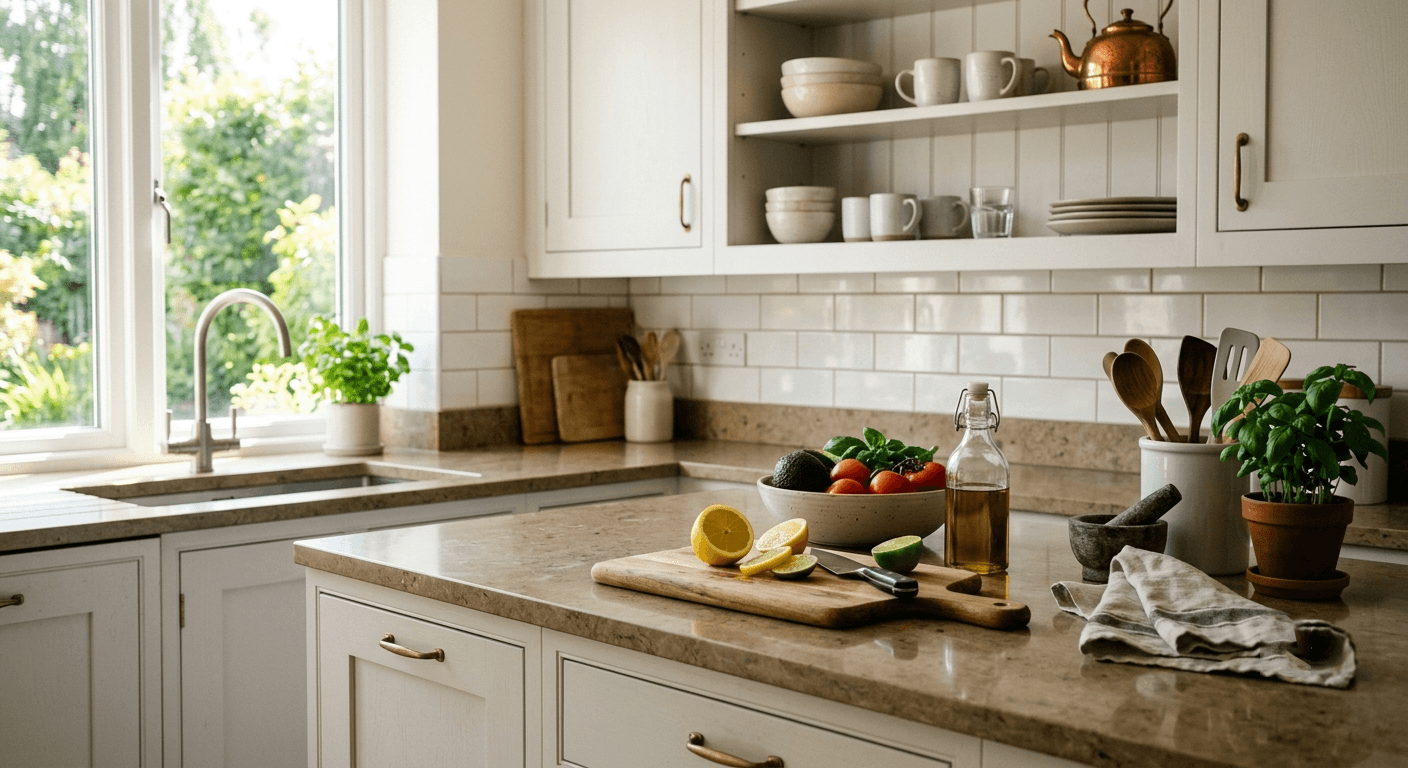
Countertop heat resistance determines whether a surface can withstand direct contact with hot pans, trivets, and cooking equipment without cracking, discoloring, or losing structural integrity. Kitchen surfaces routinely encounter temperatures between 200°F and 500°F (93°C to 260°C) from stovetop cookware, appliances, and baking dishes, so material selection directly affects long-term surface condition.
Countertop materials fall into two broad heat-performance categories: natural stone and engineered or manufactured surfaces. Natural stone materials such as granite, marble, and quartzite form under geological heat and pressure, which gives them inherent thermal stability. Engineered materials such as quartz and laminate combine mineral content, polymer resin, or laminated layers, which introduces heat sensitivity at the resin or adhesive level even when the base material is heat resistant.
This guide ranks common countertop materials by heat tolerance, explains how heat resistance relates to stain and scratch resistance, and identifies which materials perform best across all three durability factors. It also covers practical heat-protection methods and selection criteria for matching a countertop material to kitchen use patterns.
The comparisons in this guide use manufacturer technical data and material science properties rather than marketing claims, so the rankings reflect measurable thermal performance under typical kitchen conditions.
What Makes a Countertop Heat Resistant
A countertop is heat resistant when its surface material withstands direct or indirect contact with high-temperature objects without melting, discoloring, cracking, or releasing harmful compounds. Heat resistance depends on three material properties: thermal conductivity, chemical composition, and surface structure.
Thermal conductivity determines how fast a material absorbs and disperses heat. Natural stone materials such as granite and quartzite have high thermal mass, which allows them to absorb heat gradually and distribute it across the slab rather than concentrating it at one contact point. Chemical composition determines whether a material’s binding agents degrade under heat. Engineered stone products contain polymer resin, typically 7% to 15% of total content, and this resin softens or discolors at sustained temperatures above 300°F (149°C) even though the mineral content itself remains stable. Surface structure affects heat resistance because porous or laminated materials transfer heat unevenly, which increases the risk of localized damage such as scorching or delamination.
A material’s heat resistance rating reflects its performance under direct, sustained, or repeated heat exposure rather than brief contact, since even heat-resistant surfaces can show damage from extended contact with extreme temperatures.
Best Heat-Resistant Countertop Materials, Ranked
Granite, marble, and quartzite rank as the most heat-resistant countertop materials because their natural mineral composition withstands direct contact with hot cookware without damage. Quartz and laminate rank lower because their polymer resin and laminate layers degrade under sustained high heat despite performing well against everyday kitchen use.
This ranking evaluates materials by maximum safe contact temperature, resistance to thermal shock, and susceptibility to discoloration or structural damage. Natural stone materials formed under intense geological heat generally outperform engineered materials that combine minerals with heat-sensitive binding agents.
Granite: How Much Heat Can It Handle?
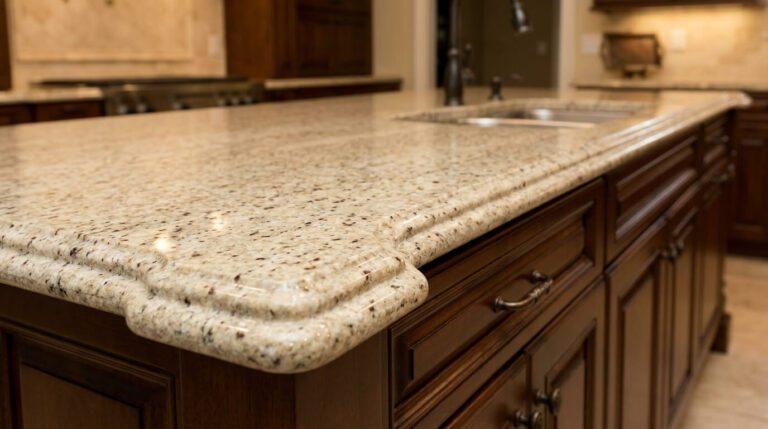
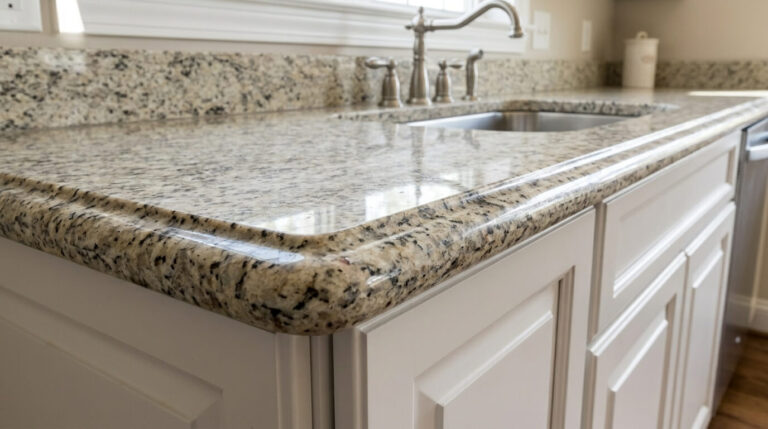
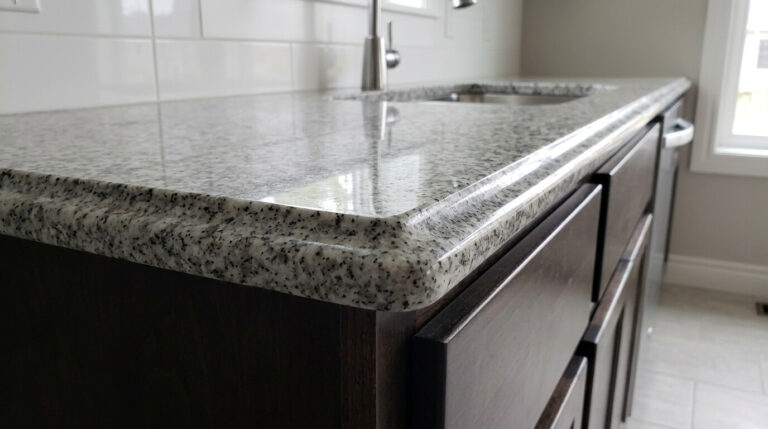
Granite withstands direct contact with cookware up to approximately 480°F to 500°F (249°C to 260°C) without sustaining damage. Granite forms through the cooling of magma under extreme heat and pressure, which gives the mineral crystalline structure inherent thermal stability at typical kitchen temperatures.
Granite’s high quartz and feldspar content provides consistent thermal mass across the slab, so heat disperses rather than concentrating at the contact point. Rapid temperature changes, such as moving a pan directly from a stove to a cold, wet granite surface, can create thermal shock that causes hairline cracking in unsealed or low-quality slabs. Granite requires periodic sealing to maintain both heat and stain performance, since an unsealed surface allows moisture to penetrate microscopic pores and weaken the stone’s structural consistency over repeated heat cycles.
Marble: Is It Actually Heat Resistant?
Marble resists heat from direct contact with hot cookware and can tolerate temperatures comparable to granite, generally up to 480°F (249°C), without melting or structural failure. Marble forms through the metamorphosis of limestone under heat and pressure, which gives it natural thermal stability similar to other metamorphic stones.
Marble’s higher porosity compared with granite makes it more vulnerable to heat-related surface effects even though the stone itself does not melt or crack easily. Prolonged contact with hot pans can cause localized discoloration or dulling of marble’s polished finish, particularly on unsealed surfaces where heat interacts with absorbed oils or liquids trapped beneath the surface. Marble performs well against occasional heat exposure but requires trivets or pads for extended cooking tasks to preserve its surface finish.
Laminate: Heat Tolerance and Its Limits
Laminate countertops tolerate brief, low-level heat contact but sustain damage from direct contact with hot cookware at temperatures above 275°F (135°C). Laminate consists of layered paper or fabric sheets bonded with resin under a decorative top layer, and this resin bond weakens or scorches under sustained heat exposure.
Direct contact with a hot pan can cause laminate to blister, discolor, or delaminate at the seam between the decorative layer and the substrate. Laminate’s heat vulnerability stems from its adhesive-based construction rather than its surface material, since the resin bonding agent has a lower heat threshold than the natural or engineered stone materials used in other countertop categories. Laminate manufacturers recommend trivets or heat pads for all hot cookware, since even short-term direct contact can cause permanent surface damage.
Quartz, Quartzite, and Other Common Options
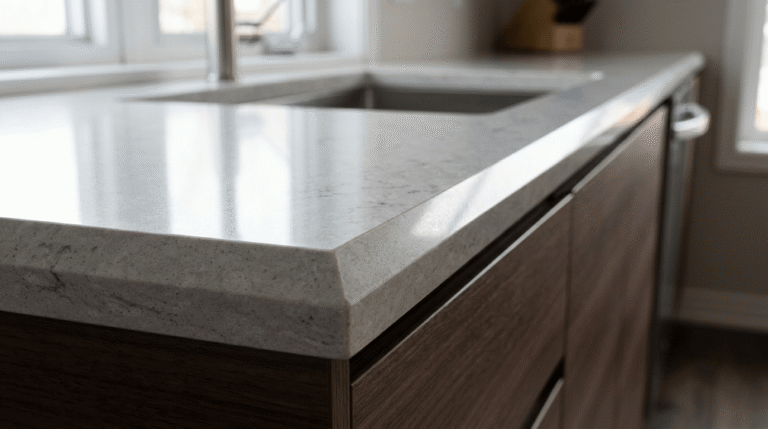
Quartz countertops tolerate direct heat up to approximately 150°F to 200°F (66°C to 93°C) before the polymer resin binding the material begins to soften or discolor, while quartzite, a natural stone, withstands heat comparable to granite at up to 480°F to 500°F (249°C to 260°C). The shared name creates frequent confusion, though the two materials differ substantially in composition and heat performance.
Quartz consists of roughly 90% crushed quartz mineral combined with polymer resin and pigment, and the resin component is the primary heat-limiting factor despite the mineral content’s natural heat resistance. Manufacturers such as Caesarstone and Cambria advise against placing hot cookware directly on quartz surfaces for this reason. Quartzite forms naturally from sandstone subjected to heat and pressure, giving it a mineral structure and thermal performance similar to granite. Other engineered options, including solid surface materials such as Corian, tolerate moderate heat up to approximately 212°F (100°C) but can scorch or discolor under direct contact with hot pans.
Heat Resistance vs. Stain and Scratch Resistance
Heat resistance, stain resistance, and scratch resistance measure separate material properties, and a countertop material can rank highly in one category while ranking lower in another. Granite and quartzite perform well across all three categories due to their dense mineral structure, while quartz offers strong stain and scratch resistance despite moderate heat tolerance, and marble offers strong heat tolerance despite lower stain resistance.
Stain resistance depends primarily on surface porosity, while scratch resistance depends on mineral hardness measured on the Mohs scale. Heat resistance depends on thermal conductivity and the presence of heat-sensitive binding agents. These three properties do not correlate directly, so material selection requires evaluating each property according to specific kitchen use patterns rather than assuming that heat resistance predicts overall durability.
Stain-Resistant and Non-Porous Countertops
Quartz and solid surface materials rank as the most stain-resistant countertop options because their non-porous, engineered construction prevents liquids from penetrating the surface. Quartz’s resin binder fills microscopic gaps between mineral particles, creating a surface with near-zero porosity that resists staining from oil, wine, coffee, and acidic foods without sealing.
Granite offers moderate stain resistance and requires sealing to maintain non-porous performance, since its natural mineral structure contains microscopic pores that absorb liquids when left unsealed. Marble ranks lowest in stain resistance among common countertop materials because its calcium carbonate composition reacts with acidic substances, causing etching that permanently alters the surface texture regardless of sealing.
Scratch-Resistant Countertops
Granite and quartz rank as the most scratch-resistant countertop materials, with Mohs hardness ratings of approximately 6 to 7, which allows both surfaces to resist scratching from knives, cookware, and everyday kitchen tools. Quartzite matches this hardness range due to its similar mineral composition.
Marble ranks lower in scratch resistance, with a Mohs hardness of approximately 3 to 4, making it susceptible to visible scratching from metal utensils and abrasive cleaning tools. Laminate surfaces resist light scratching from routine use but sustain permanent damage from direct cutting or abrasive contact, since scratches expose the substrate layer beneath the decorative surface and cannot be polished out.
Most Durable Countertop Materials Overall
Granite and quartzite rank as the most durable countertop materials overall because they combine high heat resistance, strong scratch resistance, and moderate-to-high stain resistance within a single natural stone surface. Quartz ranks closely behind for overall durability due to superior stain and scratch performance, despite lower heat tolerance than natural stone.
Overall durability depends on how a material performs across heat, stain, and scratch resistance simultaneously rather than excelling in a single category. Granite’s crystalline mineral structure provides consistent performance across all three factors when properly sealed, while quartzite matches or exceeds granite’s hardness and heat tolerance due to its similarly dense natural composition. Quartz offers the most consistent day-to-day durability for kitchens that prioritize stain and scratch resistance over maximum heat tolerance, since its non-porous surface eliminates the sealing maintenance that natural stone requires. Marble and laminate rank lower in overall durability due to marble’s vulnerability to etching and scratching and laminate’s vulnerability to heat and moisture damage at the seams.
How to Protect Any Countertop from Heat Damage
To protect any countertop from heat damage, place a trivet, pad, or cooling rack beneath hot cookware before setting it on the surface, regardless of the material’s rated heat resistance. Direct contact with cookware above 300°F (149°C) can damage even heat-resistant materials over repeated exposure, since cumulative thermal stress weakens binding agents and mineral structure over time.
Allow cookware to cool briefly before placing it on any countertop surface, since rapid temperature transfer causes more damage than gradual heat exposure. Avoid sliding hot pans across the surface, as this combines heat exposure with scratching, which compounds surface wear. Seal natural stone countertops according to the manufacturer’s recommended schedule, typically every 1 to 2 years for granite and marble, since an unsealed surface loses thermal consistency as pores absorb moisture and oils. Clean any heat-related residue promptly with a manufacturer-approved cleaner to prevent staining from combining with heat damage at the same contact point.
How to Choose the Right Heat-Resistant Countertop for Your Kitchen
Choose a heat-resistant countertop by matching material performance to actual cooking habits, since a household that frequently sets hot cookware directly on the counter requires higher heat tolerance than a household that consistently uses trivets. Granite or quartzite suits kitchens with frequent direct heat exposure, while quartz suits kitchens that prioritize stain resistance and low maintenance over maximum heat tolerance.
Evaluate cooking frequency and cookware habits first, since a kitchen used primarily for reheating and light meal preparation encounters less heat stress than a kitchen used for daily stovetop cooking and baking. Consider maintenance capacity next, as natural stone materials such as granite and marble require periodic sealing to sustain heat and stain performance, while quartz requires no sealing but has a lower maximum heat threshold.
Budget affects material selection as well, since laminate offers the lowest upfront cost but the lowest heat tolerance, while granite and quartzite occupy a higher price range in exchange for superior heat performance. Match the countertop material to the specific combination of heat exposure, maintenance willingness, and budget that applies to the kitchen’s actual use pattern rather than selecting based on a single performance criterion.