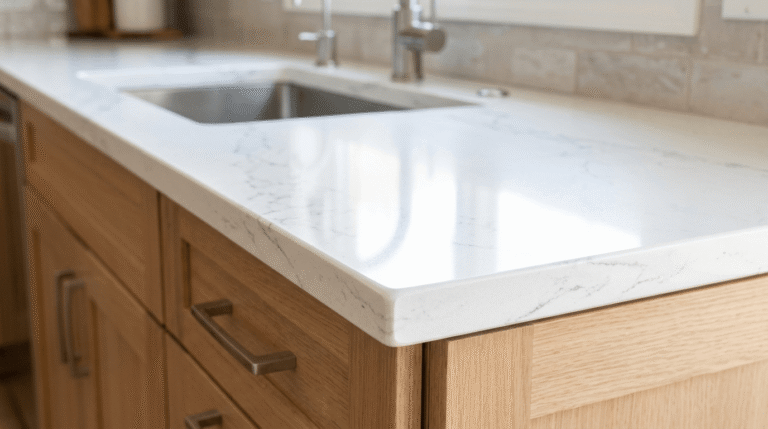
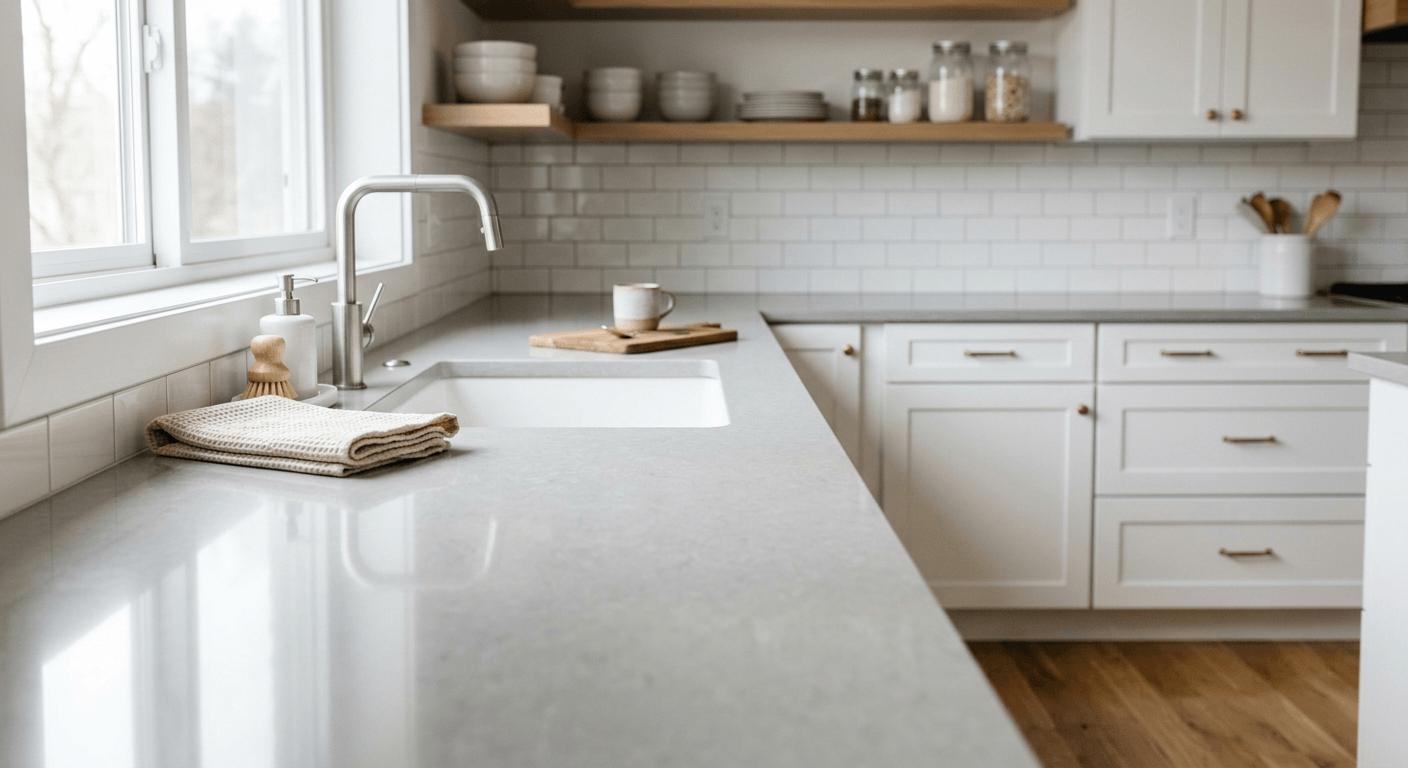
A low-maintenance countertop reduces the time, products, and effort required to keep a kitchen or bathroom surface clean, sanitary, and free of visible damage. Homeowners choose these surfaces to limit routine sealing, avoid frequent stain removal, and reduce long-term repair costs. Material composition, surface porosity, and factory finishing determine how much upkeep a countertop requires over its service life.
This guide compares low-maintenance countertop materials by porosity, durability, stain resistance, and installed cost. It explains which materials resist scratches, heat, and chipping, and which surfaces require periodic sealing despite marketing claims of being maintenance-free. Each section addresses one buying factor so the comparisons remain consistent across materials.
The guide also outlines common limitations that manufacturers do not always disclose, such as resin discoloration under heat or micro-fracturing in engineered stone. A final section explains how to match a countertop material to a household’s cooking habits, budget, and cleaning routine, followed by baseline cleaning and care practices that apply across most low-maintenance surfaces.
What Makes a Countertop Low Maintenance?
A low-maintenance countertop combines low porosity, high scratch and stain resistance, and minimal sealing requirements. These properties reduce the frequency of cleaning, resealing, and repair compared with high-porosity or unfinished natural materials.
Four factors determine a countertop’s maintenance level:
- Porosity: A non-porous or low-porosity surface resists liquid absorption and bacterial growth without sealing.
- Surface hardness: A harder surface resists scratches from knives, cookware, and abrasive cleaning tools.
- Heat tolerance: A heat-resistant surface withstands direct contact with hot cookware without discoloring or warping.
- Finish stability: A stable factory finish resists etching from acidic foods, cleaning chemicals, and UV exposure.
A material that scores well across all four factors requires less frequent maintenance than a material that scores well in only one or two categories. Engineered stone and porcelain typically rank highest across all four factors, while natural stones such as marble require sealing despite high hardness.
Porous vs. Non-Porous Materials
Porosity determines how much liquid a countertop surface absorbs, which directly affects staining and bacterial growth. A porous material contains microscopic openings that allow water, oil, and pigments to penetrate below the surface, while a non-porous material blocks penetration at the surface level.
Marble, unsealed granite, and unsealed concrete are porous materials that absorb spilled liquids within minutes if left uncleaned. Engineered quartz, porcelain, and solid surface acrylic are non-porous materials that resist the same spills without staining. Porous stone requires periodic sealing to reduce absorption, while non-porous materials do not require sealing to maintain their stain resistance. Porosity also affects bacterial growth, since absorbed liquids in porous stone can support bacteria below the surface where standard cleaning cannot reach.
Sealed vs. Unsealed Surfaces
A sealed countertop surface has a protective coating applied to reduce porosity, while an unsealed surface has no such coating and remains vulnerable to absorption. Sealants fill the microscopic pores in natural stone, creating a barrier between the stone and spilled liquids.
Granite, marble, and other natural stones typically require sealing at installation and resealing every one to three years, depending on the stone’s natural porosity and the sealant used. Engineered materials such as quartz and porcelain do not require sealing because their manufacturing process produces a non-porous surface. An unsealed porous countertop absorbs oil, wine, and coffee within minutes, producing stains that standard cleaning cannot remove. Resealing restores stain resistance but does not repair stains that have already penetrated the stone.
Types of Low-Maintenance Countertop Materials
Seven material categories account for most low-maintenance countertop installations: engineered quartz, granite, quartzite, porcelain, solid surface, laminate, and natural stone alternatives such as sintered stone. Each category differs in composition, manufacturing process, and baseline maintenance requirements.
Engineered materials (quartz, porcelain, solid surface, sintered stone) generally require less maintenance than natural stone (granite, quartzite) because manufacturing controls porosity during production. Laminate ranks as low maintenance for daily cleaning but has lower resistance to heat and physical damage than stone-based materials.
Quartz (Engineered Stone)
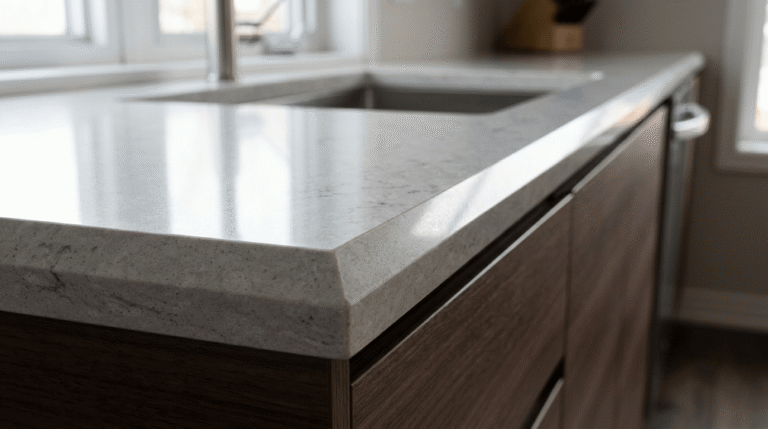
Quartz countertops are engineered surfaces made from crushed quartz minerals bound with polymer resin, producing a non-porous surface that does not require sealing. The mineral content typically accounts for 90 to 94% of the material, with resin and pigments making up the remainder.
The polymer resin fills all natural gaps between quartz particles during manufacturing, eliminating the pores found in natural stone. This composition gives quartz consistent stain resistance across the entire slab, unlike natural stone, where porosity can vary by section. The resin component limits heat tolerance; direct contact with cookware above approximately 150°C (300°F) can discolor or crack the surface, so a trivet or hot pad is required for hot pans.
Granite
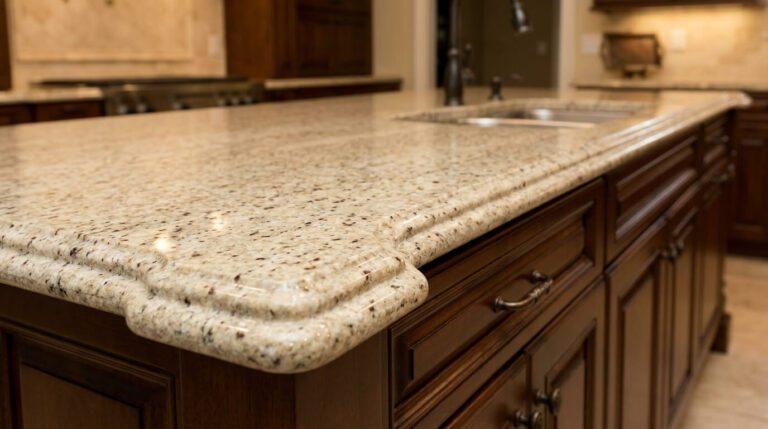
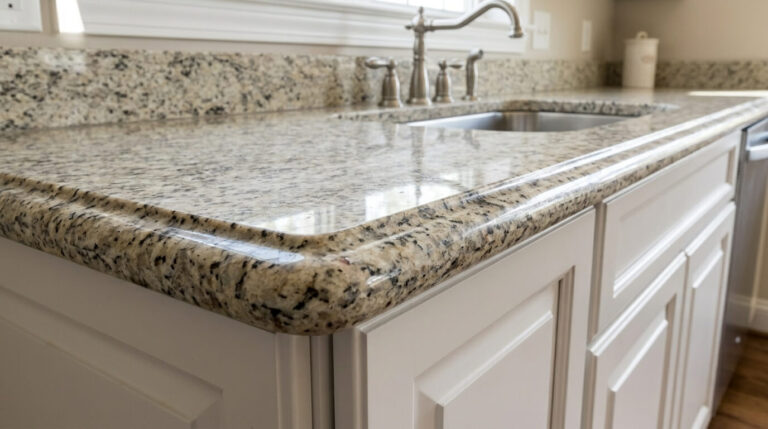
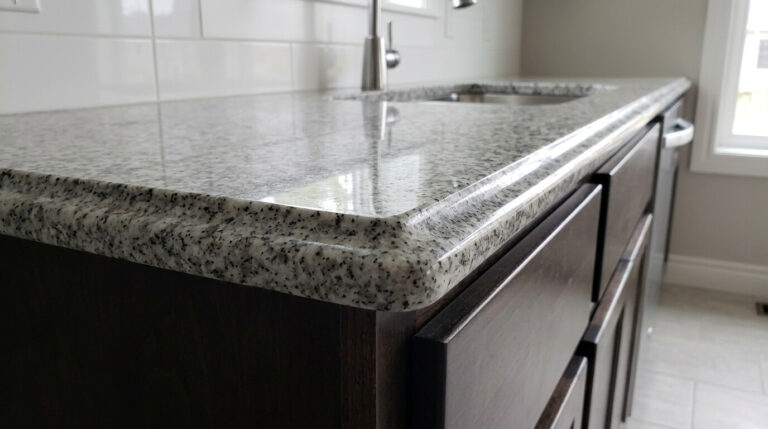
Granite is a natural igneous stone composed primarily of quartz, feldspar, and mica, quarried in slabs and polished for countertop use. Granite ranks among the hardest natural countertop materials, with a Mohs hardness of approximately 6 to 7.
Granite’s mineral crystal structure creates natural pores that vary by slab, requiring sealing at installation and periodic resealing to maintain stain resistance. A properly sealed granite countertop resists most kitchen stains, scratches, and heat from cookware. Granite’s maintenance burden centers on the sealing schedule rather than daily cleaning, since a sealed surface responds to routine cleaning in the same way as engineered stone.
Quartzite
Quartzite is a natural metamorphic stone formed when sandstone is subjected to heat and pressure, producing a surface with a Mohs hardness of approximately 7, comparable to or higher than granite. Quartzite’s crystalline structure gives it high scratch resistance and a natural stone appearance often compared to marble.
Despite its hardness, quartzite remains porous and requires sealing to resist staining from oil, wine, and acidic foods. Sealing frequency for quartzite typically matches granite, at approximately every one to two years, depending on the specific stone’s porosity. Quartzite differs from engineered quartz in composition and origin: quartzite is a natural stone, while engineered quartz is a manufactured composite.
Porcelain
Porcelain countertops are manufactured by compressing clay, feldspar, and mineral pigments at high temperature and pressure, producing a dense, non-porous slab. The firing process gives porcelain a Mohs hardness of approximately 7 to 8, along with high resistance to heat, UV exposure, and staining.
Porcelain’s non-porous structure eliminates the need for sealing, and its resistance to UV fading makes it suitable for outdoor kitchen installations where other materials degrade. Porcelain slabs are typically thinner than quartz or granite, which reduces weight but increases the risk of chipping along unsupported edges during installation or heavy impact.
Solid Surface
Solid surface countertops are manufactured from acrylic or polyester resin combined with mineral fillers, producing a non-porous surface that can be sanded and polished to remove scratches. The material’s uniform composition allows seams to be fused and sanded until they become nearly invisible.
Solid surface ranks lower in scratch and heat resistance than quartz, granite, or porcelain, with a Mohs hardness of approximately 3 to 4. Surface scratches and minor burns can typically be repaired by sanding, which is not possible with stone-based materials. This repairability offsets the material’s lower baseline hardness for households prioritizing long-term surface renewal over initial scratch resistance.
Laminate
Laminate countertops consist of a paper and resin surface layer bonded to a particleboard or medium-density fiberboard (MDF) core, producing a non-porous top layer at a lower cost than stone-based materials. The surface layer resists staining and requires no sealing.
Laminate has the lowest heat and impact resistance among common low-maintenance materials; direct contact with hot cookware can scorch or delaminate the surface, and heavy impacts can chip the edge or crack the surface layer. Water that penetrates a seam or edge can swell the particleboard core, so laminate requires prompt cleanup of standing water rather than periodic sealing.
Natural Stone Alternatives
Sintered stone is a manufactured alternative to natural stone, produced by compressing mineral raw materials under extreme heat and pressure without resin binders, resulting in a fully non-porous surface. This process replicates and often exceeds the density of natural stone.
Sintered stone resists staining, scratching, heat, and UV exposure without sealing, making it comparable to porcelain in maintenance requirements. The material is typically installed in large-format slabs with minimal seams, which reduces the number of joints where dirt or liquid could otherwise collect.
Most Durable Low-Maintenance Countertops
Porcelain, sintered stone, quartzite, and granite rank as the most durable low-maintenance countertop materials, based on scratch resistance, heat tolerance, and chip resistance. Quartz ranks close behind these materials in scratch resistance but has lower heat tolerance due to its resin content.
Durability affects maintenance indirectly: a more durable surface requires fewer repairs, less frequent replacement of damaged sections, and less careful handling during daily use.
Scratch Resistance by Material
Porcelain, quartzite, and granite offer the highest scratch resistance among common countertop materials, each reaching a Mohs hardness of 6 to 8. Engineered quartz follows closely with a hardness of approximately 7, though its resin content makes it slightly more susceptible to scratching from very hard or sharp objects than pure mineral stone.
Solid surface and laminate rank lowest in scratch resistance, with Mohs hardness values of approximately 3 to 4 for solid surface and a thin, scratch-prone top layer for laminate. Cutting directly on any countertop material, including the hardest stones, can dull knives and create fine surface scratches over time; a cutting board limits this wear regardless of material.
Heat and Impact Resistance
Porcelain and granite tolerate direct contact with hot cookware without discoloring, since both materials form through high-heat manufacturing or geological processes. Quartzite shares this heat tolerance due to its natural mineral composition.
Engineered quartz has lower heat tolerance than natural stone because its polymer resin can discolor or crack when exposed to temperatures above approximately 150°C (300°F). Solid surface has similarly limited heat resistance, as its acrylic or polyester base can scorch under direct contact with hot cookware. Laminate has the lowest heat tolerance of the common materials, since its resin-paper surface layer can scorch or delaminate from sustained heat exposure. A trivet or hot pad reduces heat damage risk across all seven material categories.
Chip and Crack Resistance
Granite and quartzite resist chipping and cracking under normal kitchen use due to their dense crystalline structure, though sharp impacts at unsupported edges or corners can chip any natural stone. Sintered stone and porcelain also resist chipping under typical use, though porcelain’s thinner slab profile increases chip risk at exposed edges compared with thicker stone slabs.
Engineered quartz resists chipping under normal use but can crack under concentrated impact or improper installation support, such as an unsupported overhang. Solid surface resists cracking better than stone-based materials because its resin composition allows slight flexing, though it remains vulnerable to deep gouges from sharp impacts. Laminate has the lowest chip and crack resistance, since its layered construction can separate or crack under heavy or sharp impact.
Stain-Resistant and Non-Porous Countertop Options
Engineered quartz, porcelain, and sintered stone provide the highest stain resistance among low-maintenance countertop materials because their manufacturing processes eliminate surface porosity. Granite and quartzite offer strong stain resistance only when properly sealed.
Why Porosity Determines Stain Resistance
Porosity determines stain resistance because a porous surface allows liquid pigments to penetrate below the surface where standard cleaning cannot remove them. A non-porous surface blocks this penetration, keeping spills on the surface until they are wiped away.
Common kitchen substances that stain porous surfaces include red wine, coffee, tea, turmeric, olive oil, and citrus juice. These substances contain pigments or acids that bond with the internal structure of porous stone when absorption occurs. A non-porous countertop exposed to the same substances shows no staining as long as the spill is removed within a normal cleaning cycle, since the liquid cannot penetrate the surface.
Best Materials for Stain Resistance
Engineered quartz, porcelain, sintered stone, and solid surface rank as the best materials for stain resistance because each forms a fully non-porous surface during manufacturing. These materials resist staining from wine, oil, coffee, and acidic foods without requiring a sealant.
Granite and quartzite rank below these engineered materials for stain resistance in their natural, unsealed state, though a properly sealed slab of either material approaches the stain resistance of engineered surfaces. Laminate resists staining on its intact surface layer but loses stain resistance at chipped edges or seams where the underlying core becomes exposed.
Light and White Countertops That Resist Staining
White and light-colored countertops show stains more visibly than dark-colored surfaces because light backgrounds create higher contrast with pigmented spills. Material composition, not color, determines whether a stain actually penetrates the surface.
A white engineered quartz or porcelain countertop resists staining as effectively as a dark slab of the same material, since both share the same non-porous composition. A white granite or marble countertop shows the same porosity-related staining risk as a darker slab of natural stone and requires the same sealing schedule. Homeowners who prefer light countertops and want to minimize visible staining risk should prioritize non-porous engineered materials over light-colored natural stone.
Cost of Low-Maintenance Countertops by Material
Low-maintenance countertop materials typically range from $40 to $200 per square foot installed in the United States, with the price determined by material type, slab thickness, edge treatment, and regional labor rates. The following table compares typical installed price ranges by material.
| Material | Typical Installed Cost (per sq. ft., USD) | Sealing Required |
|---|---|---|
| Laminate | $20–$60 | No |
| Solid Surface | $50–$120 | No |
| Granite | $50–$150 | Yes |
| Engineered Quartz | $60–$150 | No |
| Porcelain | $60–$180 | No |
| Quartzite | $70–$200 | Yes |
| Sintered Stone | $80–$200 | No |
Material cost typically accounts for 60 to 75% of the total installed price, with labor, edge profile, and slab fabrication making up the remainder. Materials that require sealing, such as granite and quartzite, carry an additional long-term cost of approximately $150 to $400 per resealing service over the life of the countertop, depending on surface area and product used. Non-porous materials avoid this recurring cost, which can offset a higher upfront price over a 10- to 20-year ownership period.
Common Problems and Limitations of “Low-Maintenance” Countertops
Low-maintenance countertops still carry limitations that marketing materials often omit, including heat sensitivity in resin-based materials, visible seams, and vulnerability to specific impact or chemical damage.
- Heat damage in resin-based materials: Engineered quartz and solid surface can discolor, crack, or scorch when exposed to direct heat from cookware, despite being marketed as low maintenance.
- UV sensitivity: Quartz countertops can fade or discolor under prolonged direct sunlight, which limits their use in outdoor installations; porcelain and sintered stone resist UV exposure and suit outdoor use.
- Chemical sensitivity: Strong acids, alkaline cleaners, and abrasive scouring pads can dull or etch the surface of quartz and solid surface countertops, despite their stain-resistant rating for food-based substances.
- Visible seams: Slab-based materials, including granite, quartzite, and large-format porcelain, may show visible seams in installations that exceed standard slab dimensions, requiring careful seam placement during fabrication.
- False “sealed for life” claims: Some granite and quartzite products marketed with permanent sealants still show reduced stain resistance over time, and manufacturer testing conditions may not reflect all household use cases.
- Edge chipping in thin slabs: Porcelain and engineered quartz slabs thinner than 20 millimetres carry a higher risk of edge chipping during installation or heavy impact than thicker stone slabs.
How to Choose the Best Low-Maintenance Countertop for Your Kitchen
Choosing a low-maintenance countertop requires matching material properties to a household’s cooking habits, budget, and long-term ownership plans, since no single material ranks highest across every category.
A household that cooks frequently with hot cookware benefits from a material with high heat tolerance, such as granite, porcelain, or quartzite, over resin-based materials such as quartz or solid surface. A household prioritizing a consistent, non-porous surface without a sealing schedule benefits from engineered quartz, porcelain, solid surface, or sintered stone. A household with a fixed renovation budget can compare the installed cost ranges in the cost section against the long-term resealing costs associated with granite and quartzite.
Buyers should also consider these factors before selecting a material:
- Slab thickness: A thicker slab (30 millimetres or more) reduces the risk of chipping and cracking compared with thinner slabs.
- Edge profile: A rounded or beveled edge reduces chip risk compared with a sharp square edge, particularly in solid surface and thin porcelain.
- Color and pattern: Light, solid colors show stains and scratches more visibly than dark or patterned surfaces, regardless of material.
- Installation environment: Outdoor or high-sunlight installations require UV-resistant materials such as porcelain or sintered stone rather than quartz.
- Repair needs: Solid surface allows sanding and repair of scratches and minor burns, which stone-based materials do not allow without professional refinishing.
Countertop Care and Cleaning Basics
Routine cleaning for most low-maintenance countertops involves wiping the surface with warm water and a mild dish soap, followed by drying with a soft cloth to prevent water spotting.
Daily and weekly care should follow these steps:
- Remove loose debris and food particles from the surface.
- Wipe the surface with a cloth dampened in warm water and mild dish soap.
- Rinse the surface with clean water to remove soap residue.
- Dry the surface with a soft cloth to prevent streaking or spotting.
- Wipe spills, particularly oil, wine, and acidic liquids, as soon as they occur.
Households should avoid abrasive scouring pads, bleach-based cleaners, and highly acidic or alkaline products on quartz, solid surface, and sealed natural stone, since these can dull the finish or degrade sealants over time. A cutting board and trivet reduce scratch and heat damage risk across all seven material categories covered in this guide, including materials rated for high scratch or heat resistance. Sealed natural stone countertops, including granite and quartzite, require resealing on a schedule of approximately one to three years, determined by a simple water-absorption test: if water darkens the stone within 15 to 30 minutes, the surface requires resealing.