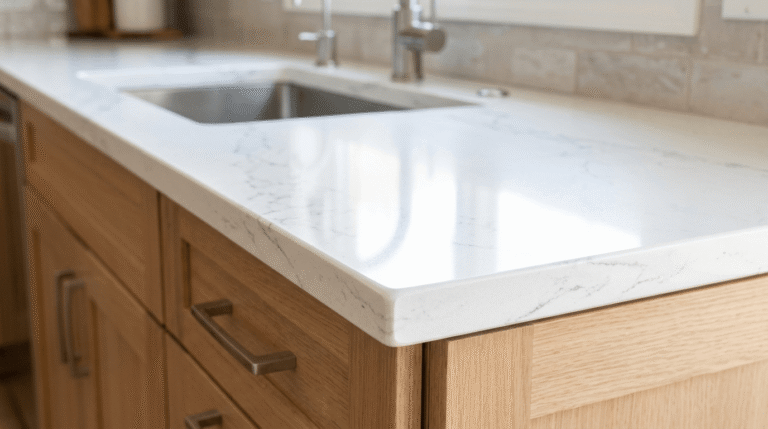
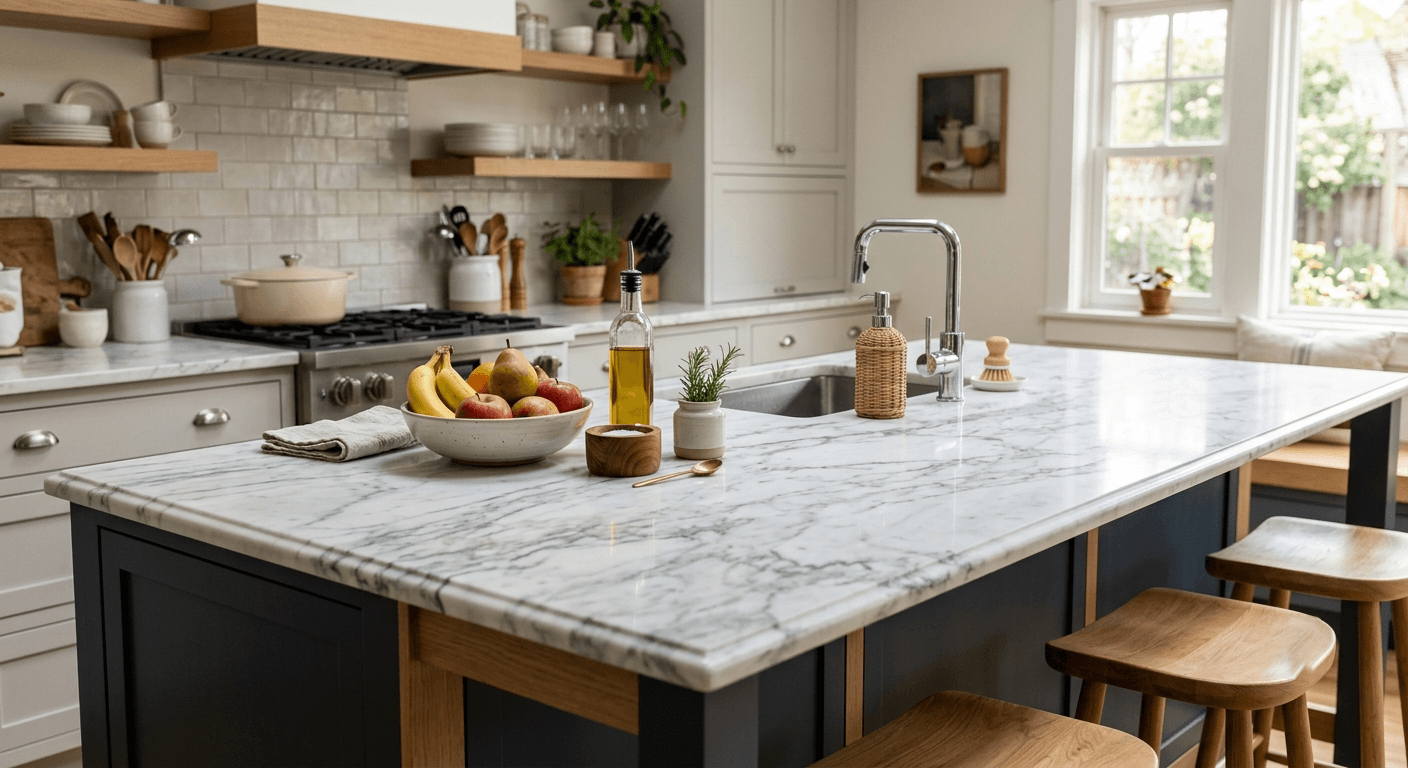
Marble and granite are the two most common natural stone materials used for kitchen countertops. Both form through geological processes over millions of years, and both are cut into slabs for use as work surfaces, but they differ in mineral composition, hardness, porosity, and appearance. These differences affect how each material performs during daily food preparation, how it resists heat and staining, and how much maintenance it requires over time.
Granite is an igneous rock composed mainly of quartz, feldspar, and mica, formed from cooled magma. Marble is a metamorphic rock formed when limestone recrystallizes under heat and pressure, and it consists primarily of calcite or dolomite. This structural difference is the source of most of the practical distinctions between the two materials, including their resistance to scratching, their reaction to acidic substances, and their surface veining patterns.
Choosing between marble and granite for a kitchen countertop depends on the household’s cooking habits, maintenance preferences, budget, and design goals. A household that prioritizes low maintenance and high resistance to everyday wear may find granite better suited to its needs. A household that prioritizes a specific veined appearance and is prepared for more frequent sealing and careful cleaning may prefer marble.
This article compares marble and granite across hardness, durability, kitchen performance, visual identification, cost, and maintenance requirements to help identify which material fits a specific kitchen’s conditions and priorities.
What Is the Difference Between Marble and Granite?
Marble and granite differ primarily in geological origin, mineral composition, and physical hardness. Granite is an igneous rock formed from cooled and solidified magma, giving it a dense, crystalline structure composed of quartz, feldspar, and mica. Marble is a metamorphic rock formed when limestone or dolomite undergoes recrystallization under heat and pressure, resulting in a softer structure composed mainly of calcite.
These origins produce distinct surface characteristics. Granite typically displays a speckled, granular pattern created by its mineral crystals. Marble typically displays continuous veining created by mineral impurities present during recrystallization. Granite’s crystalline structure makes it harder and less porous than marble, while marble’s calcite content makes it more reactive to acidic substances and more prone to surface etching. These structural differences carry directly into how each material performs under kitchen conditions such as knife use, hot cookware, and contact with acidic foods.
Marble vs. Granite Hardness: Which Is Stronger?
Granite is harder than marble. Granite ranks 6 to 7 on the Mohs hardness scale, while marble ranks 3 to 4. This difference means granite resists scratching, chipping, and surface wear from daily kitchen use more effectively than marble, which is more susceptible to physical damage from knives, cookware, and dense objects placed directly on the surface.
Hardness affects both immediate durability and long-term appearance. A harder surface such as granite retains its polish and edge definition longer under repeated contact with utensils and cookware. A softer surface such as marble can develop visible scratches and dull patches in high-traffic areas, particularly near sinks and food preparation zones, even with careful use.
Mohs Hardness Scale Comparison
Granite measures 6 to 7 on the Mohs hardness scale, and marble measures 3 to 4. The Mohs scale ranks mineral hardness from 1 (talc) to 10 (diamond) based on a material’s resistance to scratching by a harder substance. Granite’s position on the scale places it close to quartz and above common steel utensils, which reduces scratching from typical kitchen tools. Marble’s lower position places it closer to materials such as calcite, which explains its greater vulnerability to scratches from knives, keys, and other hard objects placed directly on the surface.
Scratch and Chip Resistance in Daily Use
Granite resists scratches and chips better than marble during everyday kitchen tasks. Granite’s higher hardness rating allows it to withstand direct contact with knives, pots, pans, and other kitchen tools without significant surface damage, though cutting directly on the surface can still dull blades and is not recommended for either material. Marble scratches more easily under the same conditions because its calcite structure is softer and more susceptible to abrasion. Chips are also more likely on marble edges and corners, particularly from dropped cookware or dense kitchen equipment, while granite edges typically withstand similar impacts without chipping.
Marble vs. Granite Durability for Long-Term Use
Granite offers greater overall durability for long-term kitchen use because of its higher hardness and lower porosity, while marble requires more consistent care to maintain its surface condition over the same period. Both materials can last for decades when properly installed and maintained, but granite tolerates heat, scratching, and general wear with less intervention, while marble is more vulnerable to etching from acidic substances and staining from prolonged liquid exposure.
Heat Resistance
Granite withstands direct heat from hot cookware better than marble. Granite’s mineral composition gives it a high tolerance for temperature exposure, allowing brief contact with hot pots or pans without significant risk of surface damage, although using a trivet is still recommended to prevent thermal shock from rapid temperature changes. Marble also resists heat reasonably well but is more prone to discoloration or surface stress when exposed to sudden or prolonged high temperatures, making protective barriers more important for marble surfaces.
Staining and Etching Risk
Marble carries a higher risk of staining and etching than granite. Marble’s calcite content reacts with acidic substances such as lemon juice, vinegar, and wine, causing visible dull spots called etching, even on sealed surfaces. Granite’s lower reactivity and lower porosity make it more resistant to both etching and staining, though unsealed or poorly sealed granite can still absorb liquids such as oil or wine over time. Regular sealing reduces staining risk for both materials, but marble requires more frequent attention to prevent visible surface changes from common kitchen substances.
Weight and Installation Considerations
Granite and marble are both heavy natural stone materials that require reinforced cabinetry and professional installation. Granite slabs typically weigh slightly more than marble slabs of the same thickness due to granite’s denser mineral composition, though the difference is generally not significant enough to change basic installation requirements. Both materials require a level, well-supported base, and both benefit from installation by professionals experienced in handling and fabricating natural stone to avoid cracking during transport, cutting, or placement.
Marble vs. Granite Countertops for Kitchens
Granite generally performs better than marble as a primary kitchen work surface due to its higher resistance to scratching, heat, and acidic staining, while marble is often selected for its appearance and used with additional protective habits during food preparation. The choice between the two depends on how the countertop will be used, with heavy daily cooking favoring granite’s resilience and design-focused kitchens favoring marble’s veining, provided the household is prepared for its maintenance needs.
Performance Around Heat, Acid, and Food Prep
Granite performs more consistently than marble when exposed to heat, acidic ingredients, and direct food preparation. Granite’s low porosity and high hardness allow it to tolerate hot cookware, citrus, tomatoes, and wine with minimal risk of etching or staining. Marble is more vulnerable in these conditions because its calcite content reacts with acidic ingredients, producing dull etched marks, and its softer surface is more prone to scratching from knives and kitchen tools used directly on the countertop. Cutting boards and trivets reduce this risk on marble surfaces during active food preparation.
Aesthetic Options (Including White Granite vs. Marble Look)
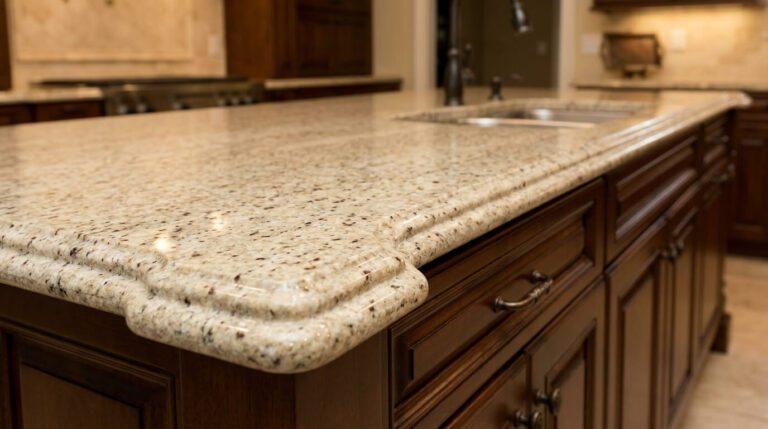
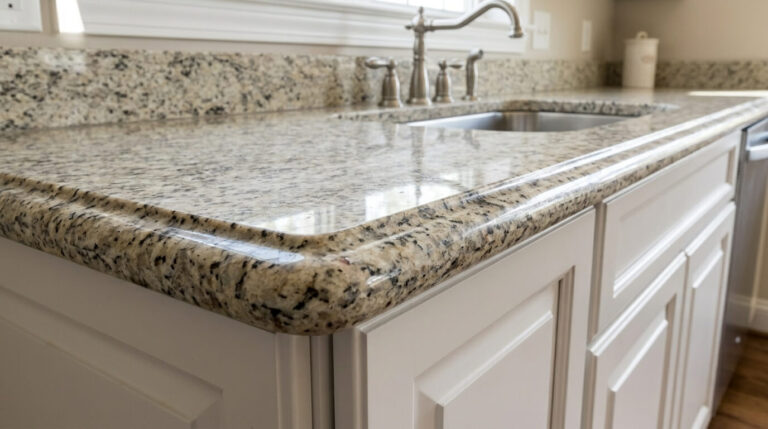
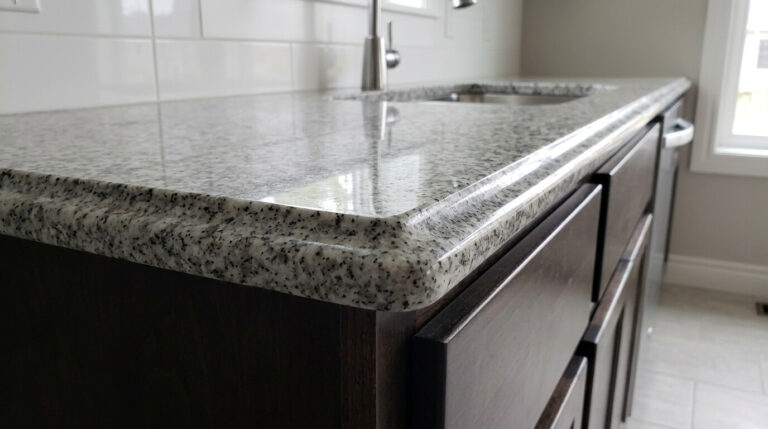
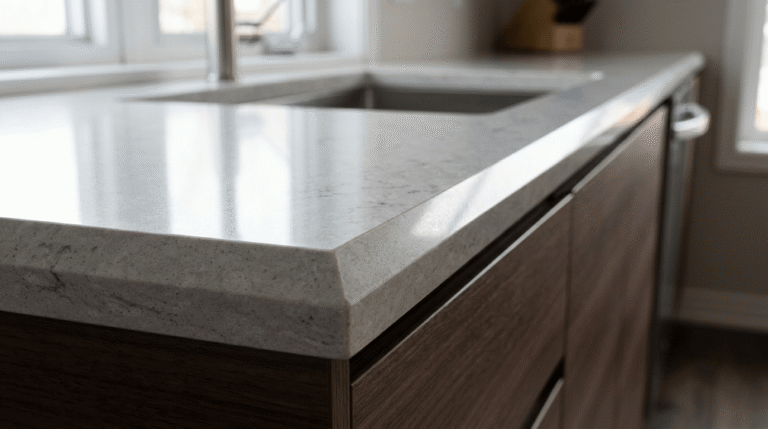
Granite and marble offer different visual characteristics that influence kitchen design choices. Granite typically displays a speckled or granular pattern with visible mineral flecks in colors such as black, gray, brown, and white, while marble typically displays soft, continuous veining across a more uniform background, most recognizably in white or cream tones. White granite varieties, such as those containing higher concentrations of quartz and feldspar, can visually resemble marble’s light coloring but retain granite’s granular texture rather than marble’s linear veining. Buyers seeking a marble appearance with granite’s durability sometimes select these lighter granite varieties or engineered quartz surfaces designed to replicate veined patterns.
How to Tell Marble and Granite Apart
Marble and granite can be told apart by examining surface pattern, texture, and reaction to acidic liquids. Granite displays a speckled, granular texture formed by visible mineral crystals, while marble displays continuous, flowing veins running through a more uniform base color. Granite’s surface feels consistently grainy across its entirety, while marble’s surface often shows smoother, more uniform sections interrupted by distinct vein lines.
A simple acid test also distinguishes the two materials. Placing a drop of vinegar or lemon juice on an inconspicuous area causes marble to etch, leaving a dull mark, while granite typically shows no visible reaction due to its lower calcite content. Weight can offer an additional clue during selection, as granite slabs of equal size are generally slightly heavier than marble slabs due to granite’s denser crystalline structure. Reviewing the slab’s pattern, texture, and reaction to acid together provides a reliable method for identification, particularly when comparing samples during a countertop selection process.
Which Is Better, Marble or Granite? A Decision Summary
Granite is generally the better choice for households prioritizing durability, heat resistance, and low maintenance, while marble is generally the better choice for households prioritizing a distinct veined appearance and willing to maintain a more careful cleaning and sealing routine. Neither material is universally superior, since the correct choice depends on cooking habits, design preferences, and the level of maintenance a household is prepared to commit to.
Choose Marble If…
Marble suits households that prioritize its veined appearance and are prepared to maintain it carefully. Marble is a suitable choice when the kitchen design calls for a light, veined surface, when the countertop will see moderate rather than heavy daily food preparation, when acidic ingredients can be kept off the surface or wiped promptly, and when the household is willing to reseal the surface regularly and address etching as it occurs.
Choose Granite If…
Granite suits households that prioritize durability and minimal maintenance. Granite is a suitable choice when the kitchen sees frequent, heavy cooking activity, when resistance to heat, scratching, and acidic staining is a priority, when a granular, speckled appearance fits the design plan, and when the household prefers a surface that requires less frequent sealing and careful handling than marble.
Caring for Marble and Granite Countertops
Marble and granite both require regular sealing, prompt spill cleanup, and pH-neutral cleaning products, though marble demands more consistent attention due to its higher porosity and reactivity. Both surfaces should be sealed periodically to reduce liquid absorption, with marble often requiring more frequent resealing than granite because of its greater porosity. Spills, particularly from acidic substances such as citrus juice, wine, and vinegar, should be wiped immediately on both materials, with extra urgency on marble to prevent etching.
Daily cleaning should use warm water and a mild, pH-neutral soap rather than acidic or abrasive cleaners, which can degrade the sealant and damage the stone’s surface on either material. Cutting boards and trivets protect both countertops from scratches and heat damage, though this practice is particularly important for marble given its lower hardness rating. Granite generally tolerates minor lapses in this routine better than marble, but consistent care extends the lifespan and appearance of both materials.
Cost Comparison: Marble vs. Granite Countertops
Granite and marble countertops generally fall within a similar overall price range, with the exact cost depending on stone quality, slab rarity, thickness, and regional labor rates. Both materials are typically priced per square foot and include material and installation costs, with high-grade or rare slabs of either stone commanding a premium over standard-grade material. Marble is often priced slightly higher than granite at comparable quality tiers due to lower global supply of premium marble deposits and higher fabrication care required during cutting and installation.
Long-term ownership costs also factor into the overall price comparison. Granite’s lower maintenance requirements typically result in lower costs over time, since it needs less frequent resealing and is less prone to damage that requires professional repair. Marble’s higher maintenance needs, including more frequent sealing and a greater likelihood of etching-related touch-ups, can add to its total cost of ownership beyond the initial installation price. Buyers comparing costs should request quotes based on the specific slab grade, thickness, and edge profile selected, since prices vary between suppliers and regions.