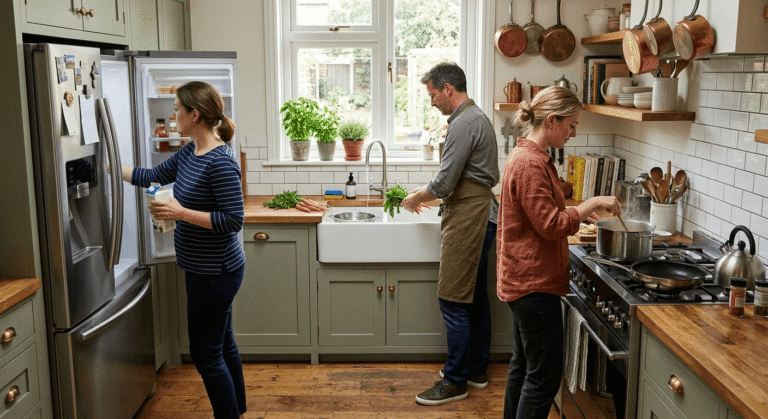
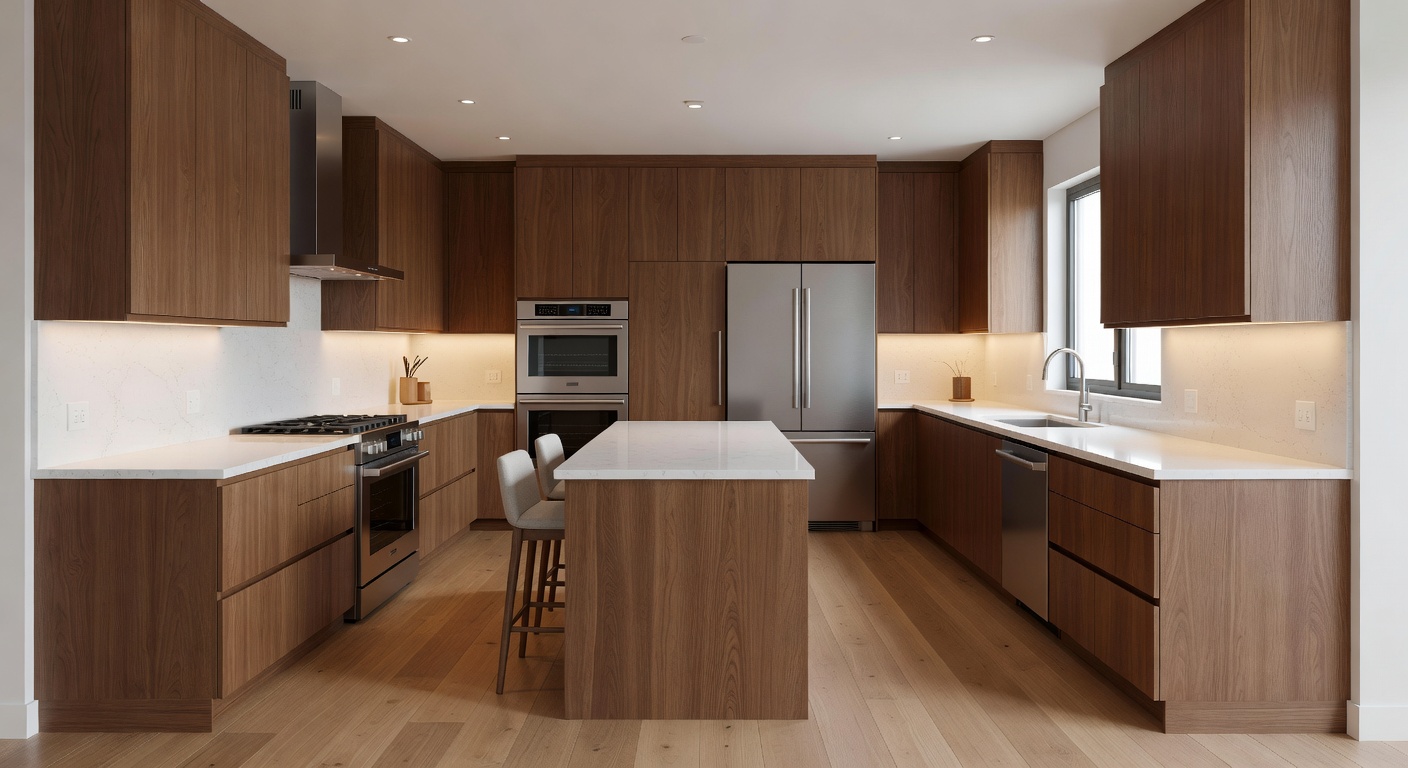
A U-shaped kitchen arranges cabinets, countertops, and appliances along three connected walls, forming a continuous U that surrounds the cook on three sides. The layout places the sink, refrigerator, and range within a compact working triangle, which reduces the distance a cook travels between core tasks. Homeowners choose this configuration for kitchens that require dedicated storage, uninterrupted counter space, and a clear separation between the cooking zone and adjacent living areas.
The layout adapts to galley-style kitchens, open floor plans, and kitchens with an island or peninsula extension. A U-shaped kitchen can measure as compact as 8 by 10 feet or extend beyond 12 by 12 feet, depending on the available wall length and the number of appliances the plan includes. Cabinet configuration, countertop material, and corner-storage solutions determine how efficiently the layout performs in a given square footage.
This guide explains the U-shaped kitchen layout, its standard dimensions, design variations, island and peninsula options, cabinet and countertop choices, pantry solutions, remodeling cost factors, and how the layout compares with I-shaped, L-shaped, and galley kitchens.
What Is a U-Shaped Kitchen?
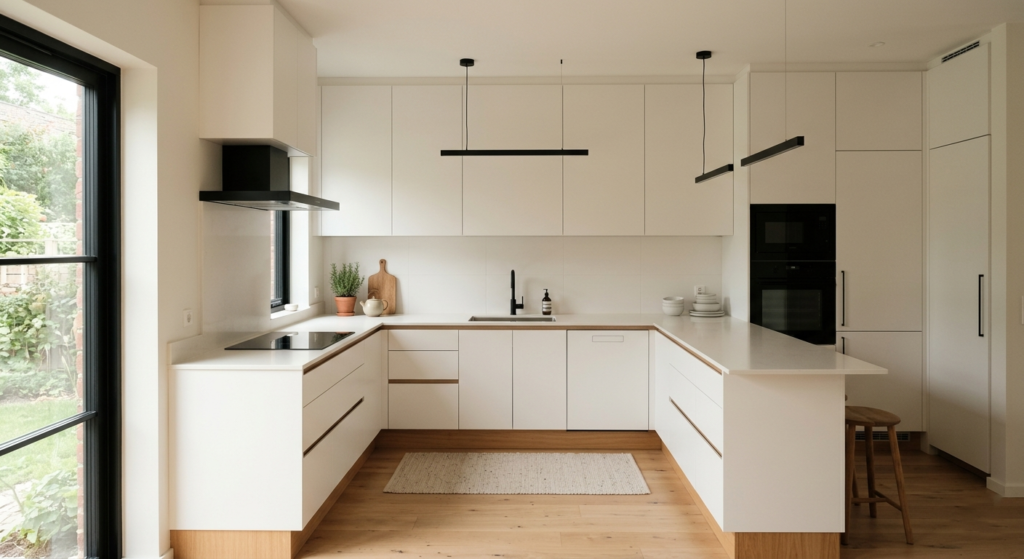
A U-shaped kitchen is a kitchen layout in which cabinetry and countertops occupy three adjoining walls, forming a continuous U-shaped work area. The three walls typically hold the primary work zones: one wall for the sink and dishwasher, a second wall for the cooktop or range, and a third wall for the refrigerator or additional storage.
The layout encloses the cook on three sides, which limits cross-traffic through the primary work area. This enclosure supports a short, direct path between the sink, stove, and refrigerator, commonly referenced as the kitchen work triangle. A U-shaped kitchen provides more continuous counter and cabinet space than a single-wall or galley kitchen of comparable square footage, because it uses three walls instead of one or two.
U-Shaped Kitchen Layout and Floor Plans
A U-shaped kitchen floor plan positions base cabinets, wall cabinets, and countertops along three walls that meet at two interior corners, with the fourth side left open for entry and traffic flow. The open end connects the kitchen to an adjacent hallway, dining area, or living space.
Floor plans vary according to wall length, corner treatment, and appliance placement. A parallel-leg U-shaped plan uses two walls of similar length with a shorter connecting wall for the sink or a compact prep zone. An asymmetrical U-shaped plan extends one leg further than the other to accommodate a range wall or a taller run of pantry cabinets. Corner cabinets require lazy Susans, blind-corner pull-out systems, or diagonal cabinet fronts to keep the interior corners accessible. The distance between opposing counters typically measures 42 to 48 inches, which allows one person to work while a second person passes behind without obstructing cabinet or appliance doors.
Standard U-Shaped Kitchen Dimensions (8×10, 10×10, 12×12)
Standard U-shaped kitchen dimensions range from 8×10 feet for a compact layout to 12×12 feet for a full-size layout with an island or extended pantry wall. An 8×10 U-shaped kitchen fits a sink wall, a range wall, and a narrow refrigerator wall within roughly 80 square feet, suited to single-cook households with limited floor space.
A 10×10 kitchen, the standard reference size used for cabinet and remodeling estimates, provides approximately 100 square feet and accommodates a full appliance suite with 24-inch-deep base cabinets on all three walls. A 10×10 U-shaped layout typically allows 42 to 48 inches of clearance between opposing counters, meeting minimum code-recommended walkway width. A 12×12 kitchen, at 144 square feet, provides enough floor area for a peninsula, a small island, or an extended pantry run along one leg of the U. Larger dimensions increase counter length and storage capacity without changing the three-wall configuration that defines the layout.
How to Draw a U-Shaped Kitchen Layout
To draw a U-shaped kitchen layout, measure the three walls, mark the door and window openings, and plot the sink, range, and refrigerator along separate legs of the U. Begin with a scaled floor plan, using a ratio such as 1/4 inch to 1 foot, and outline the perimeter walls first.
Mark fixed elements before placing cabinetry: door swings, window sills, plumbing stub-outs, and existing electrical outlets. Position the sink on the wall closest to existing plumbing to reduce relocation costs, and place the range on a wall with adequate clearance for ventilation ducting. Draw base cabinets as 24-inch-deep rectangles along each wall, then add wall cabinets at a standard 18-inch gap above the counter. Indicate the two interior corners with a diagonal line or corner-cabinet symbol to confirm that appliance and cabinet doors clear the adjacent run. Verify that the walkway between opposing counters measures at least 42 inches for a single-cook kitchen or 48 inches for a two-cook kitchen before finalizing appliance placement.
U-Shaped Kitchen Design Ideas
U-shaped kitchen design ideas apply consistent cabinetry, countertop material, and finish choices across all three walls to maintain visual continuity around the enclosed layout. Because the layout surrounds the cook on three sides, design decisions affect the entire field of view from the center of the kitchen, unlike a single-wall or L-shaped layout where one wall may remain unfinished or serve a secondary role.
Design direction typically follows a chosen style, color palette, and degree of openness to adjoining rooms. Cabinet finish, hardware, backsplash material, and lighting placement carry across all three legs of the U to avoid a fragmented appearance.
Modern U-Shaped Kitchens
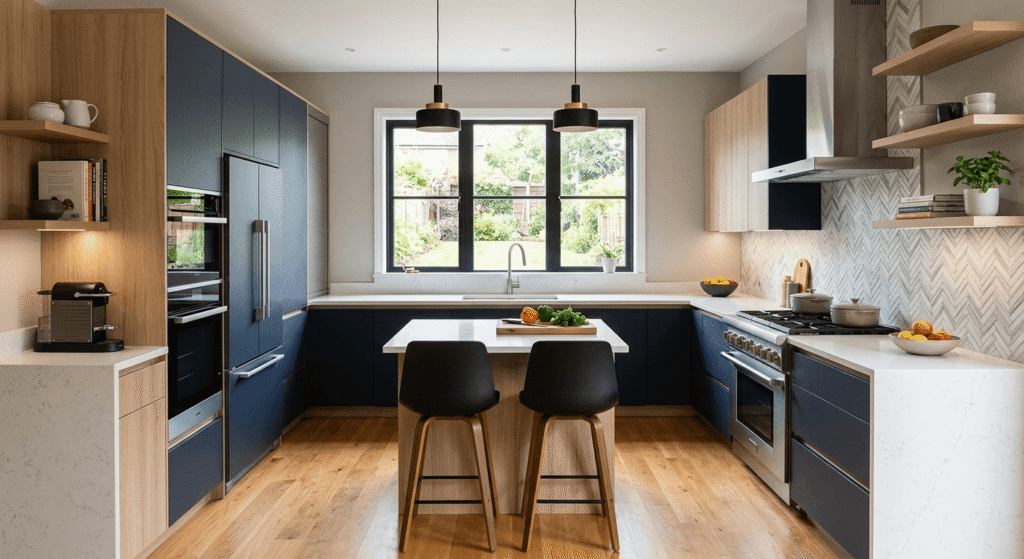
A modern U-shaped kitchen uses flat-panel cabinetry, integrated appliances, and a restrained color palette across all three walls of the layout. Modern design favors handleless or minimal-hardware cabinet fronts, which keep the continuous cabinet runs visually uninterrupted.
Countertop materials commonly include quartz or solid-surface options in a single, consistent color to reinforce the uniform look of the three connected walls. Under-cabinet LED lighting and a single-material backsplash, often extending in a continuous strip rather than a patterned tile, support the streamlined character associated with modern kitchen design.
White and Light U-Shaped Kitchens
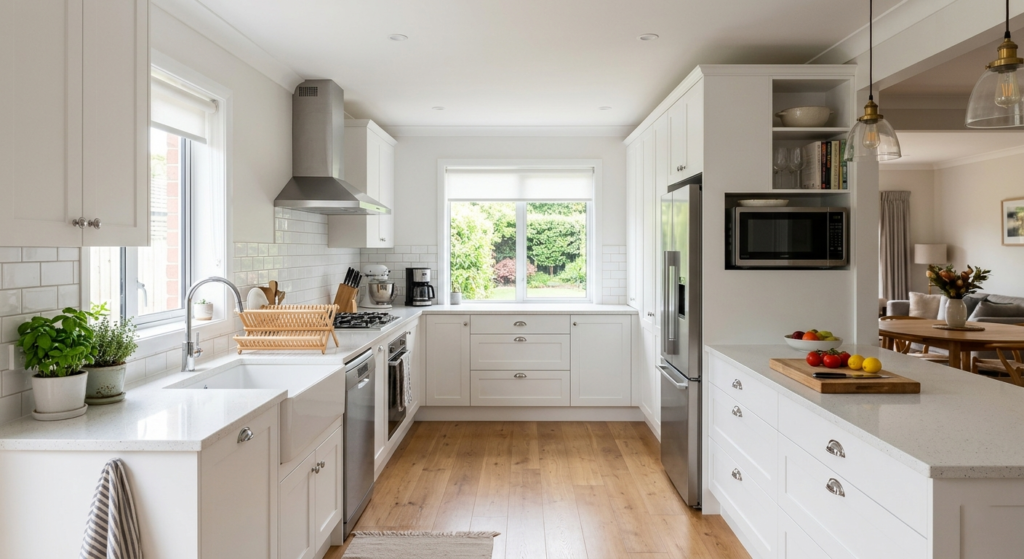
A white or light-toned U-shaped kitchen applies pale cabinet finishes, light countertops, and neutral wall colors across all three legs of the layout to increase perceived brightness and visual openness. Light finishes reduce the enclosed feeling that a three-wall layout can create, particularly in kitchens with limited natural light.
White shaker or slab-front cabinets paired with light quartz, marble-look, or butcher-block countertops maintain contrast without introducing heavy visual weight. Reflective surfaces, such as glossy tile backsplashes or polished countertop finishes, further increase light distribution within the enclosed three-wall space.
Open-Concept U-Shaped Kitchens
An open-concept U-shaped kitchen leaves the fourth side of the layout unobstructed, connecting the enclosed cooking area directly to an adjoining dining or living space. Removing a wall between the kitchen and an adjacent room allows the U-shape to function as the kitchen’s structural boundary while sightlines extend into the connected living area.
This configuration often incorporates a peninsula or partial-height counter along the open side to define the kitchen boundary without fully enclosing the space. Open-concept treatments typically require consistent flooring and ceiling finishes between the kitchen and adjoining room to reinforce the sense of a single continuous space.
Small and Narrow U-Shaped Kitchen Layouts
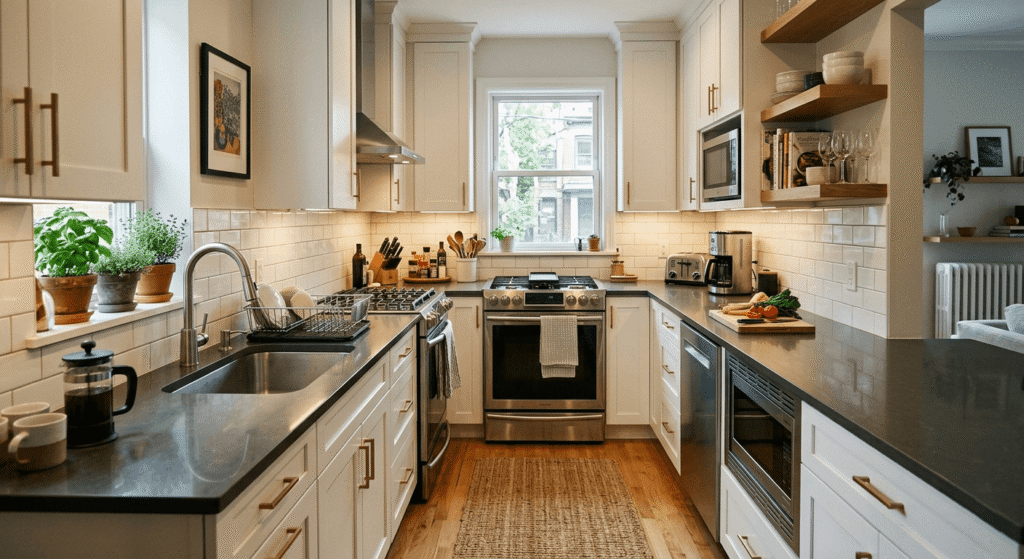
A small or narrow U-shaped kitchen compresses the standard three-wall configuration into a reduced footprint, often below 8×10 feet, by shortening the legs of the U and narrowing the aisle between opposing counters. Narrow layouts require careful appliance sizing, since standard 30-inch ranges and 24-inch dishwashers consume a larger proportion of the available wall length in a compact plan.
Space-saving strategies for small U-shaped kitchens include slim-depth base cabinets, compact 18-inch dishwashers, and corner storage solutions that recover usable space from the two interior corners. Vertical storage, such as wall cabinets extended to the ceiling, compensates for reduced base-cabinet footprint in kitchens with limited floor area.
Small U-Shaped Kitchen with an Island
A small U-shaped kitchen with an island adds a compact island, typically 24 to 36 inches wide, within a floor plan large enough to maintain the minimum 42-inch clearance on all sides. This configuration requires the U-shaped legs to remain short enough that the island does not obstruct the walkway between opposing counters.
A small island in this layout commonly serves as additional prep space, a seating counter, or a location for a secondary sink or cooktop, rather than duplicating the full appliance suite already positioned on the three perimeter walls.
Open-Concept Small U-Shaped Kitchens
An open-concept small U-shaped kitchen removes the fourth wall of a compact layout to visually extend the kitchen into an adjoining room, compensating for the limited floor area within the enclosed three-wall footprint. Opening the layout to an adjacent space increases perceived room size without altering the physical dimensions of the U-shaped cabinetry.
This approach commonly pairs a shortened U-shaped configuration with a narrow peninsula or open shelving on the fourth side, maintaining a defined cooking zone while preserving sightlines into the connected living or dining area.
U-Shaped Kitchen with an Island
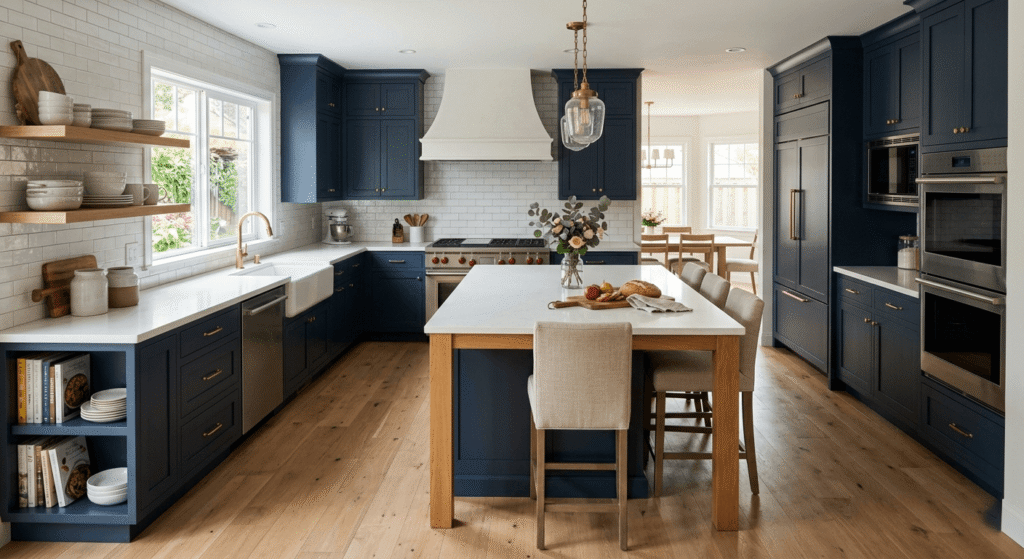
A U-shaped kitchen with an island places a freestanding cabinet and countertop unit within the open fourth side of the three-wall layout, provided the floor plan allows at least 42 inches of clearance between the island and each surrounding counter. This configuration requires a minimum floor area, generally starting near 10×12 feet, to accommodate both the U-shaped perimeter and a functional island footprint.
The island typically adds prep space, secondary storage, or seating without disrupting the sink-range-refrigerator triangle established along the three perimeter walls. Plumbing or electrical runs to the island, if the design includes a secondary sink or cooktop, add to the layout’s installation requirements compared with a U-shaped kitchen without an island.
Island Seating in a U-Shaped Kitchen
Island seating in a U-shaped kitchen requires a minimum overhang of 12 inches for counter-height seating or 15 inches for bar-height seating, measured from the cabinet face to the counter edge, to provide adequate knee clearance. The seating side of the island typically faces the open end of the U, allowing diners to face into the kitchen or toward an adjoining room.
Clearance behind the seated diners must account for both chair or stool movement and the walkway connecting the U-shaped kitchen to the rest of the home, which commonly requires an additional 36 inches beyond the seating overhang.
U-Shaped Kitchen Without an Island
A U-shaped kitchen without an island relies entirely on the three perimeter walls for storage, countertop space, and appliance placement, leaving the fourth side open for unobstructed traffic flow. This configuration suits smaller floor plans where the minimum clearance required for an island cannot be maintained on all sides.
Without an island, the layout depends on perimeter counter length and corner-storage efficiency to meet the kitchen’s prep and storage needs, since no additional freestanding work surface supplements the three connected walls.
U-Shaped Kitchen with a Peninsula
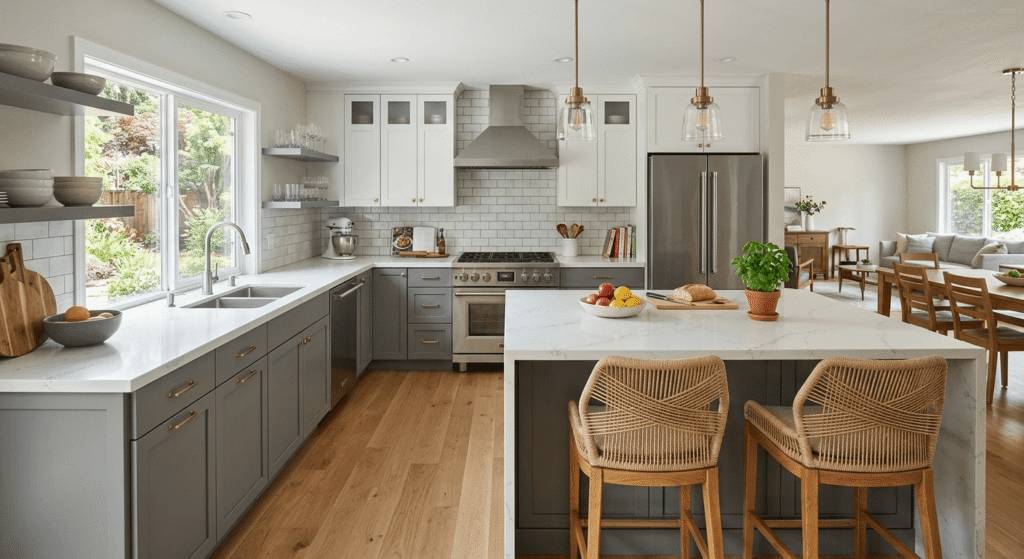
A U-shaped kitchen with a peninsula extends a fourth, shorter counter from one of the three existing walls, converting part of the open end into additional counter space while remaining structurally attached to the layout. Unlike an island, a peninsula connects directly to one leg of the U, which allows it to fit in floor plans too narrow to support a freestanding island with clearance on all sides.
A peninsula commonly incorporates a secondary sink, a raised seating counter, or additional base-cabinet storage, and it often serves as the visual and functional boundary between the U-shaped kitchen and an adjoining dining or living space. Because the peninsula attaches to an existing wall, it typically requires less additional plumbing or electrical rerouting than a comparable island.
Cabinets for U-Shaped Kitchens
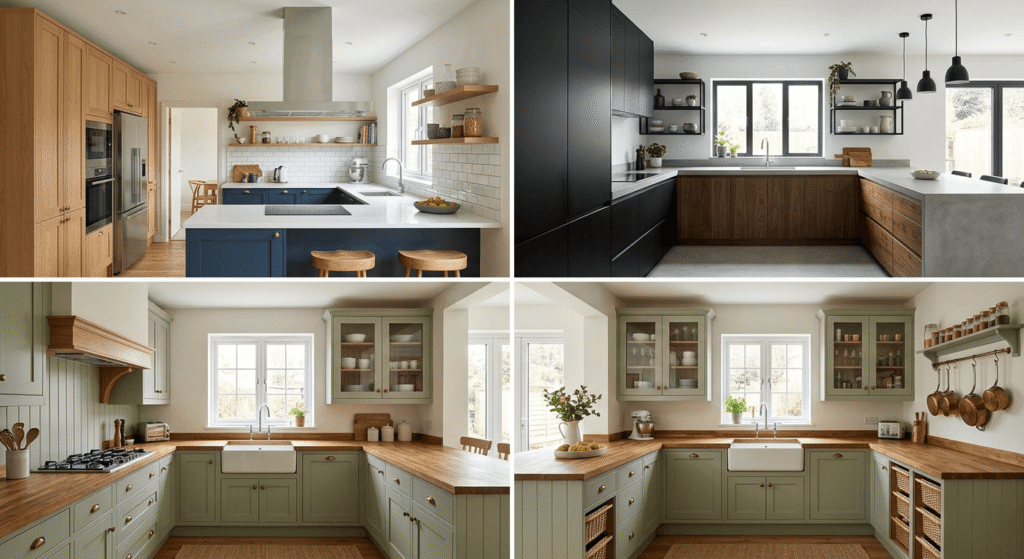
Cabinets for U-shaped kitchens run continuously along three connected walls, which requires corner-cabinet solutions at both interior corners where the walls meet. Standard base cabinets measure 24 inches deep, and wall cabinets measure 12 to 15 inches deep, with the two corner locations typically fitted with lazy Susans, blind-corner pull-out units, or diagonal corner cabinets to maintain access to stored items.
Cabinet configuration in a U-shaped kitchen commonly separates storage by function across the three walls: one wall dedicated to cookware near the range, a second wall dedicated to dishware near the sink and dishwasher, and a third wall allocated to pantry or general storage near the refrigerator. Full-height cabinets, extended to the ceiling, increase storage capacity on any wall with sufficient vertical clearance, which particularly benefits smaller U-shaped layouts with limited floor-level cabinet runs.
Countertops for U-Shaped Kitchens
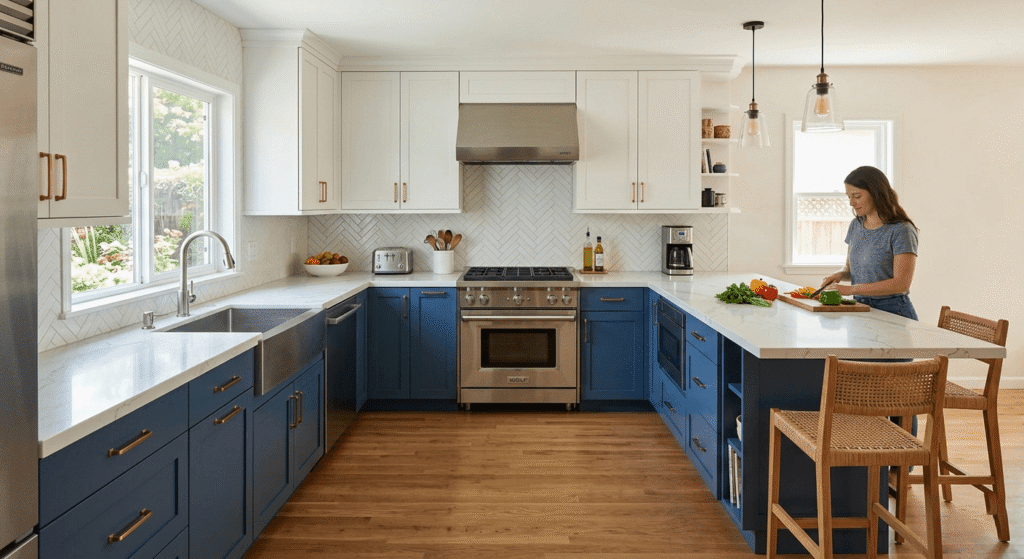
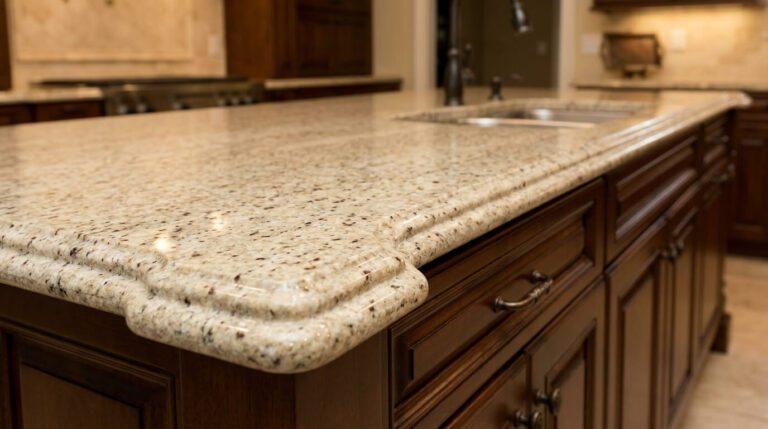
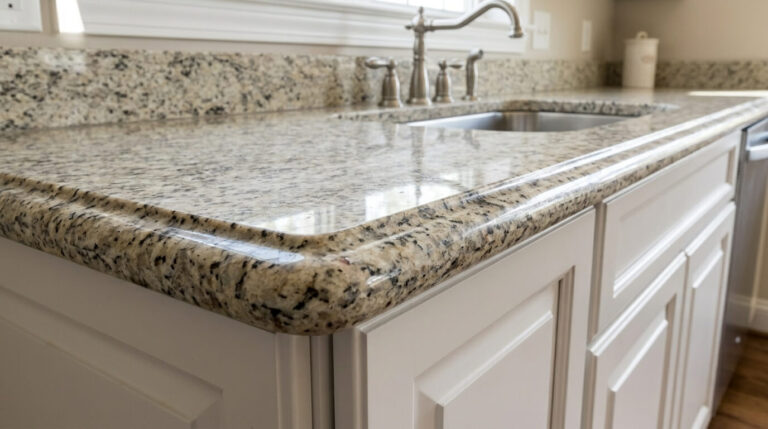
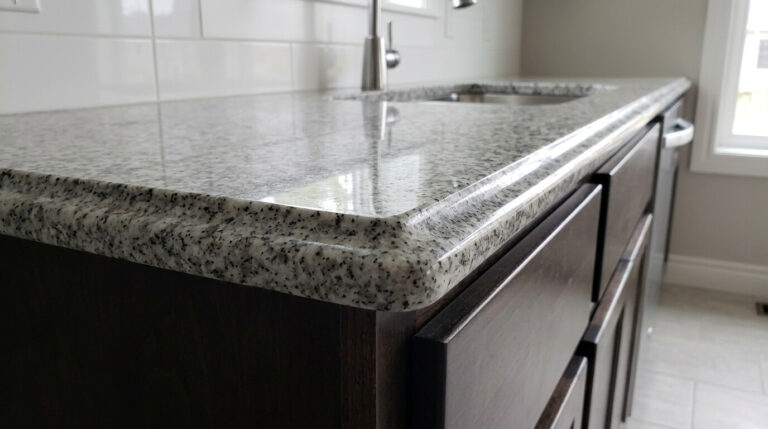
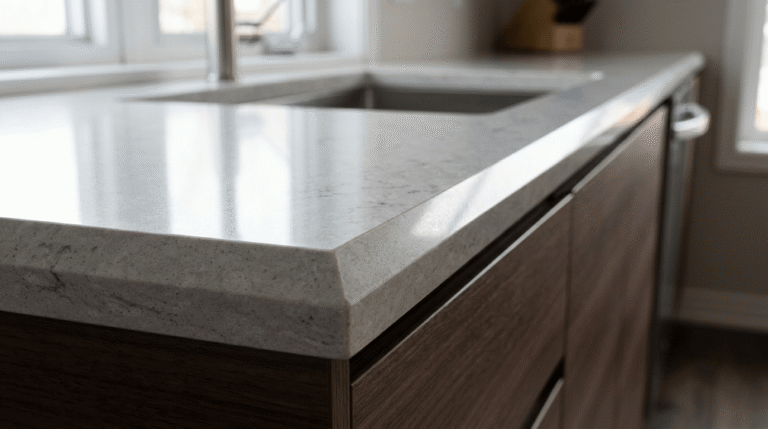
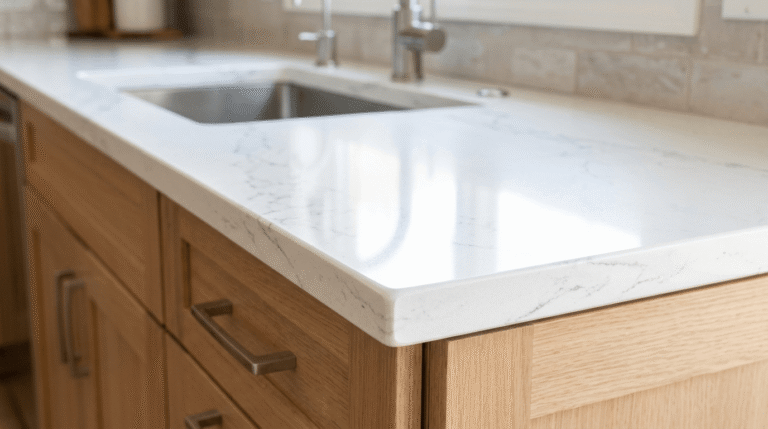
Countertops for U-shaped kitchens extend across three connected walls and two interior corner joints, which requires material selection that accommodates seams without a visible mismatch in pattern or color. Quartz, granite, and solid-surface materials allow fabricated corner joints with minimal visible seams, while laminate countertops typically show a more noticeable seam line at each interior corner.
Material choice affects heat resistance, scratch resistance, and maintenance requirements across the full perimeter of the layout. Granite and quartz resist heat and scratching under normal kitchen use, while laminate and butcher-block surfaces require additional care near the range wall to prevent heat damage or surface marking. Continuous countertop material across all three walls maintains a uniform appearance around the enclosed layout, while a change in material at one wall, such as a butcher-block section near a prep zone, creates a defined functional zone within the continuous U.
U-Shaped Kitchen Pantry Ideas
Pantry storage in a U-shaped kitchen typically occupies one leg of the U as a dedicated run of floor-to-ceiling cabinets, or extends into a walk-in pantry adjacent to the open fourth side of the layout. Allocating an entire wall section to pantry storage reduces the need for additional upper cabinets elsewhere in the three-wall configuration.
Common pantry solutions include pull-out pantry cabinets 6 to 12 inches wide fitted between the refrigerator and an adjacent wall, full-height pantry cabinets with adjustable interior shelving, and a separate walk-in pantry positioned just outside the open end of the U-shaped layout. In smaller U-shaped kitchens, a tall single-column pantry cabinet on the shortest leg of the U provides dedicated food storage without consuming base-cabinet or countertop space needed for food preparation.
U-Shaped Kitchen Remodel Ideas and Cost Factors
A U-shaped kitchen remodel typically involves replacing cabinets, countertops, and flooring across three connected walls, which increases material and labor requirements compared with single-wall or L-shaped remodels of similar square footage. Cost factors include cabinet material and finish, countertop material, appliance replacement, plumbing or electrical relocation, and whether the remodel retains the existing wall configuration or restructures the layout.
Relocating the sink or range to a different wall raises costs due to additional plumbing or gas-line work, while a remodel that keeps existing fixture locations reduces labor expenses. Corner-cabinet hardware, such as lazy Susans or blind-corner pull-out systems, adds incremental cost at each of the two interior corners compared with a straight-run cabinet layout. Countertop material selection significantly affects total project cost, since a U-shaped kitchen requires a greater total linear footage of countertop than a comparable L-shaped or galley layout. Homeowners planning a remodel typically request itemized quotes covering demolition, cabinetry, countertops, appliances, plumbing, electrical, and flooring to account for the layout’s three-wall scope.
U-Shaped vs. Other Kitchen Layouts (I-Shaped, L-Shaped, Galley)
A U-shaped kitchen differs from I-shaped, L-shaped, and galley layouts in the number of walls used for cabinetry and the resulting counter length, storage capacity, and traffic pattern. An I-shaped, or single-wall, kitchen places all cabinets and appliances along one wall, which requires less floor area but provides less counter length and a longer travel distance between the sink, range, and refrigerator than a U-shaped layout offers.
An L-shaped kitchen uses two adjoining walls, leaving two sides of the room open, which suits open-concept spaces but provides less enclosed counter space than a U-shaped kitchen of equal wall length. A galley kitchen places cabinets along two parallel walls with an open aisle at both ends, supporting an efficient work triangle in a narrow footprint, though it lacks the enclosed corner storage and continuous counter run that a U-shaped layout provides. Compared with all three alternatives, a U-shaped kitchen offers the greatest total counter and cabinet length within a given footprint, at the cost of requiring more wall space and, in most cases, a larger minimum room dimension.
Styling a U-Shaped Kitchen: Rugs, Tables, and Breakfast Bars
Styling a U-shaped kitchen involves selecting rugs, tables, and breakfast bar elements that fit within the open fourth side of the layout without narrowing the required walkway clearance. A runner rug placed along the open aisle of the U typically measures 24 to 30 inches wide, sized to fit between opposing counters while leaving adequate floor clearance on both sides.
A freestanding table placed near the open end of a U-shaped kitchen functions as a casual dining or prep surface when the layout does not include an island or peninsula. A breakfast bar, whether formed by an extended countertop on one leg of the U or a raised counter on an attached peninsula, provides informal seating without requiring the additional floor area an island demands. Lighting fixtures positioned over a table or breakfast bar in a U-shaped kitchen typically align with the center of the open fourth side, reinforcing that area as the layout’s secondary functional zone.